
Teaching Science in Early Childhood
Are you struggling to cover the ACARA Science curriculum in your school day?
Before implementing a play-based pedagogy, I struggled too. Now I cover not only the Science curriculum but ALL the curriculum subjects and ALL the learning intentions. The children in my class reach curriculum benchmarks easily. In fact, they learn so much more than the mandated curriculum.
In this blog post, I will share with you HOW to easily cover the entire curriculum for science in the early years with just two 20min explicitly taught science lessons each week. Check out my real-life timetable…
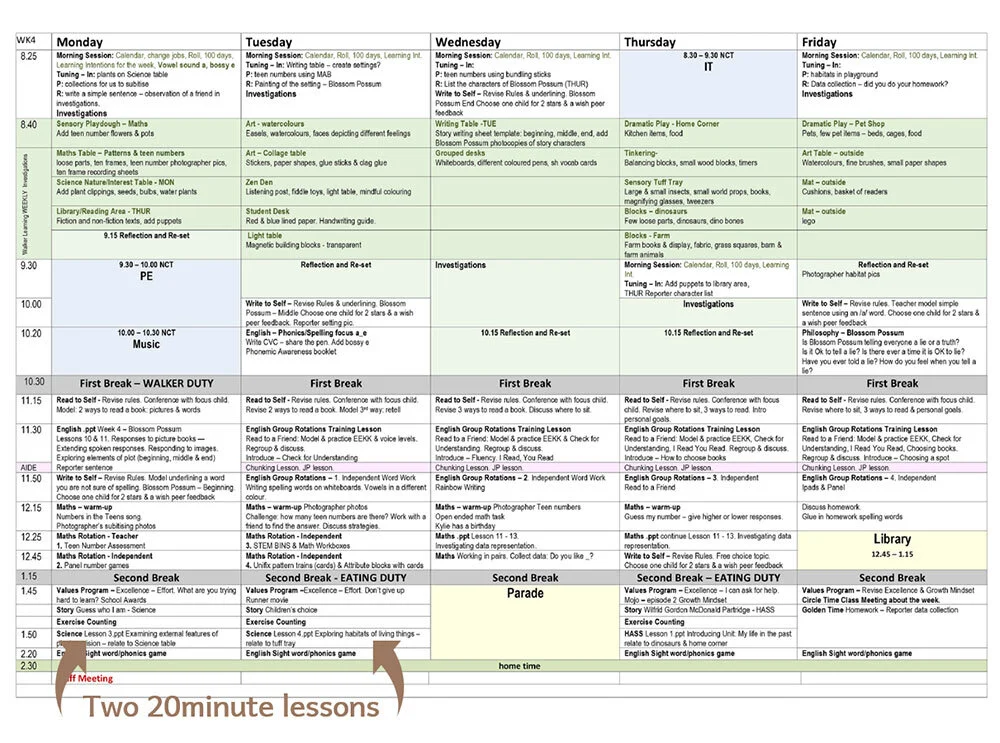
If you are interested in taking a closer look at my planning, head over to this blog post - Weekly Timetable for My Play-based Classroom. There is even a fully editable timetable for both Prep/Foundation and Year One free for you to download there.
Looking closely at my timetable, you will notice there are daily 45min blocks planned for our investigative play sessions. Investigative play has many benefits. It is the reason we easily cover ALL the curriculum subjects and ALL the learning intentions.
Through developmentally appropriate investigative play, children develop their physical, social, emotional, cognitive, and creative selves. A play-based learning pedagogy holistically supports a broad range of literacy, numeracy, and scientific skills. However, your role in planning and implementing this pedagogy is crucial to its success.

Before you discover HOW to teach the early childhood science curriculum, we need to highlight WHAT the Science curriculum entails. You might like to have a close look at the Australian Science curriculum (Foundation to Year 2) here on the ACARA website.
The Science content includes these three strands:
science understanding
science inquiry skills
science as a human endeavour
These strands are inter-related, so we should teach the content in an integrated way.
What are the F-2 ACARA Science Learning Intentions?
The Australian Curriculum builds on the key learning outcomes of the national Early Years Learning Framework. It has three interrelated strands: science understanding, science as a human endeavour, and science inquiry skills.
Science Understanding
Science knowledge refers to the facts and concepts established by scientists. Science understanding requires children to select and integrate their science knowledge in order to explain and predict phenomena, and to apply that knowledge to new situations.
The science understanding strand includes Biology, Chemistry, Physics and Earth and Space.
Science as a human endeavour
The nature and development of science is a sub-strand which involves observing, asking questions about, and describing changes in, objects and events
The use and influence of science is another sub-strand exploring how people use science in their daily lives, including when caring for their environment and living things.
Science inquiry skills
Science inquiry skills are evident any time you observe children learning through play. These skills involve children identifying and posing questions; planning, conducting, and reflecting on their investigations; processing, analysing and interpreting evidence; and communicating their findings.
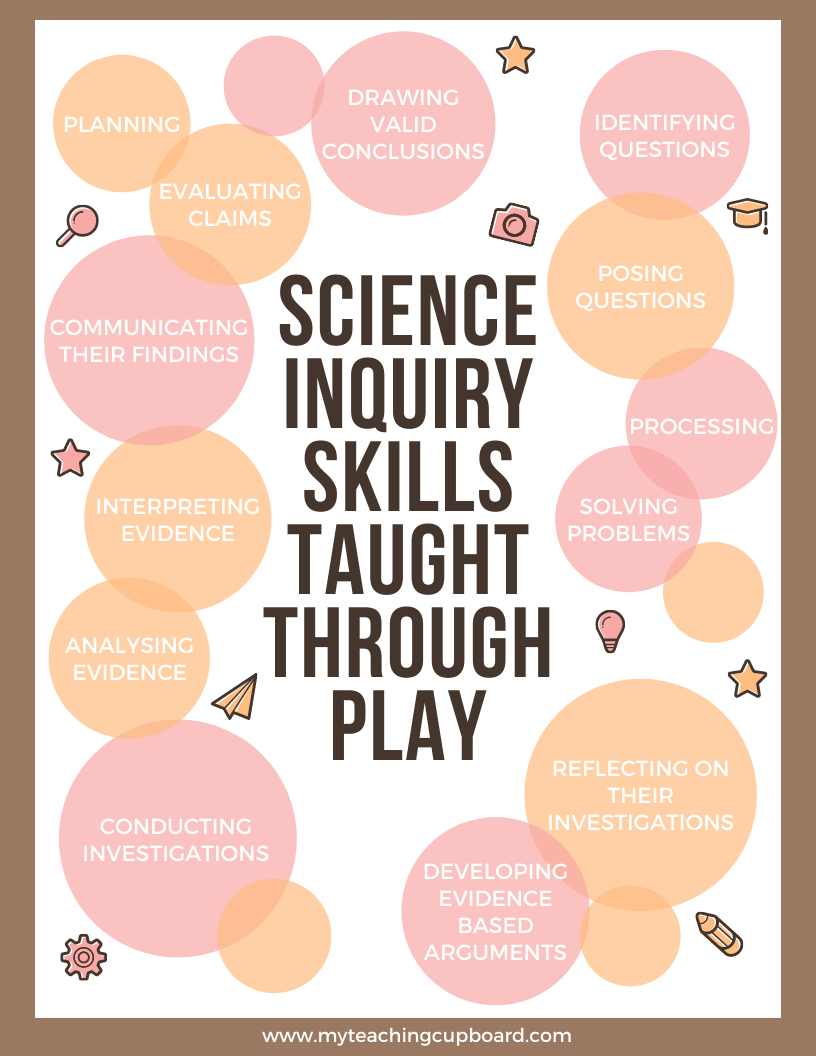
This strand is also concerned with evaluating claims, investigating ideas, solving problems, drawing valid conclusions, and developing evidence-based arguments. The science inquiry skills children develop give them the tools they need to achieve a deeper understanding of science concepts.
In the early years, children learn the three strands of science understanding, science as a human endeavour and science inquiry skills. They are closely integrated and should be taught in an integrated way.
The ACARA content descriptions of the three strands are written in a way that makes integration possible. In early childhood education, the nature and development of science focuses on scientific inquiry. This allows young children to make clear connections between the inquiry skills that they are learning and the work of real scientists.
Foundation Year Science
In Foundation, students observe and describe the behaviours and properties of everyday objects, materials and living things. They explore change in the world around them, including changes that impact on them, such as the weather, and changes they can effect, such as making things move or change shape. They learn that seeking answers to questions they pose and making observations is a core part of science and use their senses to gather different types of information.
Year 1 Science
In Year 1, students infer simple cause-and-effect relationships from their observations and experiences, and begin to link events and phenomena with observable effects and to ask questions. They observe changes that can be large or small and happen quickly or slowly. They explore the properties of familiar objects and phenomena, identifying similarities and differences. Students begin to value counting as a means of comparing observations, and are introduced to ways of organising their observations.
Year 2 Science
In Year 2, students describe the components of simple systems, such as stationary objects subjected to pushes or pulls, or combinations of materials, and show how objects and materials interact through direct manipulation. They observe patterns of growth and change in living things, and describe patterns and make predictions. They explore the use of resources from Earth and are introduced to the idea of the flow of matter when considering how water is used. They use counting and informal measurements to make and compare observations and begin to recognise that organising these observations in tables makes it easier to show patterns.
https://www.australiancurriculum.edu.au/
How to Teach the Science Learning Intentions
The only way to cover all those curriculum outcomes is through an integrated, play based approach. One benefit of a play-based pedagogy is how easily you can integrate Science with all the other curriculum areas.
When you integrate Science into your curriculum, it means you do not have to add more into your school day. Integrating science ensures you will cover the early years science curriculum and it won’t end up being just an afterthought - one more thing you are trying to squeeze in when you have time.
Honestly, if you cleverly integrate the early year’s science curriculum, you will cover all the required skills and content and do it easily.
In fact, adopting an investigative, play based pedagogy will have you integrating and teaching ALL the curriculum subjects and ALL the related learning intentions. Another advantage to this child-centered pedagogy means you will teach in a developmentally appropriate way. This holistic pedagogy will be highly engaging and meaningful to your children.
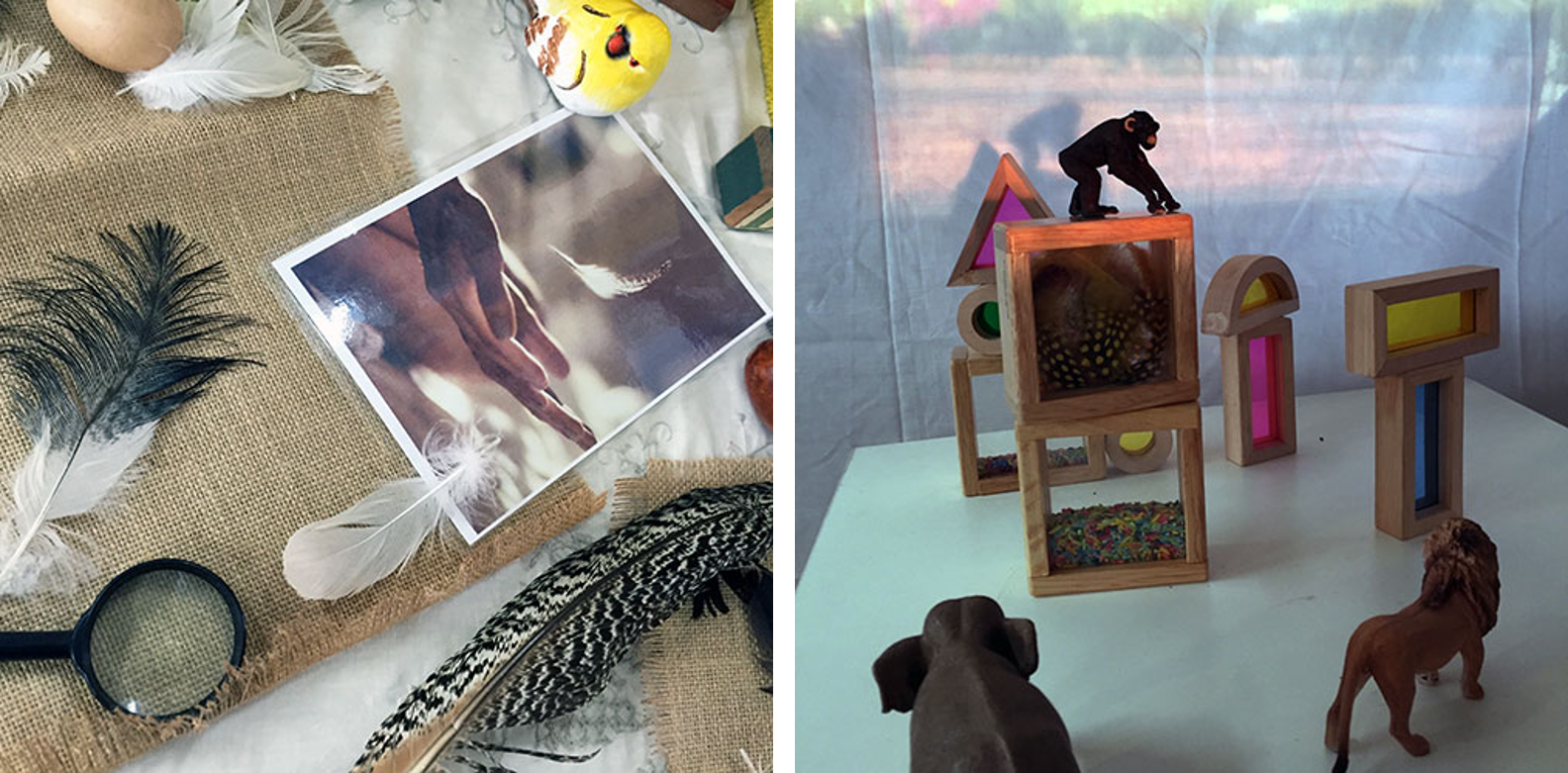
Reggio Emilia Philosophy
The early childhood teachers in the Italian town of Reggio Emilia have had tremendous success with an investigative, play based pedagogy. The teachers in their schools work collaboratively with the children to scientifically pose problems, ask questions, and add a level of complexity to their investigative learning program.
The teachers and children in Reggio Emilia are co-creators of knowledge and understandings. The teachers provide the children with information, materials, and help as needed. This ensures both children and adults merge their learning and move to the next level of understanding together.
Following the Reggio Emilia Philosophy means you will not be teaching your curriculum learning intentions in an isolated or fragmented way. You will be thoughtfully integrating them into a broader developmentally appropriate pedagogy.
The Reggio philosophy views children’s learning as integrated and interconnected, so their pedagogy reflects this view. Connections between children, families and the communities of Reggio Emilia are honoured and respected. Connections between the natural world and the child are also central to this approach.
Connections are embedded in the Reggio classrooms and in their way of life. It is understandable then that a scientific understanding and respect for the community and the broader world is fostered.
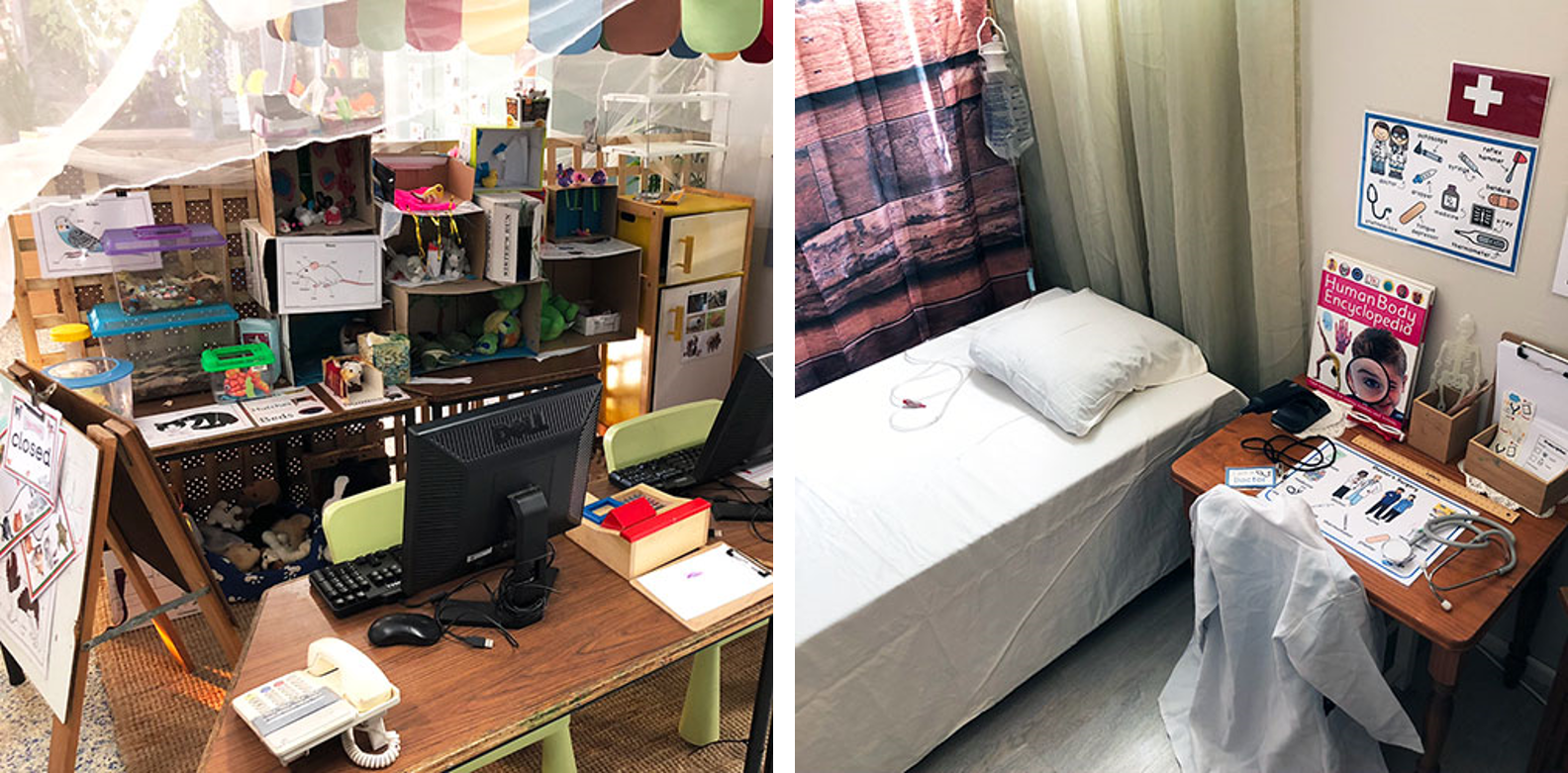
A Connected Integrated Early Years Curriculum
In the early years of schooling, providing opportunities for children to make connections across all aspects of their lives, including those related to science, is really very important. A play-based pedagogy with an integrated and interconnected curriculum will blend the child’s experiences across home life, school, and the community.
A connected, integrated Curriculum will give the children in your classroom opportunities to internalise their learning across ALL the curriculum subjects. It will provide a truly meaningful education where your children will increasingly develop their sense of self and the world around them.
An interconnected and integrated curriculum delivered through a play-based learning approach more than covers the three interrelated strands (science understanding, science as a human endeavour and science inquiry skills) of the ACARA science curriculum. Actually, it more than covers ALL the curriculum strands.
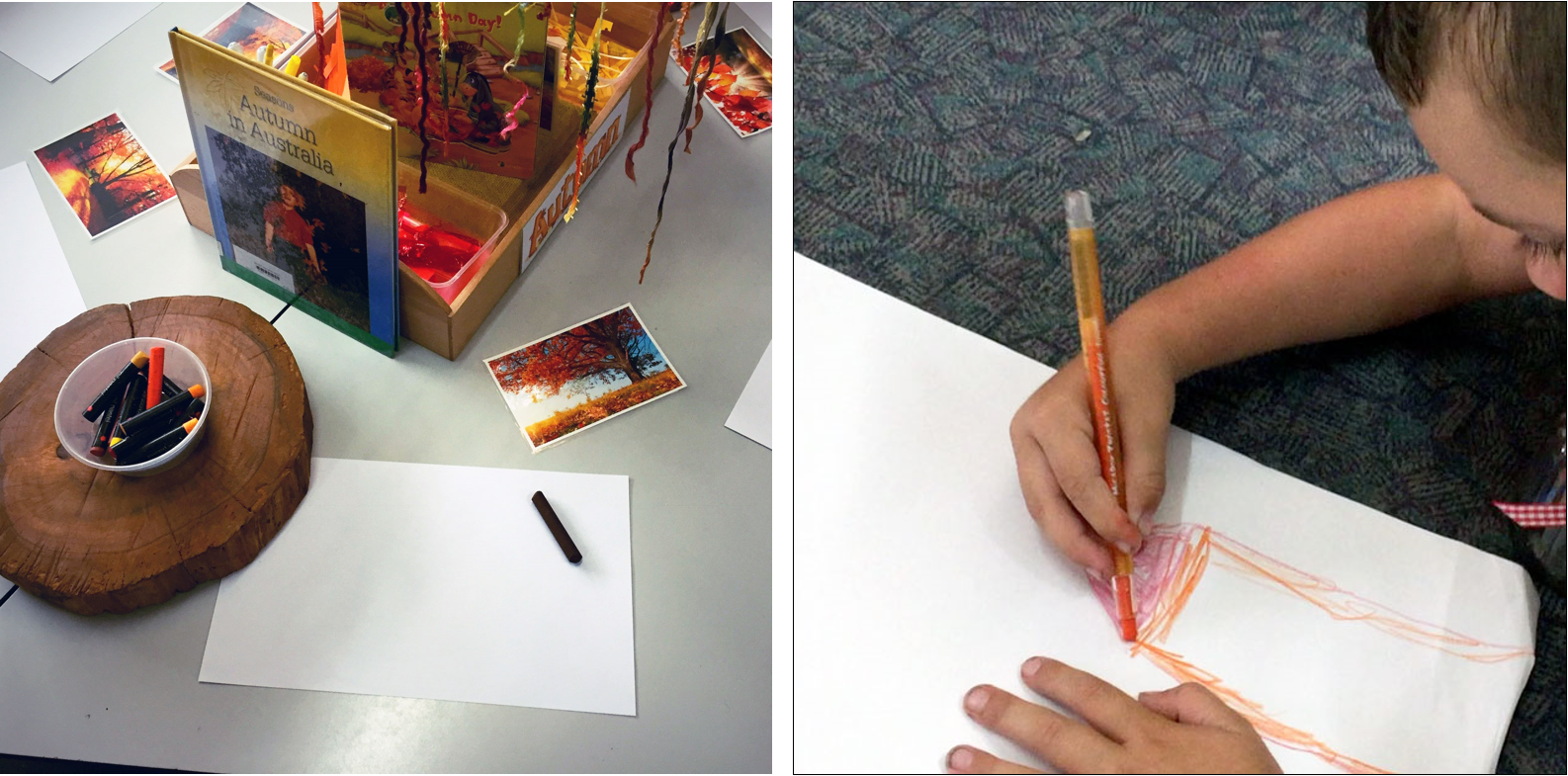
Integrating Literacy, Numeracy and Science
During developmentally appropriate play, ALL curriculum subjects can be covered. Children will learn skills and understandings necessary to master the early years literacy, numeracy, and science curriculum. They will learn them and achieve mastery because these science skills and understandings will be taught, practised, and revised constantly as the children investigate and discuss what they are doing and what they have found.
The research-based Primary Connections (Australian Academy of Science, 2018) program states science and literacy can be easily integrated, and that this integration helps young children to develop both their science and literacy skills in a play-based program.
There are many opportunities for children to develop their science vocabulary and metalanguage in an integrated curriculum too. If your children have the correct vocabulary, it will help them think, communicate, and work scientifically.
Connecting the Science and Mathematics curriculum happens naturally in a play-based classroom. Numeracy and Science have common concepts and skills like measurement, number patterns, sorting, classifying, and forming groups based on common characteristics. Play-based science and maths learning invitations easily integrate mathematics and science so children can learn that both these curriculum subjects involve exploring our world.

Walker Learning Approach
Another successful integrated investigative pedagogy is the Walker Learning Approach by Kathy Walker. If you follow the play-based Walker Learning Approach, you will set child photographer and reporter tasks each day. You can design these teacher designated tasks to address scientific learning intentions. This will provide even further opportunities to teach the science curriculum.
The science curriculum planning documents can guide the Walker Learning teacher to choose tasks which will complement the science learning intentions. For example, if you are learning about living things in the biological sciences strand, the photographer’s task could be to take 5 photos of living and nonliving things in the classroom. The class can discuss and view these photographs at a reflection time. The photos will act as a stimulus to scientific questions and discussions related to the learning intentions being addressed in the biological science strand.
If you are interested in photographer tasks that directly relate to the early childhood curriculum learning intentions for Literacy, Numeracy or Science, there are over 200 tasks in this product.
There are over 70 Scientific photographer task ideas in this document and cover the early childhood learning intentions of the 4 science understanding strands:
Biology
Chemistry
Physics
Earth and Space.

Tired of trying to think up educational and purposeful photographer tasks?
I’ve listed over 200 Photographer Tasks in this handy file. They are all aligned to the ACARA P-2 curriculum and have been organised into the following curriculum headings:
Maths—Number and Algebra
Number and Place Value
Patterns and Algebra
Maths—Measurement and Geometry
Shape
Using units of measurement
Location and Transformation
Maths—Statistics and Probability
English
Language
Literacy
Literature
Science
Senses
Biological sciences
Chemical sciences
Earth and Space sciences
Physical sciences
You will receive a .pdf file containing over 200 Photographer Tasks all ready for you to use in your classroom. I know they will save you some planning time!
Explicitly Teaching Science
You will still need to designate a time-slot in your planning to explicitly teach science knowledge. Without science knowledge, your children will not easily develop proficient science understandings. Science understanding requires children to select and integrate their science knowledge so they can explain and predict phenomena, and to apply that knowledge to new situations.
Science knowledge gives children the foundation they need to effectively build their science understandings. Explicit teaching lessons covering the Biology, Chemistry, Physics and Earth and Space strands are necessary and need to be included in your weekly planning.
To ensure you teach your children the necessary required science knowledge, set aside a 40min time slot in your weekly planning to explicitly teach the necessary scientific facts and concepts.
To help you cover as much science knowledge as possible in this short time-slot, I have designed explicit teaching PowerPoint presentations for each of the Biology, Chemistry, Physics and Earth and Space strands. The PowerPoint science lessons ensure you will cover all metalanguage, content and required science knowledge.
These PowerPoint Lessons are on sale. They are part of my Living Things BUNDLE, and it is also on sale . Purchase the bundle HERE to save.
This zipped folder contains 10 LIVING THINGS PowerPoint lessons aligned to ACARA Version 8—Foundation Level. That is a lesson for each week of the term. All content descriptors from the Foundation Biological Sciences strand are covered.
I am currently working on the Version 9 Science units, so I’ve decided to heavily reduce all my Version 8 Science resources. Grab yourself a bargain and check them all out here: ACARA Version 8 Science Resources ON SALE
These highly engaging PowerPoint lessons include quality real life photos and interactive aspects perfect for large screen display and interactive panels. The lessons will help you to teach your students to use their senses to explore the needs of living things and how an environment can affect them.
Lesson 1: Science and Our Senses. Students will describe how our senses can help us learn about the world.(28 slides)
Lesson 2: Living Things in Our School. Students will observe living things using their senses. (36 slides)
Lesson 3: Exploring the Living World Using Our Senses. Students will make detailed observations of living things. (38 slides)
Lesson 4: The Needs of Living Things. Students will identify the needs of living things and how their needs are met. (33 slides)
Lesson 5: The Needs of Animals. Students will identify the needs of animals and how their needs are met. (33 slides)
Lesson 6: The Needs of Plants. Students will identify the needs of plants and how their needs are met. (45 slides)
Lesson 7: Environments that People Care For. Students will describe the needs of living things being met in a farm environment. (32 slides)
Lesson 8: Looking at Wild Environments. Students will describe the needs of living things being met in a wild environment. (37 slides)
Lesson 9: Actions that Affect Environments. Students will describe the impact of human actions on living things. (37 slides)
Lesson 10: Actions in the Local Environment. Students will share ways they could help to meet the needs of living things in the school environment. (28 slides)
A 10 page living things journal to go with these PowerPoint lessons is also available. Each page in the journal corresponds with each of the 10 PowerPoint lessons. You can purchase it HERE.
The 10 lessons are part of the Material World Unit BUNDLE. Purchase the bundle HERE to save.
10 MATERIALS AND THEIR PROPERTIES PowerPoint lessons aligned to the Australian Curriculum Version 8—Foundation Level. All content descriptors from the Foundation Chemical Sciences strand are covered.
These Science lessons on Our Material World will teach your students to describe the observable properties of materials from which an object is made. They will ask and respond to questions and share and reflect on their observations.
I am currently working on the Version 9 Science units, so I’ve decided to heavily reduce all my Version 8 Science resources. Grab yourself a bargain and check them all out here: ACARA Version 8 Science Resources ON SALE
The entire term lessons are done for you!!
These educational PowerPoint lessons include quality real life photos and interactive aspects perfect for large screen display and interactive panels.
Keep your students highly engaged as they learn all about MATERIALS AND THEIR PROPERTIES.
THIS SET CONTAINS: 10 PowerPoint Lessons
Lesson 1: Objects and Materials. Students will identify familiar objects and the materials they are made from.(49 slides)
Lesson 2: Exploring Playground Materials. Students will describe the properties of materials in their playground. (42 slides)
Lesson 3: Exploring the Properties of Hats. Students will describe the properties of materials used to make hats. (53 slides)
Lesson 4: Exploring the Materials Used to Build Houses. Students will describe how the materials used in houses are selected based on their properties. (50 slides)
Lesson 5: How Water Effects Materials. Students will share ideas about how water affects materials in different ways. (53 slides)
Lesson 6: How Wind Effects Materials. Students will identify materials that are more suited to windy conditions. (58 slides)
Lesson 7: Materials Suitable for Outdoors. Students will describe the observable properties of materials from which outdoor objects are made. (39 slides)
Lesson 8: Exploring Texture as a Property. Students will describe and explain the use of textures in familiar objects. (51 slides)
Lesson 9: Exploring Recycling. Students will sort and learn how to recycle objects by identifying their materials. (43 slides)
Lesson 10: Reduce, Reuse, Recycle. Students will learn how to reduce, reuse and recycle materials to make our world a better place. (50 slides)
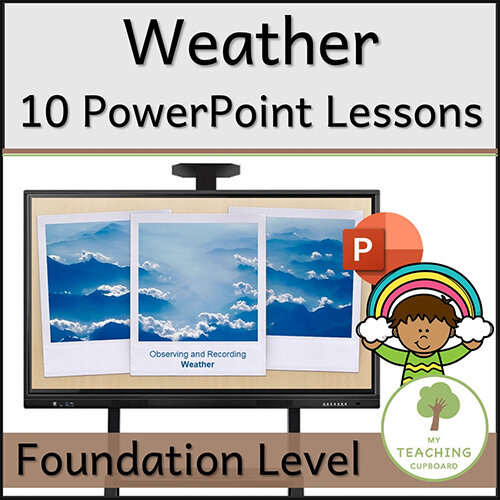
These PowerPoint Lessons are part of my Weather BUNDLE. Purchase the bundle HERE to save.
This zipped folder contains 10 WEATHER PowerPoint lessons aligned to ACARA Version 8—Foundation Level. That is a lesson for each week of the term. All content descriptors from the Foundation Earth and Space Sciences strand are covered.
I am currently working on the Version 9 Science units, so I’ve decided to heavily reduce all my Version 8 Science resources. Grab yourself a bargain and check them all out here: ACARA Version 8 Science Resources ON SALE
These highly engaging PowerPoint lessons include quality real life photos and interactive aspects perfect for large screen display and interactive panels.
Lesson 1: Observing and Recording the Weather. Students will observe and record the weather. (23 slides) Available as a free download sample HERE.
Lesson 2: Changes and Effects of Weather. Students will identify how the weather changes and effects us. (49 slides)
Lesson 3: Exploring Sunny and Windy Weather. Students will recognise the effects of sunshine, wind and temperature.(31 slides)
Lesson 4: Exploring Clouds. Students will recognise cloudy, foggy, rainy and stormy weather. (64 slides)
Lesson 5: Choosing Clothes and Activities. Students will share ideas of how weather affects our choice of clothes and activities. (24 slides)
Lesson 6: Houses and Climates. Students will share ideas of how houses protect us from the weather. (22 slides)
Lesson 7: Weather Affects Animals. Students will share ideas of how animals are affected by the weather. (30 slides)
Lesson 8: Weather Affects Plants. Students will share ideas of how plants are affected by the weather. (33 slides)
Lesson 9: Weather Affects All Living Things. Students will share ideas of how living things are affected by the weather. (28 slides)
Lesson 10: Weather Affects Living Things—Unit Revision. Students will revise the unit and share ideas of how all living things are affected by the weather. (21 slides)
A 10 page weather journal to go with these PowerPoint lessons is also available. Each page in the journal corresponds with each of the 10 PowerPoint lessons. You can view it HERE.
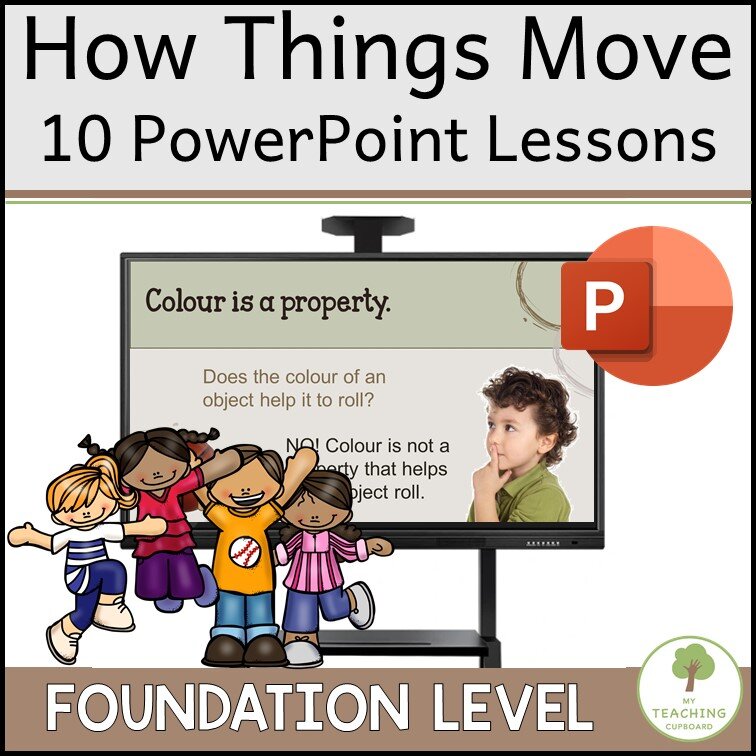
The lessons are part of my Movement BUNDLE. Purchase the bundle HERE to save.
10 MOVEMENT PowerPoint lessons aligned to ACARA Version 8—Foundation Level. All content descriptors from the Foundation Physical Sciences strand are covered. This Science unit on How We Move will teach your students to use their senses to observe and explore the properties and movement of objects.
I am currently working on the Version 9 Science units, so I’ve decided to heavily reduce all my Version 8 Science resources. Grab yourself a bargain and check them all out here: ACARA Version 8 Science Resources ON SALE
The entire term lessons are done for you!
The professional PowerPoint lessons include quality real life photos and interactive aspects perfect for large screen display and interactive panels. There are animated pictures, links to video clips, interactive slides , experiments and movement music throughout the presentations.
Keep your students highly engaged as they learn all about HOW THINGS MOVE
THIS SET CONTAINS: 10 PowerPoint Lessons
Lesson 1: Exploring How We Move. Students will observe and describe how our bodies move. (29 slides)
Lesson 2: Exploring How Objects Move. Students will describe the movement of familiar objects and identify factors affecting their movement. (41 slides)
Lesson 3: Exploring How Objects Roll and Bounce. Students will describe the properties of objects that roll and bounce. (33 slides)
Lesson 4: Exploring How Objects Slide and Spin. Students will describe the properties of objects that slide and spin. (30 slides)
Lesson 5: Exploring How Objects Move Down A Ramp. Students will describe, record and discuss how different objects move down a ramp. (39 slides) Includes a printable recording sheet.
Lesson 6: Exploring Movement of Balls. Students will identify, record, describe and compare the properties and movement of balls. (39 slides) Includes a printable recording sheet.
Lesson 7: Exploring Force and Motion of Objects. Students will describe and compare the forces of pulling and pushing. (34 slides)
Lesson 8: Exploring Objects with Multiple Moving Parts. Students will describe and compare objects with more than one moving part. (34 slides)
Lesson 9: Exploring the Movement of Animals and Plants. Students will describe how animals and plants move. (37 slides)
Lesson 10: Reflecting on How the Properties of an Object Influence Movement. Students will apply their understandings of how things move and the properties that influence movement. (39 slides)
These educational lessons are part of the HOW THINGS MOVE BUNDLE—Click HERE to get ALL of the lessons PLUS the matching STUDENT JOURNAL.
The 10 page movement journal to go with these PowerPoint lessons is also available separately. Each page in the journal corresponds with each of the 10 PowerPoint lessons. You can purchase it HERE.
There are 10 PowerPoint lessons for each Science strand. They are aligned to the Australian Curriculum—Foundation Level with all the content descriptors covered. These educational PowerPoint presentations include quality real life photos and interactive aspects perfect for large screen display and interactive panels.
The early childhood science curriculum requires children to explore, question, and develop into scientific learners. This will happen naturally in an integrated and connected play-based learning environment. In these developmentally appropriate environments, science becomes an integral part of the investigation areas and learning invitations.
As a play-based teacher, you just need to recognise the science already present in your daily classroom life. See science as an approach to learning not just as an activity. Integrating science into all aspects of your play-based classroom will develop knowledge, skills, and understandings in science as well as so much more!!