
Weekly Planning For Play-based Learning in the Classroom
Discover practical weekly planning for play-based learning. Get free templates, tips, and strategies to balance curriculum and play in your classroom.
You might think I’m crazy, but I like to do my weekly planning on a Friday night. The past school week is still fresh in my mind, so if I missed a lesson, need to revise, or want to move on to the next one, it’s easy to plan while everything is still buzzing around in my head.
Planning on a Friday night also frees up my weekend. I can relax without the upcoming week looming in the back of my mind. I’ll often spend a little time on Saturday or Sunday making resources and packing provocation materials so that by Monday morning, my whole week is prepped and ready to go.
Now, I know not every teacher enjoys spending Friday night planning. Most kindergarten teachers I talk to feel overwhelmed by the sheer load of all the expectations in early childhood education and the responsibility of supporting child development while also keeping up with curriculum demands. Between explicit teaching requirements, assessments, parent communication, and managing a play-based curriculum, it can feel impossible to fit it all in.
So if you’ve ever wondered how to effectively plan in the early years…
in a way that supports the education of young children,
while also leaving space for genuine play,
and without devoting your whole life to planning (or your Friday nights!)…
Or maybe you’ve asked yourself: How on Earth do you fit play into an already packed timetable AND still meet curriculum benchmarks? If that’s you, this blog post is for you.
What You’ll Learn in This Post
How to plan your week without starting from scratch.
How to stay flexible while still covering the curriculum.
How to organise your week for play-based learning.
How to reduce planning overwhelm.
How to make your planning sustainable long term.
Why Weekly Planning Is What Makes Play-Based Learning Work
Weekly planning is where everything comes together. It’s what turns your Term Overview, Statement of Intent and daily schedule into something you can actually manage each week.
Without a clear weekly plan, it’s easy to feel like you’re constantly reacting, scrambling for ideas or trying to keep up.
When your weekly planning is intentional, you’re not starting from scratch all the time - you’re simply refining and responding to your students while staying aligned with your overall goals.
This is what makes play-based learning feel organised, purposeful and sustainable.
In this post, I’ll share exactly how I do my weekly planning for play-based learning, including a free download of the play-based learning planning template I use. You’ll see how my planning process weaves together explicit teaching and investigations, helps me balance curriculum outcomes, and gives my children the freedom to explore, create, and learn through play.
So, if you’ve ever felt stuck between ticking off the curriculum and providing meaningful play experiences, keep reading. I’m going to walk you through my process step by step!
👉 If you’re brand new to this approach, you might want to start with my blog post: How to Start with Play-Based Learning, where I share the key strategies that make implementing play simple and manageable.
If you’re feeling unsure how to bring your planning together each week, you’re not alone! This is where many teachers I talk to feel stuck.
Before diving in to this blog post, it helps to understand the full planning system behind this approach. So make sure to start here: Planning for Play: Balancing Curriculum & Child-Led Learning
This comprehensive blog post will show you how your term, fortnight and weekly planning all connect together.
The Teacher’s First Step in Play-Based Planning
In any play-based classroom, the teacher’s first step is not with the planning documents, but with watching and listening.
The most powerful tool we have is the ability to observe children closely.
Effective play-based planning relies on teachers as both observers and documenters. By noticing what your children are drawn to and how they engage, you can gather the information you need to create lessons and provocations that truly connect to each child’s interests and developmental needs.
Noticing Children’s Interests and Needs
Observation isn’t about a done-for-you checklist and ticking little boxes. It’s about slowing down enough to see the spark in a child’s eye when they discover something new, or the way they return again and again to the same block area, testing their ideas with growing persistence. This is where reflexive practice comes in. You need to step back, reflect on what you see, and ask yourself: What does this reveal about the child’s needs, strengths, or interests?
Recording the Details
I like to jot quick notes during the day. Nothing fancy, just enough to remember who I saw playing, what they were doing, where they were working, and how long they stayed engaged.
For example, I might notice three children creating a pretend kitchen out of boxes. One child directs the roles, another focuses on arranging utensils, and the third drifts in and out, watching before joining in. These small snapshots give me clues about social interactions, problem-solving skills, and even emerging leadership.

Using Observations to Plan Ahead
The best part about observing is that it makes planning soooo much easier! Instead of starting from a blank page, I already have insights that shape my decisions.
If I saw a group experimenting with ramps, I might plan a future invitation that extends their exploration into How Things Move.
If children show fascination with menus and order-taking in a dramatic play area, I’ll connect this interest to literacy goals by introducing writing templates.
This is where teacher guidance is subtle but intentional: creating provocations that extend children’s natural curiosity while still addressing curriculum outcomes.
“When teachers connect their planning to what children are already curious about, play becomes purposeful, meaningful, and engaging.” – Victorian Department of Education
Your Next Step
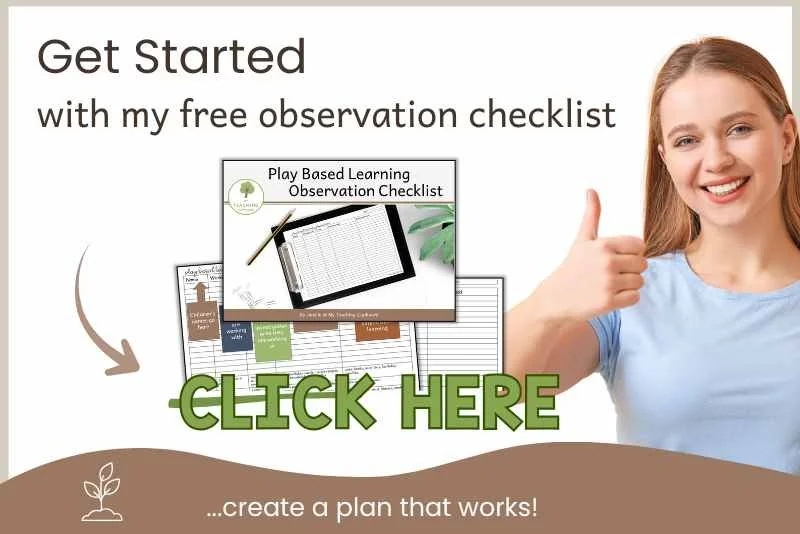
If you’d like to make this process easier in your own classroom, I’ve created a Free Play-Based Learning Observation Checklist. It’s a simple tool to help you capture those valuable notes without taking time away from being present with your students.
👉 Download your Free Play-Based Learning Observation Checklist HERE

Balancing Curriculum and Play
One of the biggest worries I hear from teachers starting out with play-based learning is this: “But what about the curriculum? How do I make sure I cover everything I’m supposed to?”
Yeah - It’s a valid concern. The expectations on us in early childhood education can feel relentless, and the fear of falling behind on curriculum outcomes is real.
The truth is, you don’t have to choose between academics and play!
With a balanced approach that combines direct instruction (whole-class and small-group lessons) with time for play-based learning or investigations, you can meet curriculum requirements and still honour the importance of play.
This balance is what I’ve found to be one of the best practices in my classroom.
For example, in my timetable, I fit 45 minutes of Investigation Time into every school day. That’s almost four hours across the week dedicated to child-led play!
And here’s the thing - it’s not “lost” time. Those minutes are rich with opportunities to practise academic skills in meaningful contexts. While children are deeply engaged in building, role play, or experimenting, I can see them working on literacy, numeracy, science, and even social skills - all without a worksheet in sight!
Research supports this too. The Victorian Department of Education highlights that props and resources connected to curriculum content lead to more complex and engaging play.
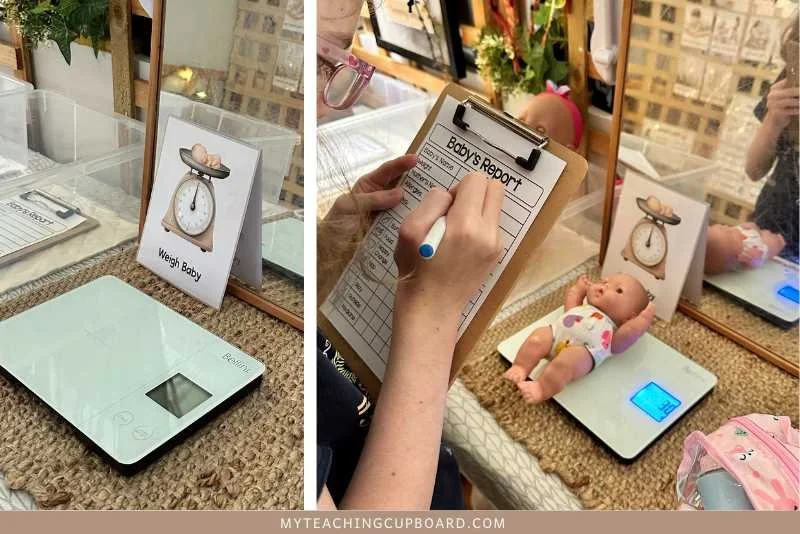
For instance, adding scales and tape measures to the block area strengthens mathematical concepts like measurement, while including storybooks and costumes in dramatic play areas extends literacy skills.
The right provocation can transform play into a bridge between curiosity and curriculum outcomes.
What I’ve learned is that the curriculum doesn’t sit outside play. It lives inside it. That’s why my lesson plans always leave space for investigations.
Some days I roll over lessons from the day before, and that’s okay. Just like every child is different, every class has its own rhythm. It’s better to go deeper and make real connections than to rush through content just to tick boxes.
If you’re struggling to see how play and academics can sit side by side, I’ve written a whole blog post on How to Write a Play-Based Learning Term Overview. It shows you how to map out your curriculum goals across a term so that both your explicit teaching and your investigations are working towards the same outcomes.
Because when your children are engaged and learning through play, you’re not only covering content but you’re setting them up for academic success in a way that’s developmentally appropriate and deeply meaningful.
My Planning Process Step by Step
When it comes to planning for play-based learning, I like to keep things simple and consistent. Over the years, I’ve developed a rhythm that makes planning manageable and ensures I’m covering both curriculum outcomes and the interests of my students.
Here’s the three-step framework I use every term.
1. Start with a Term Overview
Before I even think about weekly planning, I zoom out to see the big picture. Writing a Term Overview helps me map out the key learning areas and specific skills I need to cover across the term. This is where curriculum outcomes meet the reality of my classroom.
I find that starting with the term view stops me from feeling like I’m “chasing” content week to week. Instead, I can see exactly where the curriculum goals fit into my educational approach. Whether it’s literacy, numeracy, or inquiry, I know everything is covered across the weeks in a balanced way.
👉 If you’re unsure how to create one, I’ve written a detailed blog post on How to Write a Play-Based Learning Term Overview, which walks you through the process step by step. You’ll also find a template in my Free Resource Library to make it easier.
2. Write a Statement of Intent (SOI)
The next step is my Statement of Intent (SOI). This is a two-week roadmap that balances explicit teaching with investigation areas. It outlines the curriculum focus, my explicit lesson plans, and the provocations I’ll set up to connect with children’s play.
The SOI keeps me accountable but also flexible.
If I notice children particularly into imaginative play in the block area or showing a fascination with our dramatic play props, I can adjust the provocations in the next SOI to extend those interests. It’s about designing early learning experiences that are both intentional and responsive.
👉 I’ve shared more details about this process in How to Write a Statement of Intent. You’ll also find an SOI template ready for you in my Free Resource Library.
3. Create Your Weekly Plan
This is where it all comes together. Each Friday night, I create my weekly plan by mapping out our daily timetable.
It includes explicit teaching blocks, investigation time, small group lessons and whole-class routines. I usually keep the same subjects at the same time each week because, as every early childhood teacher knows - the children thrive on predictable routines! Besides that, this predictable timetable makes planning much quicker for me. I only need to tweak a few details, and the next week is ready to go.
So, I always start with last week’s plan. Some lessons need revising, some get rolled over, and others are left as-is for the following week. This way, nothing gets lost, and I don’t have to reinvent the wheel.
I also save all of my timetables from year to year. They’re great for jogging my memory on past successful lessons and engaging provocations.
The truth is, I don’t often use them exactly as they were because every cohort is different, with different needs. So the details change each year. But having that bank of plans behind me gives me confidence and a strong starting point.
Once I have my timetable sorted the way I like it, my weekly Friday night planning doesn’t take very long at all. I simply copy and paste from my OneNote and our SOI, make any adjustments, and I’m ready to go.
👉 If you’d like a shortcut, you can download my free templates for both a Term Overview and a Statement of Intent from my Free Resource Library.
My Weekly Planning Routine (A Practical Example)
By now you’ve probably gathered that my Friday nights have a bit of a rhythm. Once the house is quiet, I sit down with my laptop and map out the week ahead. It’s become a habit I actually enjoy!
Closing the chapter on one week, while setting the stage for the next.
Over the weekend, I’ll prep any resources I need and gather provocation materials, so by Monday morning I’m not scrambling. Everything is ready, and I can focus on the children instead of the paperwork.
I like to plan digitally because it’s quick and flexible. On Monday morning, I print my weekly plan and keep it on my desk where I can see it at a glance. During the day, I use it as a quick reference to check what’s coming up and make quick notes on it. If I need to, I can pull up the digital version at home. It’s a system that saves me a lot of headspace.
Another part of my daily routine is keeping subjects in the same time slots each week. For example, investigations might always be in the morning, with literacy and maths straight after first break. This kind of structure means less decision-making for me and more predictable security for the children. They thrive when the flow of the day feels predictable, and it makes transitions smoother as well.
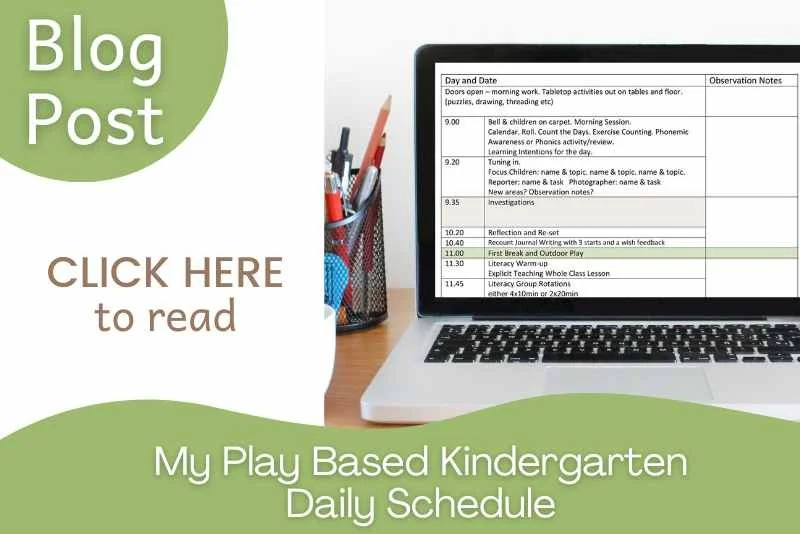
If you’d like to see an example of my daily routine and how I fit everything in, check out my post My Play-Based Kindergarten Daily Schedule. It’s where I show how I balance explicit teaching with play every single day.
Of course, I don’t always fit everything in. A busy day, a special event, or even a child’s spontaneous idea can shift the timetable. When that happens, I don’t throw out the plan. I simply roll those lessons into the following week. They stay in the timetable, ready to be picked up again, and nothing gets lost.
I have found that this flexibility is key in an effective play-based classroom. It means I can respond to children’s interests while still keeping track of curriculum goals.
And in between those explicit blocks of teaching, there’s always space for play activities, hands-on learning and group activities. That’s where the magic happens - where children connect ideas, collaborate, and bring their curiosity into the classroom.
My planning routine is what allows that space to exist. It gives me the structure I need while leaving room for the flexibility that play requires.
Using Play to Connect to Curriculum Goals
One of the most powerful shifts in my teaching came when I realised that provocations and play environments weren’t “extra” to the curriculum and that they were the curriculum.
The right resources and setups naturally lead children into literacy, numeracy, science, and even social studies. It’s about creating spaces that invite curiosity, challenge, and collaboration.
Construction and the Block Area
Take the block area, for example. At first glance, it looks like children are “just building.” But if you step back as an observer, you’ll see them experimenting with balance, measurement, and spatial awareness.
Construction play supports mathematical and scientific concepts, collaboration, symbolic thinking, and creative expression. You see, when children use ramps to test speed or balance towers against gravity, they’re actually doing hands-on science and maths.

Dramatic Play Areas and Pretend Play
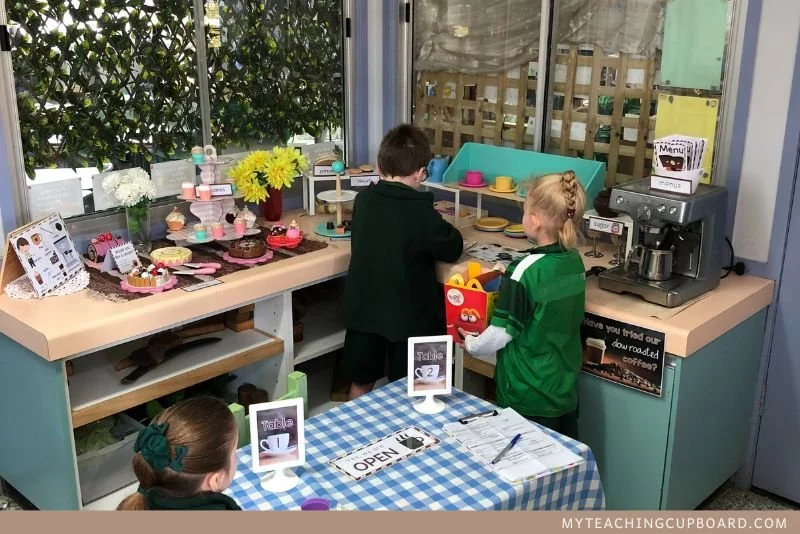
The same is true in dramatic play areas. A simple setup with pretend kitchens can become a space for pretend play that supports language development, literacy skills, and even metacognition. Children naturally take on different roles (parent, shopkeeper, chef), which strengthens communication, social negotiation, and imagination.
Adding menus, recipes, or order pads extends this play into early writing practice. When different materials are connected to curriculum content, play becomes more complex and engaging.
Water Table and Sensory Play
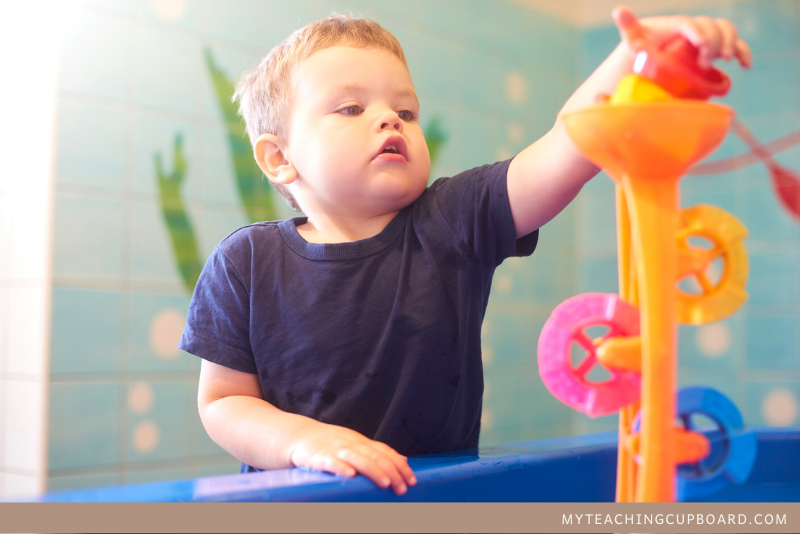
The water table is another favourite in our classroom. It’s the perfect invitation for different types of play. Pouring, measuring, floating, sinking! And these lead to rich conversations about science.
When we add loose parts or natural materials like pebbles, pinecones, or shells, the children begin to test hypotheses, compare textures, and explore cause and effect.
You’ll notice that these types of investigations often evolve into group projects, sparking different forms of collaboration and problem-solving as well.
Art Studios and Creative Expression
Art materials are just as important as blocks and dramatic play. Open-ended art spaces, like the ateliers or studios in Reggio-inspired classrooms, foster creativity, agency, and expression.
By offering children a range of different ways to represent their ideas (through painting, sculpture, collage, or recycled different materials) you give them space to build different skills. For some children, this is where they truly shine, expressing ideas they may not yet have words for.

Making Curriculum Connections
What ties all of these examples together is the way play links to the bigger picture of children’s learning. Through the block area, dramatic play, water table, and art studios, children are building mathematical thinking, literacy foundations, scientific inquiry, and social understanding.
Please don’t see these play activities as just busywork. They are purposeful, authentic, and connected to curriculum goals.
👉 Ready to transform your classroom for play-based learning?
Take a look at my blog post The 10 Essential Areas of a Play-Based Classroom. It’s a detailed guide to the must-have areas you’ll want to set up in your classroom to create engaging and educational spaces for your children to learn through play.

Reflective Observations that Drive Future Planning
Good observations are not just about collecting data. Good observations are also about reflection. Taking time to think about what you’ve seen in children’s play is one of the most effective methods for making your planning meaningful.
In a play-based classroom, reflection plays an important role: it bridges the gap between what children are doing today and what they might be ready for tomorrow.
What to Notice During Play
When I make observations, I look for three main things:
Interests - What sparks children’s natural curiosity? Do they keep coming back to the block area, or are they absorbed in pretend play with the dramatic play areas?
Collaboration - How are they working together? Who are they working with? Are they negotiating different roles or using open-ended questions with one another to extend the play?
Persistence - How long do they stay engaged? Do they try different ways to solve a problem or experiment with different materials to achieve their goal?
My simple notes provide a goldmine of additional information about each child’s strengths, challenges, and preferred learning styles.
Using Reflection to Plan Ahead
The best ways I’ve found to use this information is by letting it guide my next week’s timetable and provocations.
For example,
If I notice a group of children repeatedly measuring towers in the block area, I’ll extend that interest with different types of rulers and tape measures in the following week’s investigations. I’ll also plan an explicit teaching lesson on how to use a ruler to measure objects.
If I see children role-playing a shop, I might add price tags, sticky-notes and play money to connect their interests to our literacy and numeracy outcomes.
Reflection is about staying responsive. Rather than sticking rigidly to a plan. I adjust based on what the children show me they’re ready for. It keeps the learning authentic, and it makes the curriculum come alive in ways worksheets never could.
👉 To make this whole process easier, you can grab my Free Play-Based Learning Observation Checklist HERE. It is the one I use in my classroom - designed to help me record observations and use them to create a plan that connects children’s interests with curriculum outcomes.
A Resource to Support Teachers
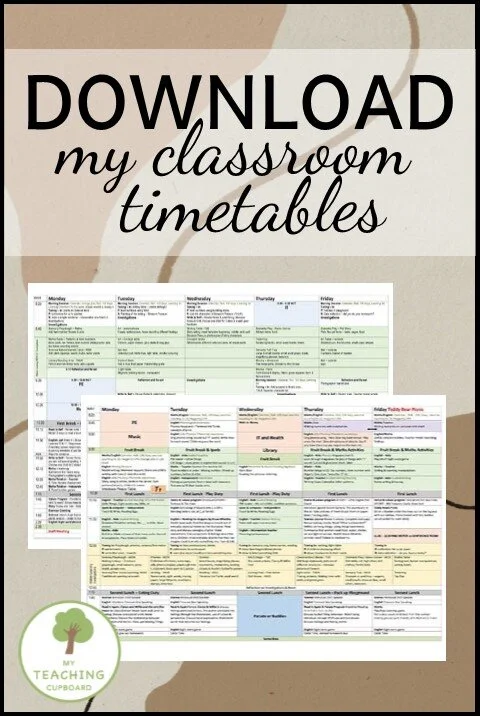
I know how overwhelming planning can feel, which is why I love sharing resources that make the process easier. One of the tools teachers tell me they find most helpful is my editable weekly timetable templates.
You can download my fully editable timetables - one for Prep/Foundation and another one for Year One from my Free Resource Library.
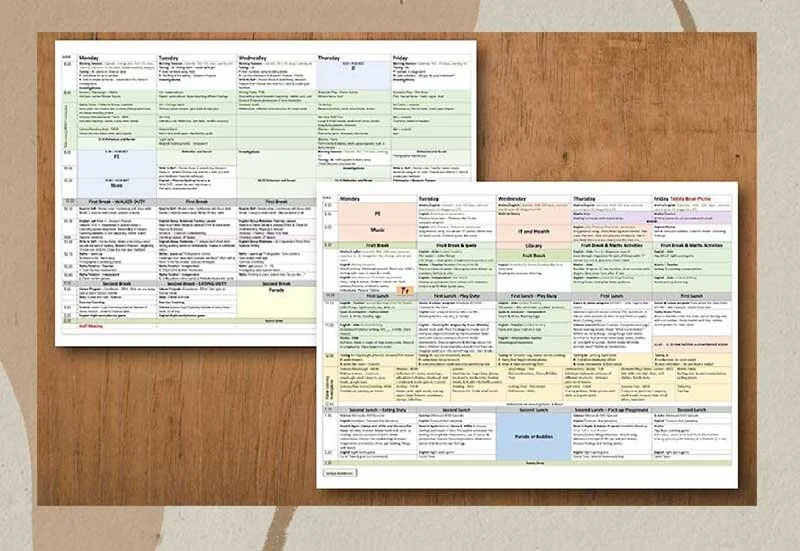
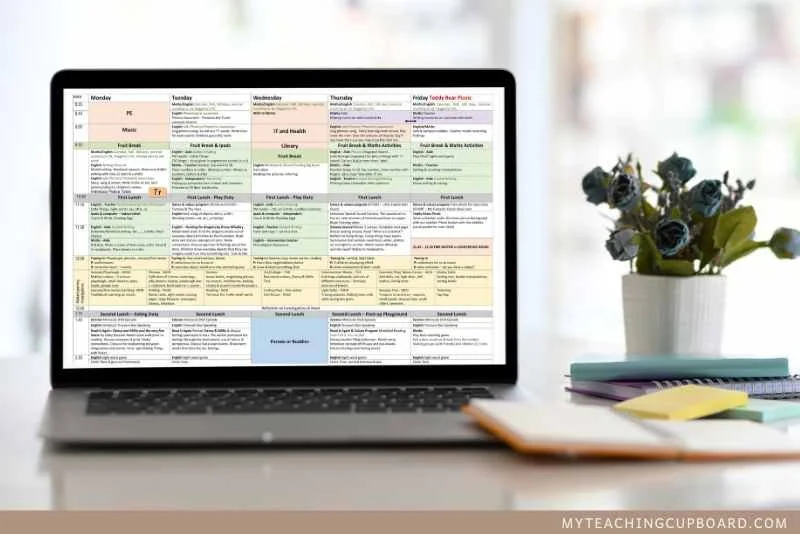
These downloads are Microsoft Word documents and are my real timetables from Week 4, Term 1. Feel free to edit them and use them for your own planning. Whether you incorporate play-based activities into your day or not, digital timetables are definitely the way to go.
What I love most about digital timetables is how much they save time. Instead of starting from scratch each week, I can copy, paste, and adjust based on my class’s needs. They also provide consistency. By keeping the structure the same (investigations in the morning, then literacy and maths after that, and science lessons every afternoon) the children know what to expect. This predictability reduces transition stress in the early childhood classroom and helps me stay organised.
Most importantly, digital timetables reduce planning stress. I don’t have to reinvent the wheel every single Friday night. I already have the framework laid out, so I can focus on making meaningful adjustments that reflect my children’s interests and the curriculum goals.
These templates are adaptable too. Every preschool classroom, early childhood setting, or group of learners is different. What works for one cohort may not fit the next. That’s why I encourage you to use these timetables as a starting point. Tweak them, edit them, and make them your own. They’re designed to support early childhood educators in creating play-based environments that reflect their teaching style and the unique needs of their students.
The goal isn’t to hand you a one-size-fits-all plan. It’s to give you a framework that supports inclusive learning communities and frees you to spend more time engaging with children, instead of feeling weighed down by admin tasks.
FAQs About Planning for Play-Based Learning
Teachers often tell me they feel overwhelmed by the thought of planning for play. Here are some of the most common questions I get asked, along with my simple, practical answers.
How do I plan for play-based learning?
Think of planning as a cycle: observe → plan → act → reflect. Start by watching your children during free play or child-led play. What are they drawn to? What sparks their curiosity? Then, use those insights to design provocations or play activities that connect with curriculum goals. Put your plan into action, and afterwards, reflect on what worked and what could be adjusted. Remember - it’s not about perfection. It’s about staying responsive to your children’s needs.
What is the planning process in early childhood education?
I like to break the process into three clear steps:
Write a Term Overview - see the big picture of what needs to be covered.
Create a Statement of Intent (SOI) - map out explicit lessons and investigations for two weeks.
Develop a Weekly Plan - detail your playful learning opportunities alongside direct teaching.
This process works for all kinds of early childhood education programs, whether you’re in a preschool classroom, a foundation year setting or teaching in a grade one or two classroom. It keeps your planning manageable and ensures you’re covering curriculum outcomes while still offering meaningful learning experiences.
How do I balance play with academic requirements?
The key is integration. Instead of seeing play and academics as separate, bring them together. For example,
When children engage in parallel play at the block area, add provocations to encourage collaboration and include some rulers and measuring tapes to connect with maths concepts.
When children role-play shopping in the dramatic play area, weave in writing lists or creating signs to extend literacy learning.
Even moments of onlooker play can be rich. Give these children photographer and reporter tasks that promote observations of their peers but also tie to their curriculum goals. These roles can give quieter children a chance to absorb ideas before joining in.
In my classroom, I dedicate 45 minutes every day to Investigation Time. That’s where provocations are linked directly to the curriculum, and children’s play becomes purposeful.
If you’d like to see how I structure this in practice, you can read my blog post: My Play-Based Kindergarten Daily Schedule. It’s full of tips, practical examples, and includes a free editable planning template to help you balance explicit teaching and play.
Isn’t unstructured play enough?
Unstructured play is incredibly valuable yes! It gives children the freedom to explore without adult direction. But in the classroom, planning helps us ensure that play is also connected to curriculum outcomes. It’s all about balance.
Play can be spontaneous and child-led, but with thoughtful planning, it becomes a purposeful play experience that builds both skills and confidence.
We have about an hour of unstructured play during first and second breaks. The children are free to play outside in the playground or at open ended play provocations we have set up on the verandah and throughout the playground.
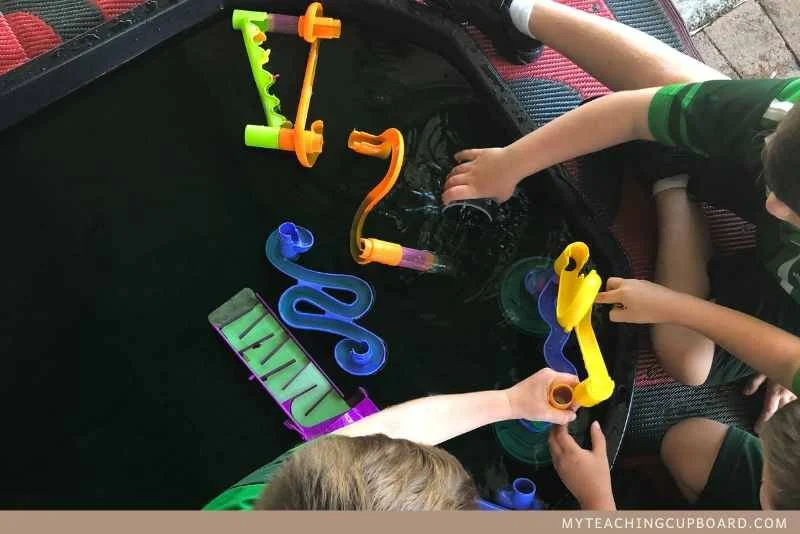
When children have access to a variety of play experiences (from dramatic play to block building and sensory explorations to playground equipment and big loose parts) they’re developing a huge range of playful learning skills that support long-term success.
Bringing It All Together
Planning for play-based learning doesn’t have to be overwhelming. With a clear structure, a balance between explicit teaching and play, and space for reflection, you can create a classroom where both the curriculum and your children’s natural curiosity thrive.
Every cohort is different. What excites one group of learners may not even spark interest in the next. That’s the beauty (and the challenge) of children’s play. The good news is, with planning templates and a flexible framework in place, you’ll always have a head start. You don’t have to reinvent the wheel each week; you simply adapt what you already have to meet the unique needs of your learners.
When we plan in this way, we’re doing more than just ticking off mandated curriculum boxes!
We’re supporting our young children’s development in every domain. Through play,
children build cognitive development as they problem-solve, experiment, and apply new ideas
strengthen fine motor skills and spatial awareness in block play, puzzles, and construction.
grow social skills and learn conflict resolution strategies through role play and collaboration.
develop communication skills and confidence when they share their thinking
practise critical thinking and problem-solving skills as they test and adapt their ideas.
Just as importantly, play nurtures emotional development and resilience. It encourages active engagement, independence, and joy in learning. All of these are the foundations of lifelong learning! Play ought to be the top priority in early childhood education.
Planning simply gives us the structure to make sure these benefits happen every day.
As teachers, we hold a powerful tool in our hands: the ability to design play-based learning environments that allow for rich, purposeful play. The benefits of play-based learning go far beyond the classroom walls.
They shape confident, curious, capable learners who are ready for the future.
👉 If you’d like support to get started, I’d love for you to join my email community. When you sign up, you’ll get access to my Free Play-Based Learning Planning Template plus my Free Guide to Play-Based Learning

Two resources designed to save you time, reduce stress, and help you create a classroom where children’s learning truly flourishes.