
The Role of Agency in Early Childhood Education
Foster agency in early childhood education and discover how autonomy supports motivation and deeper engagement in the classroom.
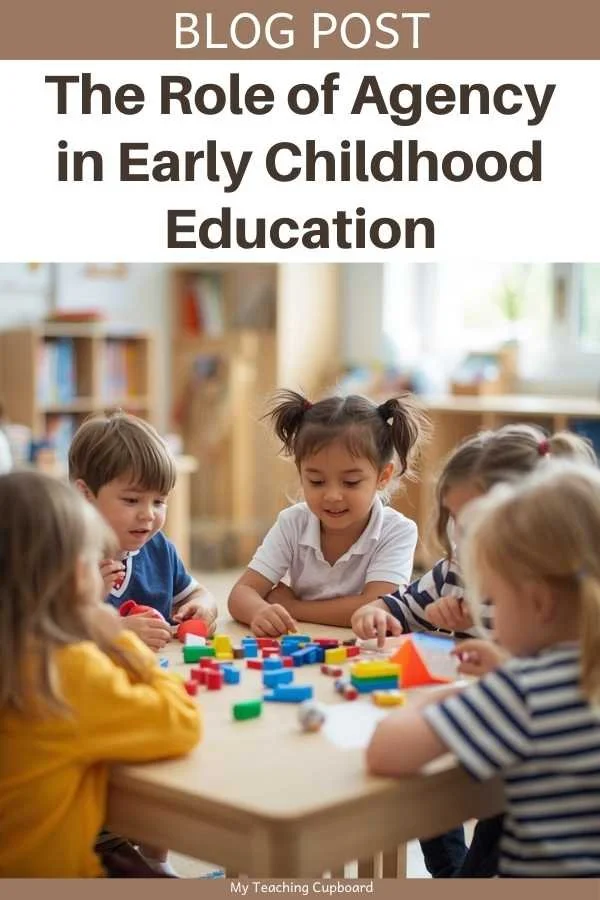
Can you imagine this scene? It’s the start of the day in your early childhood classroom. Instead of waiting for instructions, your young learners gather around the morning planning board, deciding which investigation areas to work in that day, negotiating roles, and sharing ideas with complete confidence. One child drafts a plan for a block structure, another revisits yesterday’s small world setup, and a third proudly explains how they’ll show their learning today.
This is what agency in early childhood looks like.
If you would like your children to shape their own learning, using their voices, and acting with independence inside a supportive environment that honours the rights of the child and the unique learning context of the early years, then read on!! This blog post is for you.
Many early childhood educators wonder…
How do I give children choice without losing structure?
What if they make the wrong decision?
Isn’t too much freedom confusing for young children?
Well, the truth is, agency isn’t about letting go of your teaching.
It’s more about shifting from control to collaboration. It’s about stepping in with responsive interactions, designing learning environments that promote a strong sense of identity, and trusting children’s capabilities.
When children have a genuine sense of agency, they show deeper understanding, stronger social interaction skills, and more meaningful engagement with their own learning.
Agency helps children develop independence, emotional development, and a sense of belonging. It’s not just in early childhood settings either! Child agency is for lifelong learners moving through primary school and beyond.
As early childhood professionals, our crucial role is to support children’s experiences, honour their individual rights, and guide them as they develop the confidence to make decisions about their own lives and learning.
This blog post explores what children’s agency really means in early childhood education - how we nurture it, why it matters, and how it strengthens child development across the whole child.
Interested in learning more? Before exploring the role of agency in early childhood education, you might find it helpful to explore how agency fits into the bigger picture of play-based learning. If you’re still working on balancing children’s voices with curriculum expectations, these guides will support you step-by-step:
Planning for Play in the Early Years – Discover how to build daily routines and learning environments that naturally offer children such opportunities to make choices and take ownership.
Child-Led Learning Provocations That Follow Children’s Interests – See how following children’s experiences can strengthen engagement and confidence.
Each of these posts will deepen your understanding and give you practical ways to strengthen children’s agency in your own learning context.
What Is Agency in Early Childhood?
Agency in early childhood is a child’s ability to make choices, influence decisions, and take an active role in their own learning.
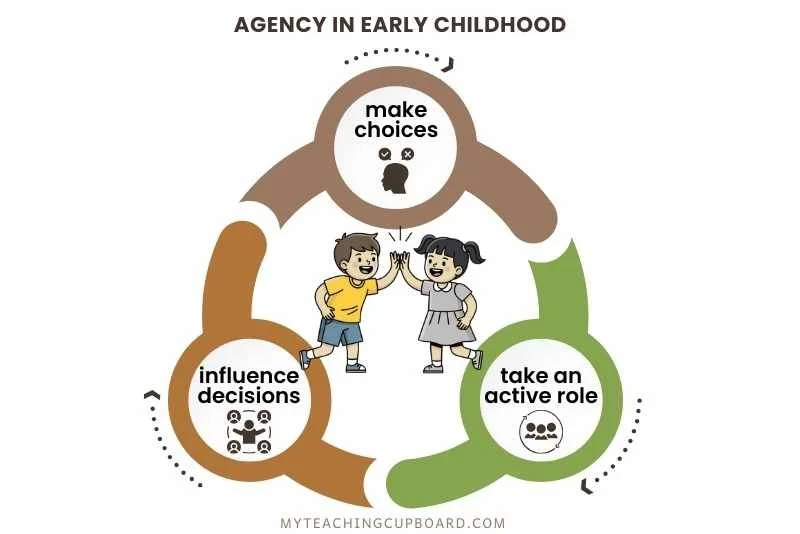
In early childhood education, agency isn’t something you “add on”. It’s something you intentionally design for through your learning environments, routines, and interactions. When children have opportunities to make decisions that matter, they begin to see themselves as capable, confident individuals with a strong sense of identity.
In high-quality early childhood settings, agency shows up in the small everyday moments: choosing materials, planning where to work, negotiating roles with peers, or deciding how to represent an idea. These moments shape how young children see themselves as learners and support healthy child development across multiple domains (cognitive, social, emotional, and physical).
Why Agency Matters
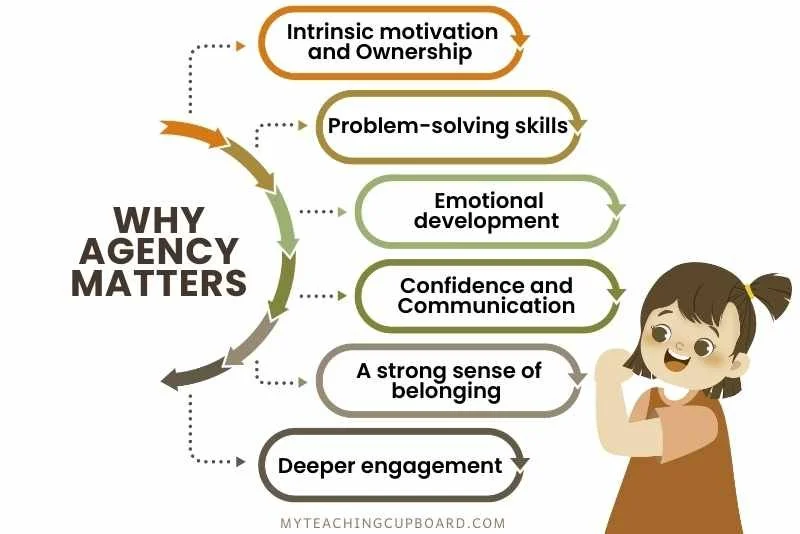
When children have a genuine sense of agency, they develop:
Intrinsic motivation and ownership over their own learning
Problem-solving skills from navigating choices and consequences
Self-regulation and emotional development as they make decisions
Confidence and communication skills in expressing their ideas
A strong sense of belonging as their voices are valued
Deeper engagement because learning connects to their interests and experiences
The Age-Appropriate Pedagogies framework highlights that active, agentic participation supports richer language development, stronger social interactions, and deeper cognitive engagement than passive, adult-directed experiences. When children participate actively, rather than passively following adult directions, they achieve stronger outcomes in language skills, social interactions, cognitive abilities, and overall well-being.
A Classroom Example of Agency
During the first week of term, you could invite your children to help co-create your classroom expectations. Instead of you deciding the rules, the group brainstorms what helps everyone feel safe, calm, and ready to learn. They discuss ideas, vote, draw icons, and choose where to display the chart.
Suddenly, the “rules” aren’t yours - they’re theirs!!
This is the exact strategy I do year after year and it works a treat. I see children referring back to the chart, reminding each other respectfully, and taking responsibility for the classroom environment. This simple strategy strengthens social-emotional development, communication skills, and a growing awareness of individual rights and responsibilities.
The Teacher’s Role in Supporting Agency
Just because learning is child-led doesn’t mean the teacher fades into the background. In fact, agency only flourishes when teachers are intentional.
Your role includes observing closely, curating meaningful learning environments, documenting children’s thinking, and stepping in with responsive interactions that honour the children’s decisions.
In a play-based early childhood classroom, the teacher’s role is to notice, name, and nudge children’s learning in ways that deepen their confidence, motivation, and sense of agency.
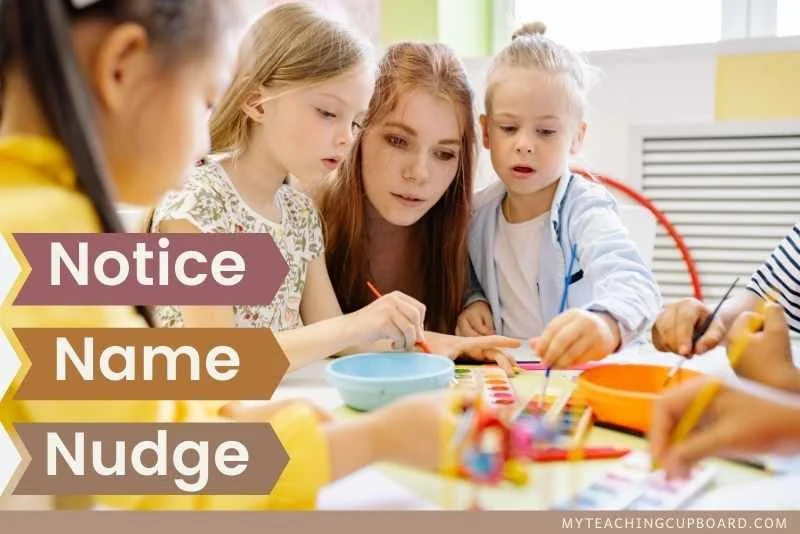
When teachers work this way, young learners begin to show stronger social interaction skills, emotional development, and a deeper understanding of their own learning processes.
Teacher as Observer
Agency starts with paying attention.
When you slow down and observe, you’ll notice patterns quickly emerging. The child who always returns to construction, the group who gravitates towards the toy animals, the quiet student sorting natural materials with incredible focus.
Observation helps you understand each child’s sense of agency, their developing identities, and the interests that shape their learning experiences. It’s also the best way to spot the individual rights, needs, and strengths present in every classroom.
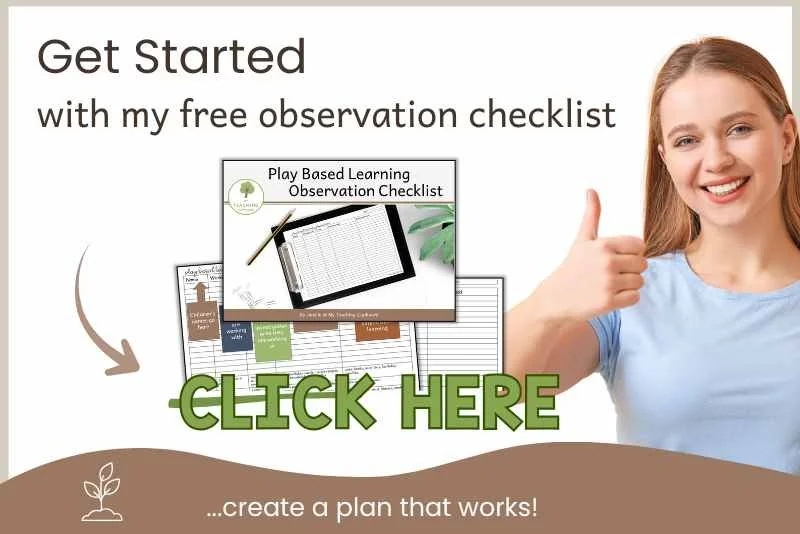
A simple tool like my Observation Checklist makes this process easier. It keeps your notes purposeful, helps you track developmental progress across the early years, and ensures your intentional teaching aligns with what the child is ready for next.
Download your FREE Child-Led Learning Observation Checklist HERE.
Teacher as Documenter
Documentation is how we make children’s agency visible.
When you capture a photo, a quote, or a drawing, you’re not only collecting evidence of learning but also showing the child that their thinking matters. Documentation strengthens a child’s sense of belonging and fosters reflective learning, especially when you revisit these pieces together.
It also supports curriculum alignment.
Anecdotes, floor books, and display panels all allow you to:
track cognitive abilities and emerging skills,
highlight language development and communication, and
help children develop strong relationships with their own learning stories.
Teacher Tip: Use real child language. It validates the child’s perspective and builds a responsive learning environment that values their contributions.
Teacher as Curator
The learning environment speaks. Often louder than we realise.
Have you ever heard teachers talk about the environment being the third teacher? This idea comes straight from the world-renowned Reggio Emilia Approach and completely changed the way I viewed my classroom. When we design learning environments with purpose (lighting, layout, materials, pathways, accessibility) the space itself begins to guide children’s decisions, curiosity, and agency.
If you’d like practical ideas for making your classroom environment a true teaching partner, you’ll love my blog post on the Environment as the Third Teacher.
It walks you through simple ways to set up a supportive, child-centred space that nurtures independence and deep engagement.

As early childhood professionals, our role is to curate spaces that respect children’s voices and encourage independence. The physical environment becomes a partner in the education of young children, shaping their choices and influencing how they interact with materials, ideas, and each other.
When children walk into the room and instantly know where things belong, how to access materials, and how to contribute, they begin to show a strong sense of identity and ownership over their own learning.
Practical ways to curate for agency:
Use planning boards so children can select and modify their Investigation Time choices
Offer invitation trays that reflect current curiosities or developmental milestones
Provide material choices: “Would you like to draw your idea, build it, or act it out?”
Ensure your setup supports children at different ages, abilities, and confidence levels
If you would like more information on designing provocations that respond to children’s agency and interests, this blog post can help you: 3 Steps to Setting Up a Learning Provocation.
Just follow the 3 easy steps in this blog post to set up engaging and educational learning provocations. You’ll also learn how I create intentional, engaging spaces that focus on the curriculum and my children’s developmental needs.

Teacher as Facilitator
Facilitation is where agency becomes powerful.
A skilled facilitator knows when to pause and when to prompt, how to extend thinking without taking over, and how to support children’s learning while respecting their autonomy. This balance helps children develop problem-solving skills, persistence, and emotional resilience.
You might:
introduce a new material to deepen investigation
pose a wondering question
connect children’s ideas to the curriculum
support social-emotional learning through guided dialogue.
All of these gentle nudges help children feel safe, capable, and ready to take the next step in their own learning. Remember, the goal isn’t to take over. It is to open a door. Sometimes that door leads to problem-solving, sometimes to collaboration, and sometimes to a completely new idea you never planned for. And they are all OK!
Teacher language stems that support agency:
What do you think would happen if…?
Can you show me another way?
How could we solve this problem together?
What’s your plan?
Who else might want to try your idea?
These prompts help young learners feel capable, support deeper cognitive engagement, and encourage flexible thinking - especially in busy early childhood settings where responsive interactions really matter.
Encouraging Choice and Voice in the Classroom
Promoting choice and voice in early childhood education allows for meaningful opportunities for young learners to influence their own learning. When children feel heard, valued, and trusted, they engage more deeply, show stronger independence, and develop the confidence to take ownership of their own learning.
Agency grows when the learning environment, routines, and interactions are intentionally designed to support children’s voices and ideas.
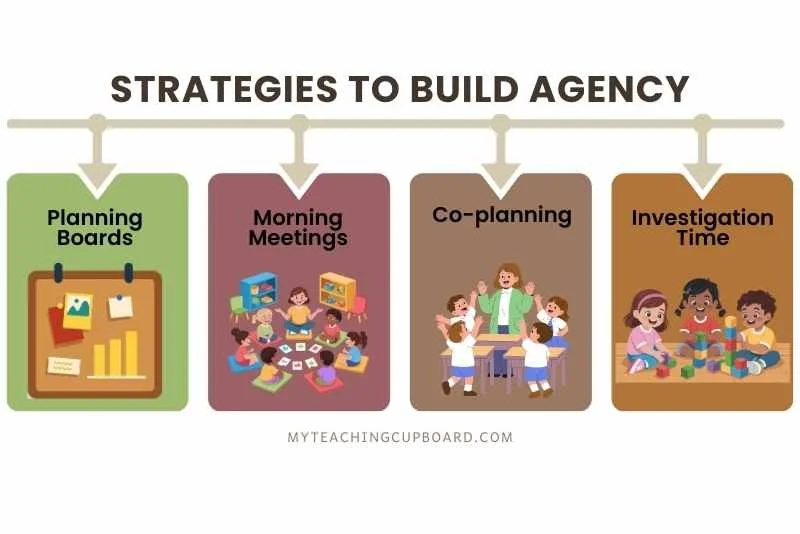
Simple Strategies to Build Agency
Here are some practical ways for you to cultivate a strong sense of agency in your classroom:
Planning Boards: Invite children to contribute ideas for investigation areas, project themes, or materials they’d like to explore. This strengthens decision-making, responsibility, and social interaction.
Morning Meetings: Co-plan the day with your students. Ask: “What are you working on today?” “What will you need?” Revisiting goals during reflection builds self-regulation and deeper understanding.
Investigation Time: Allow open-ended exploration within clear, dependable routines. This structure helps children feel safe while still giving them freedom to act with independence.
Provocations Inspired by Children’s Interests: Set up invitations that reflect children’s voices, current fascinations, and learning needs. When children see themselves in the learning environment, engagement skyrockets.
Linking Agency to Learning Outcomes
When children have agency, motivation, persistence, and academic success grow stronger because the learning becomes meaningful and connected to their own lives.
In early childhood education, this sense of ownership is one of the most powerful predictors of long-term engagement.
When children make decisions, express ideas, and direct parts of their own learning, they build the cognitive abilities, communication skills, and emotional development that underpin achievement in the early years and beyond.
Play-based agency supports executive function, creativity, and metacognition. Children plan, monitor, and adjust their thinking. All of these are essential skills for lifelong learning.
Autonomy improves self-regulation and long-term engagement. Young learners are more likely to stay focused, solve problems, and persist through challenges when they feel a strong sense of agency.
Decision-making fosters critical thinking and communication skills. Agency invites children to negotiate, collaborate, and express their ideas. All working to strengthen social interactions, social development, and language skills.
Supportive learning environments boost wellbeing and emotional intelligence. When children feel heard and valued, they develop a strong foundation of confidence and a deeper sense of belonging.
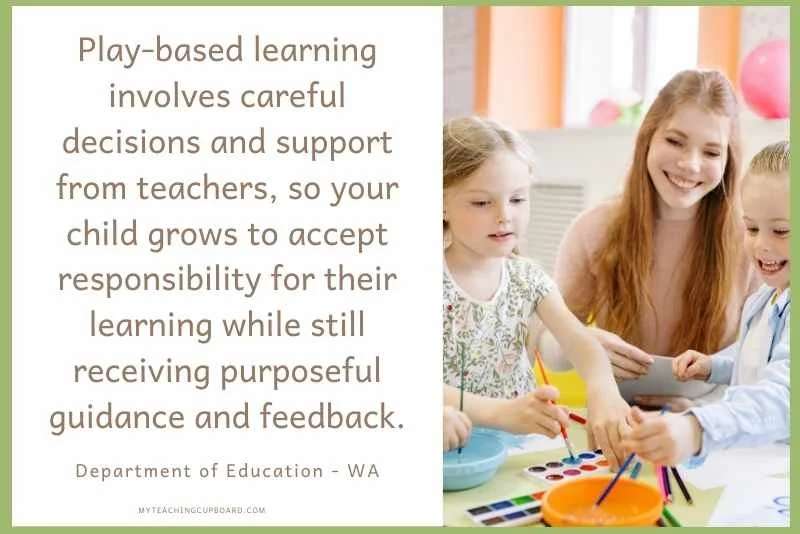
“Play-based learning involves careful decisions and support from teachers, so your child grows to accept responsibility for their learning while still receiving purposeful guidance and feedback.” — Department of Education WA
Reflection and Next Steps – Protecting and Promoting Agency
Empowering children with agency is at the heart of every high-quality play-based classroom. When we trust our children to make decisions, follow their own ideas, and scaffold their independence with purposeful teacher guidance, we nurture capable, creative young learners who take responsibility for their own learning.
Don’t think that agency isn’t about stepping back entirely.
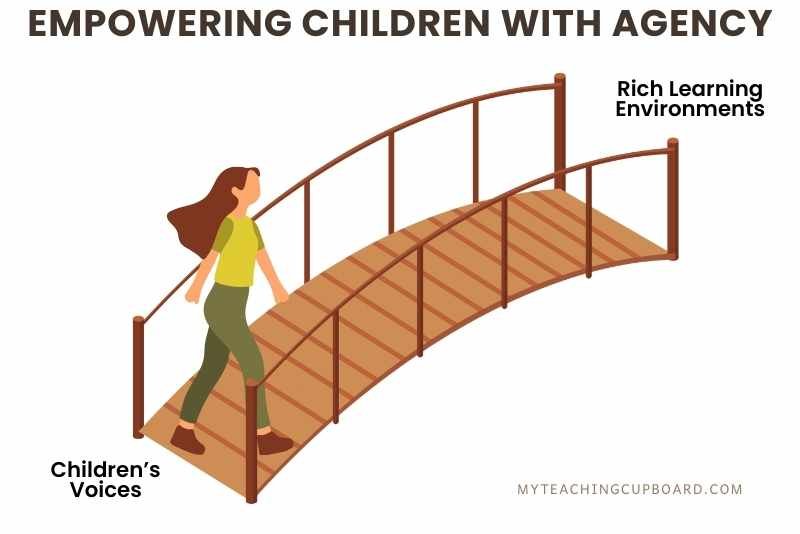
It’s more about stepping in with thoughtful, responsive pedagogy. It’s the bridge between children’s voices and the rich learning environments we design for them.
If you’re beginning your agency journey, you might find it helpful to revisit some of the foundations that make this possible. From creating a learning environment that invites decision-making to planning frameworks that keep your children’s ideas central.
Your next steps:
Read this comprehensive blog post - What Is Play-Based Learning? and discover exactly what effective play-based learning is, why it works, and how to use it the right way in your early years classroom. It includes examples from my own classroom and also has a free teacher guide you can download. This blog post will give you a clear foundation for understanding why agency thrives in play.
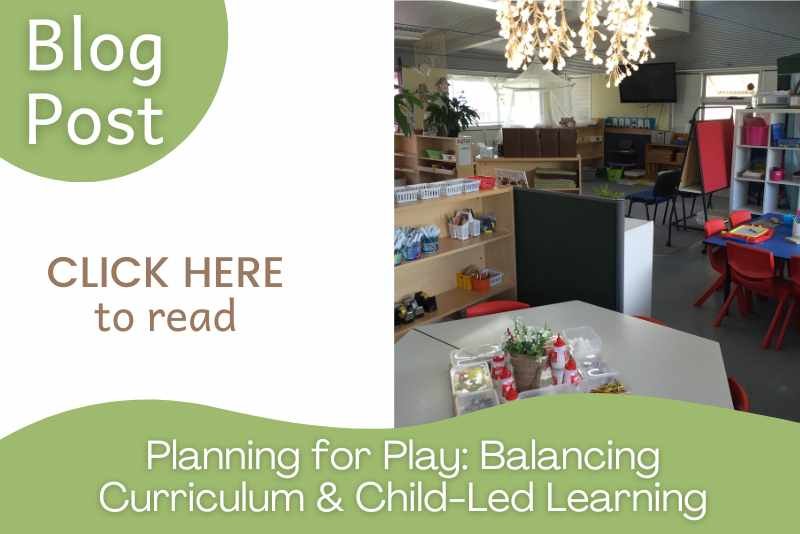
Planning for Play in the Early Years is another blog post you will find useful if you are interested in some practical ways to embed voice and choice into your weekly planning flow. In this blog post I show you ways to find the balance between play-based exploration and meeting curriculum goals in your early years classroom. It will help you to plan for play with confidence and clarity.
Teacher Reflection Prompts
Use these prompts to reflect on where agency is already thriving in your classroom and where you could strengthen it:
Do children make meaningful choices daily?
How often do I observe, document, and plan from children’s ideas?
Is my environment flexible enough to reflect their voices and evolving interests?
Do my prompts and provocations support independence and ownership?
Free Download – Reflection Checklist for Supporting Agency
Want a simple way to keep agency front and centre?
👉 Download your FREE Reflection Checklist for Supporting Agency
This printable checklist will help you:
notice opportunities for autonomy in your routines,
reflect on how the environment supports children’s voices, and
plan meaningful next steps that build a stronger sense of agency.
Agency begins with trust.
Trust that children are competent, curious, and capable of steering their own learning journey. When we intentionally design environments that honour their voices, observe closely to understand their thinking, and scaffold just enough to help them take the next step, something incredible happens: children flourish!!
They do so much more than just meeting academic expectations. You’ll see them develop confidence, independence, and a strong sense of identity as learners. They will use their voices, make decisions, solve problems, negotiate with peers, and connect deeply with their own learning experiences.
The beauty of agency is that it’s built through small, everyday choices.
So next time you are choosing materials, deciding where children will work or planning investigations, ask the children for their input. Sharing ideas and reflecting together on what comes next are simple steps you can take to ensure you are supporting capable young people who know how to learn, think, and collaborate.