
The 10 Essential Areas of A Play Based Classroom
Ready to transform your classroom for play-based learning? This detailed blog post outlines the 10 essential areas you need to create engaging and educational spaces for your students to learn through play.
In my play based classroom there are 10 essential learning areas. I cannot do without them. The provocations and resources offered in these areas change throughout the year dependent on children's interests and the curriculum intent.
The placement of these 10 areas within the classroom is thoughtfully planned at the beginning of each year. I don't usually move the areas around the classroom throughout the year.
Very often an area will have multiple objectives and will include cross-curricular experiences. When adding provocations to each area, the original purpose for that space guides what is offered there.
1. Carpet Space and Meeting Area


This area is always as large as I can possibly get away with. We play a variety of circle games. You need a large carpet space to comfortably fit a whole class seated in a circle. The carpet space includes my teacher chair, teaching easel or whiteboard and our interactive panel. Any resources I need for whole class lessons are within easy reach. I don't teach very many whole class lessons but when I do, they happen on this carpet space.
2. Block Construction
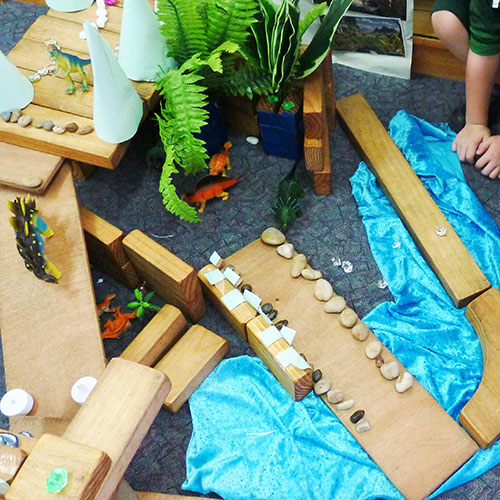


Wooden block play is a staple in most play based classrooms. You need a reasonable space large enough for 4 or 5 children to build together or individually. I place the shelf holding the wooden blocks and loose parts along one side of the carpet space we use as a meeting area. That large carpet space isn't wasted then. It serves a dual purpose. During Investigation time, it is used for block constructions and during focused teaching time, it serves as a meeting place.
3. Dramatic Play
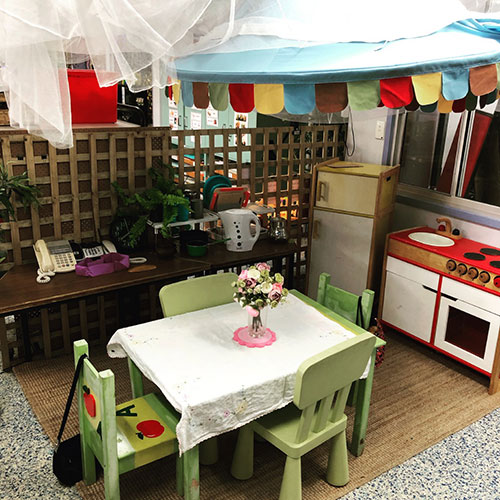


The dramatic play space is another area requiring quite a bit of room. This play based area is where oral language, social skills and problem solving are refined. It is always a popular space so it needs to accommodate at least 4 children.
The props in the dramatic play area tend to take up a lot of space so I position it in a large corner of the classroom. Position the dramatic play space in a corner so 2 walls are available to display environmental print. I usually use a small gazebo to define the space. The gazebo makes it easy to create a third wall by hanging a sheet or curtain from the frame. The roof of the gazebo also makes the space cozy and helps reduce noise.
4. Writing Table

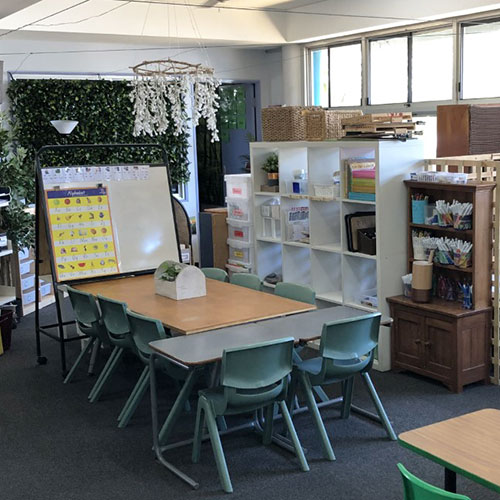
This literacy area has a large table or group of tables preferably seating 6 to 8 children. I need this many seats because I use this table as my explicit teaching table during small group instruction later in the day. Next to this large writing table I have a 16 cube Ikea KALLAX shelving unit. This is a great room divider and defines the space beautifully. All our writing tools are stored on this shelving unit. Pens, paper, envelopes, sticky-notes, journals, list pads, magnetic letters, small blackboards & whiteboards, dictionaries etc are all accessible for the children to use as they wish at the writing table. I store a few of my literacy teaching tools on the top shelves.
5. Reading Area


Our cozy reading area provides another literacy space in the classroom. I have a wooden single bed base with a light mattress and a number of pillows and cushions. A low light lamp and a net canopy is a must for this area to create a cozy atmosphere. This is a quiet space so I like to position it away from the louder spaces like dramatic play. I like to position the bed along a wall so that the cushions can be supported along the length of the bed. In Winter I add a couple of little soft blankets. There are usually a few teddy bears waiting on the bed too.
The books are stored on a low bookcase. This bookcase is the same length as the bed so I position it in line with the bed and place a rug on the floor to help define the space. The bed takes up space in the room and I have often thought of replacing it with a much smaller sofa or some large floor cushions but the children just love the coziness the bed creates. The bed comes in handy when a child isn't feeling well or just needs a little calm down time. I think it's worthwhile.
6. Science and Nature Table


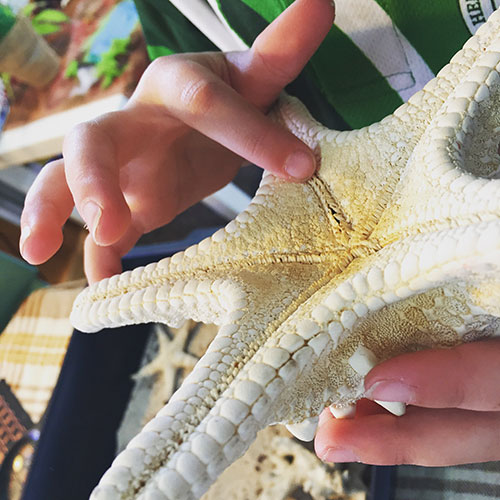
Children love collecting treasures they find in nature. Our nature table gives a home to these collections. I add interesting pieces I have collected too. We usually have mealworms, caterpillars or a fish on this table. It is important for children to have some type of living thing to look after and observe.
The items here are changed around quite regularly to sustain the children's interest in the area. Items related to our current Science Unit are setup at this table too. Magnifying glasses, clipboards, bug-catchers and other scientific tools are either stored on the table or on a small bookcase close by.
7. Art & Collage Area
Very often this area actually turns into 2 or 3 smaller areas throughout the room. I always have a box construction space. Sometimes that is just a very large box storing recycled treasures like boxes, tubes, unusual packaging - you know the traditional junk! The large storage box can be placed next to a small table where the children can work on their creations. Very close by on an open shelf, I store our art construction materials: glue, tape, scissors, crayons, various paper and card.


Painting easels could be added close to this space but I usually put 1 or 2 outside on the verandah. I have another small table inside dedicated to painting or drawing where different art mediums are offered for experimentation. These would include, pastels, watercolours, charcoal or drawing pencils. Sometimes I add tabletop easels to these tables to vary the experience.

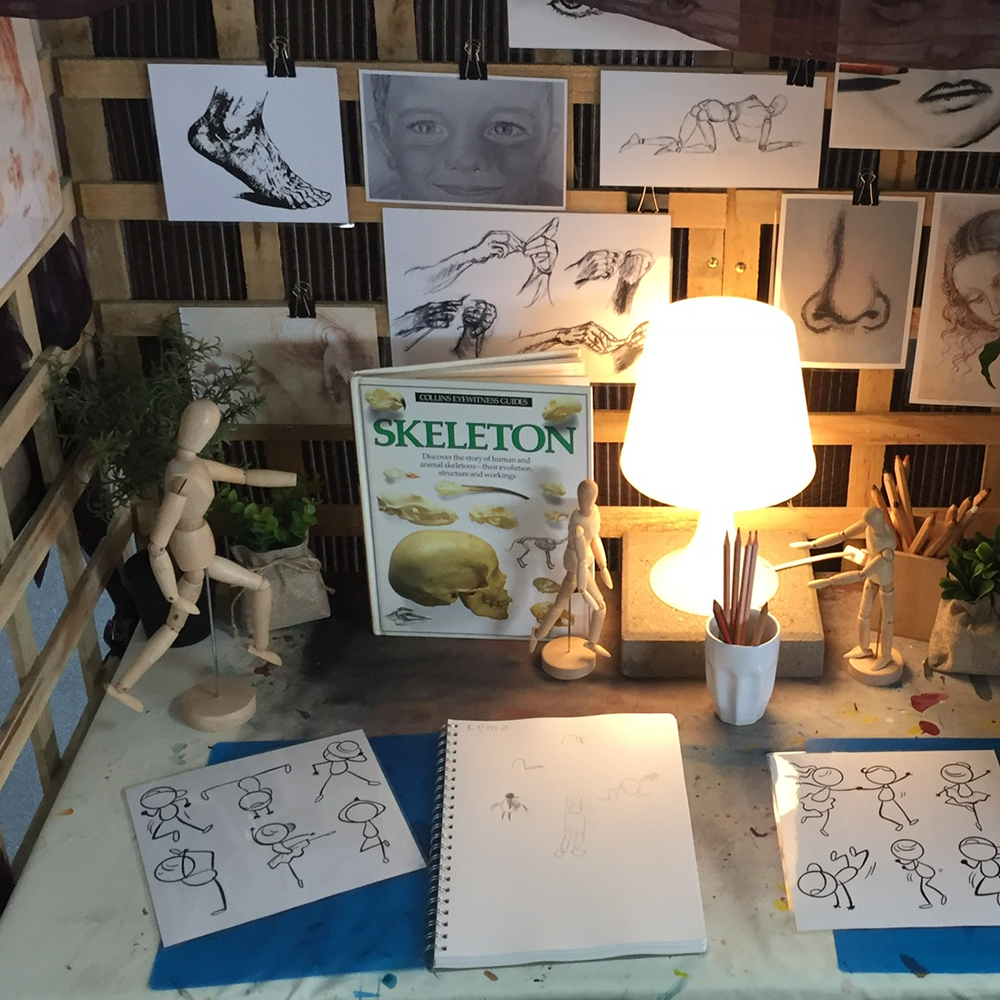

The traditional collage trolley would live in this space too. Recently I have been using the collage trolley in another part of the classroom as a sensory play space. A large shallow underbed storage tray fits perfectly in the top of the trolley and I can fill that tray with a variety of sensory invitations (water, sand, rice).


A small selection of collage items can be found on the open bookshelf housing the construction materials at the box construction area. I only offer a limited selection of collage items (cotton balls, glitter, sequins, pipe-cleaners, straws etc) on this shelf. They are presented and organised in small clear boxes.
The children are aware of all the collage items stored away in our storeroom. They will ask for specific collage items if they need them and I can easily get what they need from the storeroom.
I found it very time consuming and somewhat wasteful constantly topping up the trays on our old collage trolley. The collage items seemed to be just randomly glued onto a box or a piece of paper. Having them stored away seems to make their creations a little more purposeful.
If you would like to set up a creative construction area or Makerspace in your classroom, you might like the Makerspace Display Pack. It contains all the printables you need to set up a beautiful and productive learning area.

Whether you call it a Makerspace, Collage Area, Box Construction or even the Creation Station, this Makerspace classroom display pack has EVERYTHING you need to set up a hands-on, creative play center in your classroom. If your students love to build things like mine do, give them a well-designed and inviting area to combine boxes and other collage materials into creative projects.
What is a Classroom Makerspace?
A classroom Makerspace is a dedicated creative area where children construct three-dimensional projects using various collage materials. It develops creativity and critical thinking, making it an essential addition to every play based learning preschool, kindergarten, and early years classroom.
Makerspace Learning Resources
These engaging and beautiful resources will make setting up your classroom Makerspace quick and easy.
With the original printables included in this resource, you’ll have a beautiful well-designed creation station set up in your classroom in no time. It will be organised and purposeful.
This Makerspace pack makes for a simple and easy-to-set-up learning area your students will flock to.
The Makerspace Display Pack Contains:
Makerspace Banner Sign.
Comprehensive suggested list of materials for your Makerspace.
EDITABLE letter to send home asking for boxes and other useful recyclables to stock your area.
A large Box construction sign.
Kid’s planning and recording worksheet.
68 illustrated Makerspace vocabulary cards illustrated with photo images. You can print these cards to make a Word Wall or turn them into resource labels to keep your area tidy and organised.
4 EDITABLE Makerspace vocabulary cards in case you want to add extra resources.
Large Work in Progress poster sign.
2 Small Work in Progress signs.
An information poster for parents and visiting educators.
8 inspirational Poster quotes to decorate your space.
16 Makerspace prompt cards for creative STEM projects.
You will instantly receive a .pdf file containing absolutely everything you need to create a stunning and productive Makerspace or Box Construction area for your classroom.
The resources in this pack include detailed real-life photos so your students can easily relate to them.
Why You Need a Classroom Makerspace
If you are keen to cover cross-curricular topics and ensure your children are learning vital higher-order thinking skills like creative thinking and problem-solving, you need a Makerspace in the classroom!
There are numerous benefits for early childhood teachers and their students. Your students will:
Enhance Creative Thinking Skills through open ended artistic explorations.
Develop Critical Thinking Skills through the exploration of materials and the evaluation of their ideas.
Learn Social Skills and Effective Communication Skills through teamwork and the sharing of ideas and resources.
Build Problem-solving Skills and Resilience by tackling construction challenges.
Boost self-esteem and Confidence when projects are successfully completed.
Develop Gross and Fine Motor Skills through hands-on learning activities.
Encourage Sustainability Practices by promoting the recycling and reusing of materials.
Reinforce Literacy and Numeracy Skills by embracing STEAM and STEM education, integrating science, technology, engineering, art, and math concepts naturally.
Easily Differentiate Your Makerspace Learning Center
Makerspaces are versatile and suited to different age groups and abilities. They are successful learning centers in preschool right through to high school. Hey, I even have my very own Makerspace at home – it’s called my craft room!
Check out what other teachers are saying…
5 Star Reviews ⭐️⭐️⭐️⭐️⭐️
“It was great for organising my makerspace and the prompts gave some direction for students, rather than them just sticking a bunch of objects together like they sometimes do. Thanks!“
“This is so visually beautiful! It really fits the themes and has so many useful additions to the package. Kids love it too!”
8. Maths Area


I have a small table in the maths area but it's not absolutely necessary. You can get away with just having a resource storage space for all the math tools: counters, dice, measuring tapes, manipulatives etc. Math learning opportunities arise in all play areas of the classroom. Having a designated space to store tools that may be used throughout the room is all the children need to incorporate math learning into their investigations.
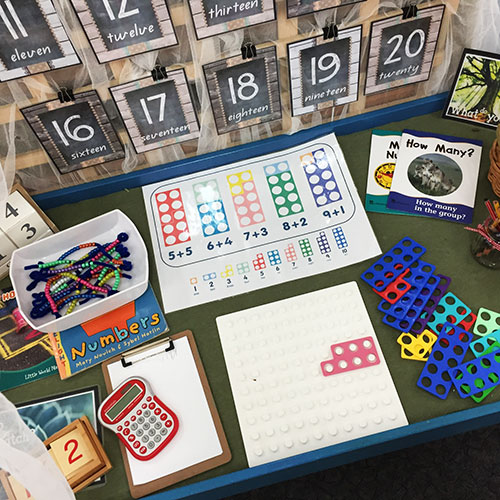


I like having a small math table or tray inviting children to investigate and practise the mathematical concepts we have been learning. The provocations I setup on the table vary according to the math concepts we are focusing on in class. Adding a sensory stimulus to the table will help with engagement and memory. I use this table during focused teaching lessons to demonstrate and teach our current math learning intentions too.
9. Tinkering
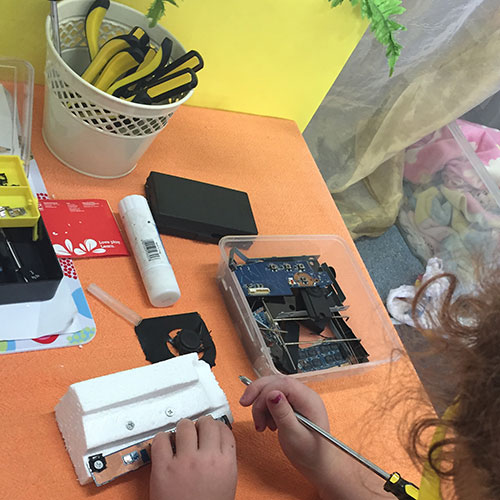


The tinkering area is a place where children can develop their fine motor and engineering skills. A small table with real tools and safety equipment for the children to use is always inviting. They can dismantle old broken household items or tinker with nuts & bolts, small engineering kits or small construction toys like meccano or lego. It is generally placed off to the side of the classroom and is only a small table for 1 or 2 children.
10. Sensory Play Area


Sensory experiences are embedded in all the areas of my play based classroom and then I also have at least 2 other areas specifically designed around sensory play. Sensory play acts as a magnet to children. Everything we learn about our world comes through our senses. This area is very important for cognitive and emotional development. Fine motor skills are also refined through sensory play. It can sometimes be a messy play space so it is best to set it up on the vinyl or outside on the verandah.

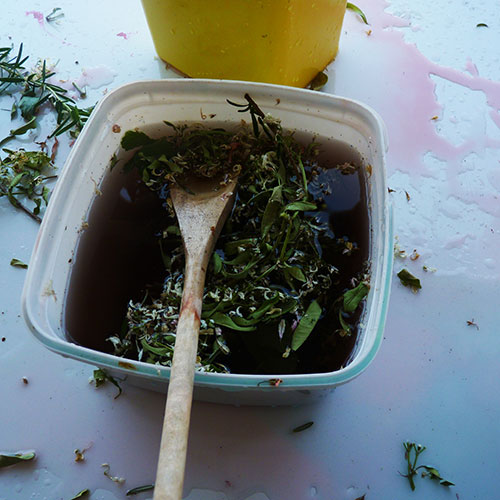
I have a light table permanently set up in the classroom. It is a very calming sensory play area. I change the provocations at the light table every 2 or 3 weeks. This allows me to design provocations linked to the curriculum. It also keeps the children interested and engaged in this space.
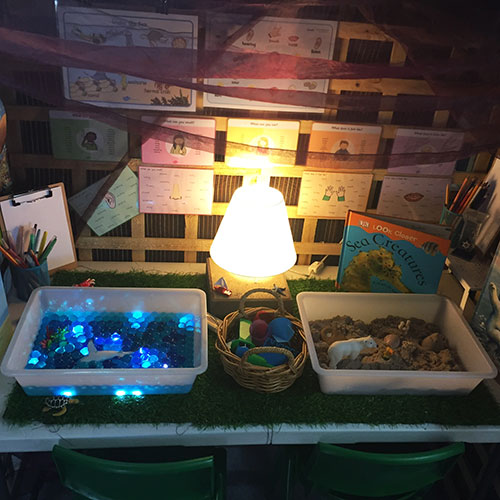

Another permanent sensory play area is the play dough table. It is set up at another small table in a quiet area of the room. I try to place this area on the vinyl as pieces of play dough always find their way to the floor. We call it the play dough table but it doesn't always have play dough on offer. Clay and plasticine are some of the malleable materials rotated through this area.


Sensory trays are very often included in the play investigations. They can take the form of a water trough on the verandah or the large under-bed storage tray in my repurposed collage trolley. A couple of small individual trays on a table can form part of our sensory play area too. There are many options for the provocations you can offer in a sensory tray.



You can read more about sensory play and how to use the sensory experience of play dough to teach phonics here on my blog.
Keep your Learning Areas consistent and clearly labelled with these themed display packs. Choose the pack to suit your classroom décor. Each pack contains 17 ready made signs and banners ready for you to print and display. There are also 2 bonus banners and 2 bonus signs with editable text boxes so you can quickly personalise a sign or banner before printing.

Neutral coloured play based learning area signs and banners for your classroom investigation areas. Keep your learning stations consistent and clearly labelled with this calming neutral themed display pack and help to decrease sensory overload in your classroom décor with these beautiful neutral tones.
You will receive a .pdf file containing neutral toned banners AND calming coloured signs for each of the following investigation areas:
Tinkering
Play Dough
Construction
Blocks Area
Art area
Painting
Collage
Writing
Reading
Fine Motor
Dramatic Play
Science
Science Table
History
Geography
HASS
Maths
BONUS: You will also receive 2 banners and 2 signs with editable text boxes so you can quickly and easily add extra areas and personalise a sign or banner before printing.
You will need Adobe Reader to edit the text boxes in this file. Most computers already have Adobe Reader but if you need the latest version, you can download it for free HERE at Adobe.
These learning area signs and banners have been designed to compliment the Neutral Themed Investigations Display Pack available HERE
This pack is also available in a Nature theme HERE.

Reggio Inspired play based learning area signs and banners for your classroom investigation areas. Keep your learning stations consistent and clearly labelled with this calming nature themed display pack. It will look beautiful in your learning space and compliments any classroom décor.
You will receive a .pdf file containing nature themed banners AND nature themed signs for each of the following investigation areas:
Tinkering
Play Dough
Construction
Blocks Area
Art area
Painting
Collage
Writing
Reading
Fine Motor
Dramatic Play
Science
Science Table
History
Geography
HASS
Maths
BONUS: You will also receive 2 banners and 2 signs with editable text boxes so you can quickly and easily add extra areas and personalise a sign or banner before printing.
You will need Adobe Reader to edit the text boxes in this file. Most computers already have Adobe Reader but if you need the latest version, you can download it for free HERE at Adobe.
These learning area signs and banners have been designed to compliment the Nature Themed Investigations Display Pack available HERE
This pack is also available in a Neutral theme HERE.