
How to Write a Statement of Intent for Your Play Based Learning Classroom
Not sure how to plan your teaching in a play based classroom? Learn how to write a clear statement of intent that connects curriculum, play, and daily lessons.
If you are familiar with the Walker Learning Approach, then you are no doubt also familiar with writing a Statement of Intent. This fortnightly planning document is vital to the success of your play-based learning program.
What You’ll Learn in This Blog Post
What a Statement of Intent is and why it matters.
How to break your Term Overview into manageable plans.
How to align curriculum, play and explicit teaching.
How to plan based on your students’ needs and interests.
How to simplify your planning without feeling overwhelmed.
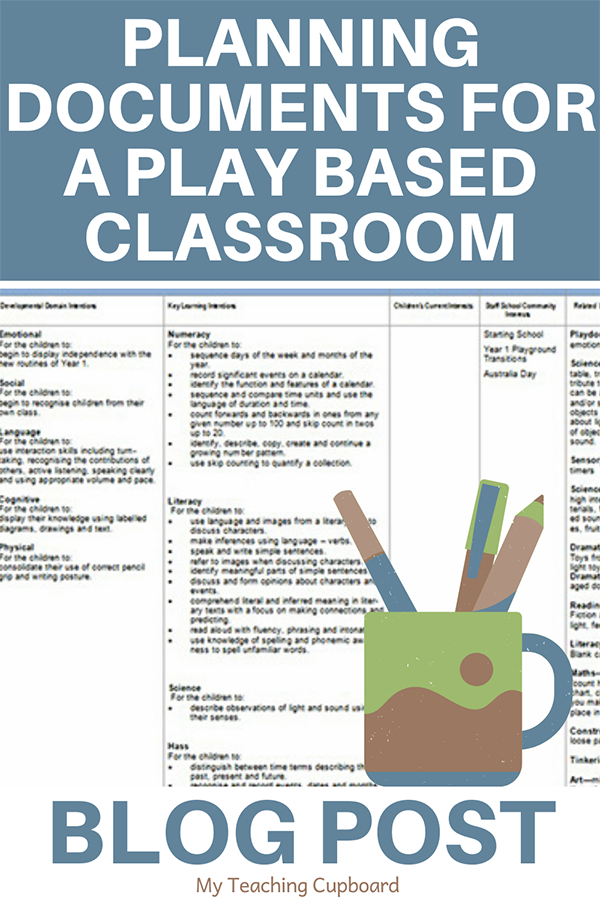
A play-based learning Statement of Intent is where your children’s needs and interests, the mandated curriculum, explicit teaching lessons, learning provocations and investigation areas all come together. If written correctly, you will find yourself constantly using and referring to this valuable document.
If you’re feeling unsure about how a Statement of Intent fits into your overall planning, before going further, I recommend reading this guide: Planning for Play: Balancing Curriculum & Child-Led Learning.
It shows you exactly how your Term Overview, the Statement of Intent and your weekly planning all work together in a simple system.
What is a Statement of Intent?
A statement of intent is a fortnightly planning document outlining what you intend to be teaching. It is written with reference to your planned curriculum term overview and should be informed by your knowledge of your student’s developmental needs and interests.
Sounds easy? It really can be. In this blog post you will discover the step-by-step process I use to write our play-based learning Statement of Intent.
Why a Statement of Intent Is the Key to Making Your Planning Actually Work
A Statement of Intent is where your planning stops sitting on paper and actually starts working in your classroom. It takes your big-picture Term Overview and turns it into clear, manageable steps you can realistically teach.
Instead of feeling like you’re constantly reacting or scrambling for ideas, you have a plan that guides your lessons, your investigation areas and your daily teaching decisions.
This is also where play-based learning and intentional teaching come together. As educators, we are expected to be deliberate and purposeful in how we support children’s learning through play. Your Statement of Intent is what allows you to do this with confidence.
Where to Start Writing a Statement of Intent
Your Statement of Intent builds directly from your Term Overview (or Term Menu).
Instead of planning everything week by week from scratch, in a Statement of Intent, you are simply breaking your term into smaller, manageable chunks.
If you haven’t created your Term Menu yet, or if you need help with writing your curriculum term overview, start here at this blog post first – How to Write a Play based Learning Term Overview
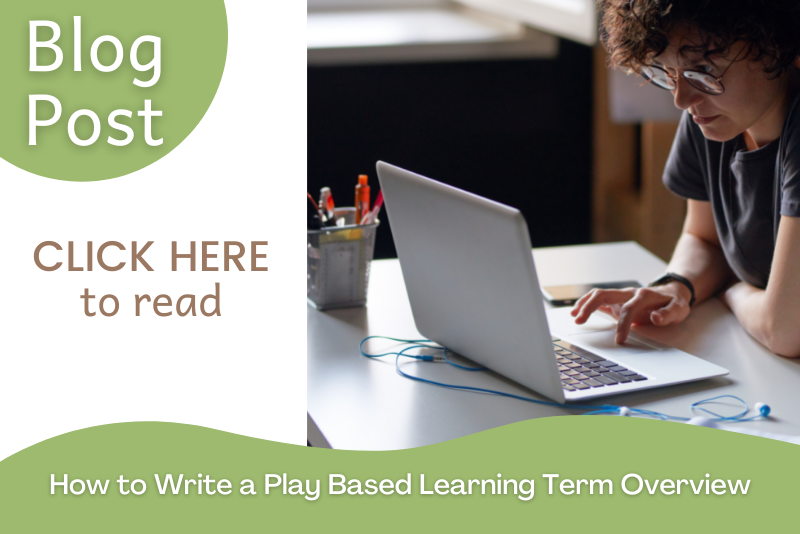
The Statement of Intent segments the term overview into manageable pieces. It breaks the whole term’s planning up into fortnightly plans. You will only need to write 5 for the whole term so it’s a quick and effective way to plan.
Most of the Statement of Intent is copied and pasted from the term menu. Then any documentation and teacher observations, along with the knowledge you have regarding your children’s needs and interests, helps you to fine tune your Statement of Intent into an effective planning document.
Before You Start Writing a Statement of Intent
Before you start writing your Statement of Intent, take a little time to reflect on your Term Menu and your curriculum learning intentions. Be realistic.
The curriculum documents supplied to you by your state or territory may very well expect your children to be developmentally further along than what they really are.
You will probably need to differentiate your planning. You will have children at the required curriculum level, and you will have others further along and some not there yet.
Don’t only think about academic benchmarks either. You need to teach the whole child so plan for social & emotional learning too.

Use your previous documentation and any teacher observations along with your professional knowledge to plan a purposeful Statement of Intent that can actually be used.
Don’t Start with Pinterest or Instagram
Sometimes you will see an inspiring activity or investigation area on Pinterest or Instagram and want to implement it straight away in your classroom. When this happens, your children’s developmental needs and the curriculum learning intentions unfortunately become an afterthought.
If you want to have successful and purposeful lessons and activities, you need to use your Statement of Intent to inform your lessons and investigation learning invitations.
Inspiring learning invitations from Instagram or Pinterest should not be your starting point. Start with your term menu and your children’s developmental needs.
Writing a Personalised Statement of Intent
At my school, we plan together as a cohort. All the prep teachers get together for planning. We write the Term Menu and the related Statement of Intent together.

We all use the same Term Menu. We often have slightly different Statement of Intents however. The Statement of Intent is a flexible document that you should personalise for your class and their needs.
The Statement of Intent I use in my classroom is personalised and meets the needs of the children in my class.
Planning the term menu together ensures consistency across the year level (Oh yeah, those audits are real!) Because the Statement of Intent is responsive and led by the developmental needs of the children in my class, a personalised Statement of Intent ensures the lessons and learning provocations I provide are meaningful and relevant.
Step 1 for Writing a Statement of Intent
Start with a blank Statement of Intent template and your already written Term Menu.
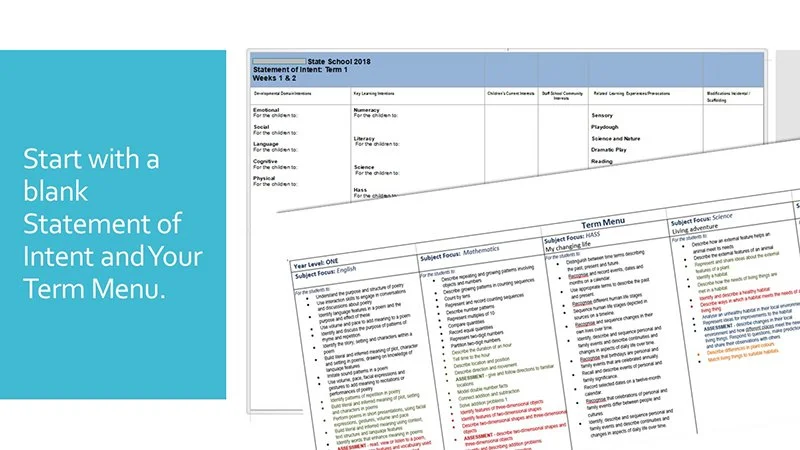
You will have a blank Statement of intent Template if you are implementing the Walker Learning Approach.
If you are not implementing this learning pedagogy, you can download a generic play-based learning planning template HERE.
First, you simply copy and paste the colour coded curriculum objectives from your Term Menu into the second column of your Statement of Intent.
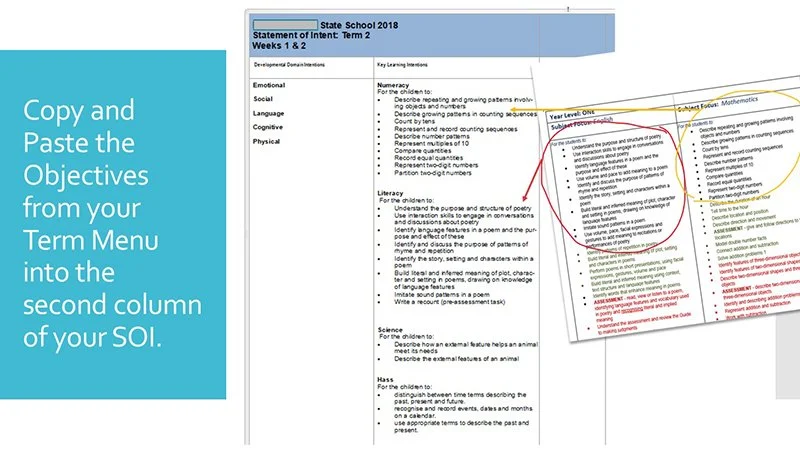
These objectives are very specific and will guide your explicit teaching lessons and the learning invitations you set up - but remember, these are learning intentions and not achievement standards.
These objectives are what we intend to teach and detail the experiences we plan to provide. These objectives must be developmentally appropriate.
Remember throughout the term to document the learning you observe. Make observational notes on how your children are going so you can modify and tweak your future planning to personalise you Staement of Intent and better suit the specific needs of your children.
Child development is a biological process. We cannot make children learn something they are not ready to learn no matter how proficient we are as teachers. It is so much better for everyone if we can meet the children where they are developmentally. Our job as teachers is to design lessons and experiences in line with the children’s developmental needs.
If you are looking for an effective method for documenting your observations, you might be interested in my play based learning observation checklist. You can download it HERE in the free resources library.

Step 2 for Writing a Statement of Intent
Sometimes there are just too many Learning Intentions. You might even need to add more if you are teaching school-based programs like Talk for Writing, Jolly Phonics or Words Their Way.
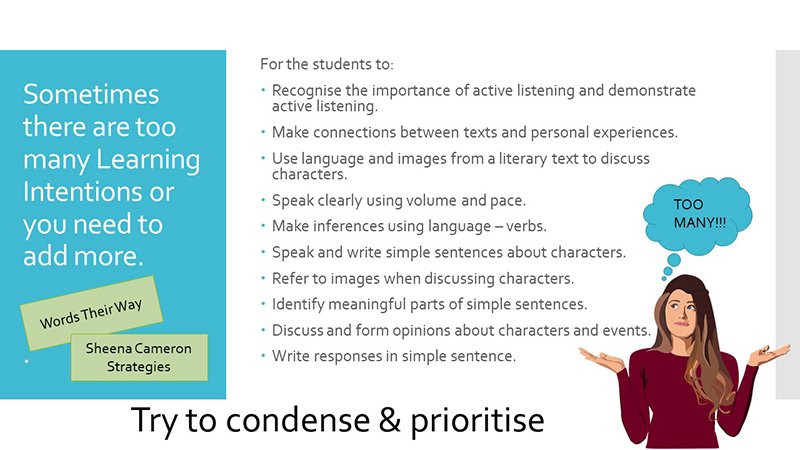
In these instances, you need to condense and prioritise the learning intentions.
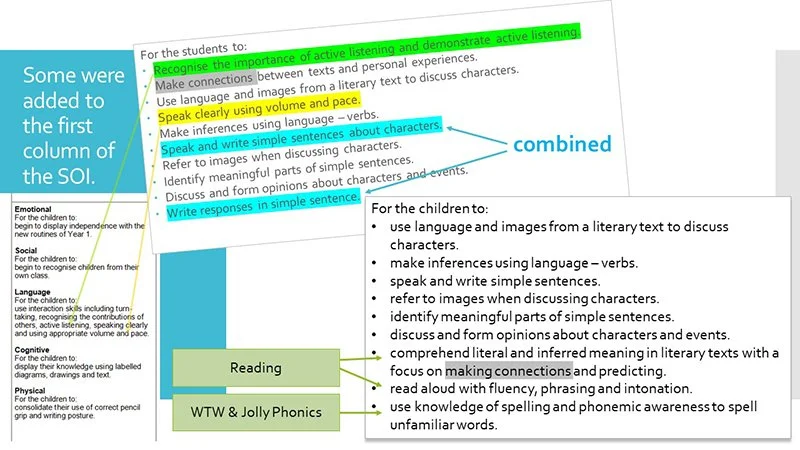
☝ Here you can see how some of the learning intentions were added to the first column of the Statement of Intent.
Others can be re-worded and condensed. The last thing you need is an over-crammed Statement of Intent. In this phase of the planning, it is time to prioritise your learning intentions.
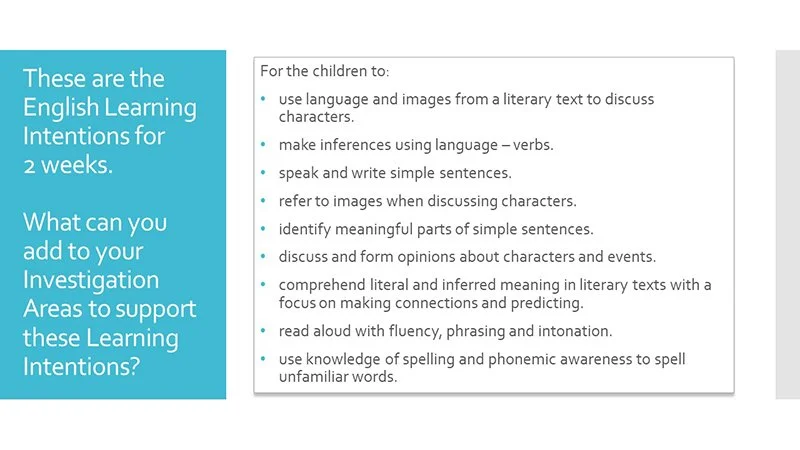
You can see here how we condensed the English Learning Intentions for 2 weeks.
Step 3 for Writing a Statement of Intent
This is my favourite part. We brainstorm our investigation ideas and get creative. We go through each of the investigation learning areas and write down our ideas for possible lessons and provocations.
This is the part where planning can start to feel a bit overwhelming. Trying to come up with meaningful, curriculum-aligned learning experiences for each area can be difficult.
If you want to save time, my Math Provocations Printables give you ready-to-use, hands-on learning invitations already aligned to the curriculum for you.
You can simply select what you need and plug it straight into your Statement of Intent.
When you are looking for learning invitations to teach a specific learning intention, now is a good time to visit Instagram or Pinterest.

If you are not sure which classroom areas you should have set up for investigations, you might be interested in this blog post – The 10 Essential Areas of A Play Based Classroom

Brainstorming the investigation areas now is a good way to start preparing for play based learning but don’t be surprised if your plans change a little as you get into the term. Your teaching observations will be used to further plan and create a truly purposeful and individualised Statement of Intent.
Into the second last column of your Statement of Intent template, write any ideas you have for possible resources you can use and any learning invitations to set up. Try to think of resources and provocations which will likely support your learning intentions.
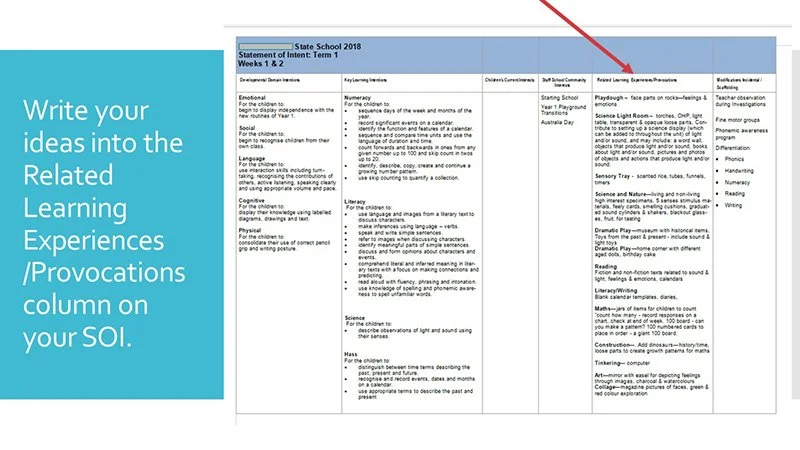
The advantage of planning with your team is that you can brainstorm and build on each other’s ideas. Together you can reflect on the curriculum objectives and discuss how to best provide opportunities for children to practice the desired curriculum skills. We note everybody’s ideas and then choose from the group’s selection when we personalise our own Statement of Intent.
Step 4 for Writing a Statement of Intent
Next you need to add any school or community events happening this term. Including community events is an important feature of play-based learning programs.
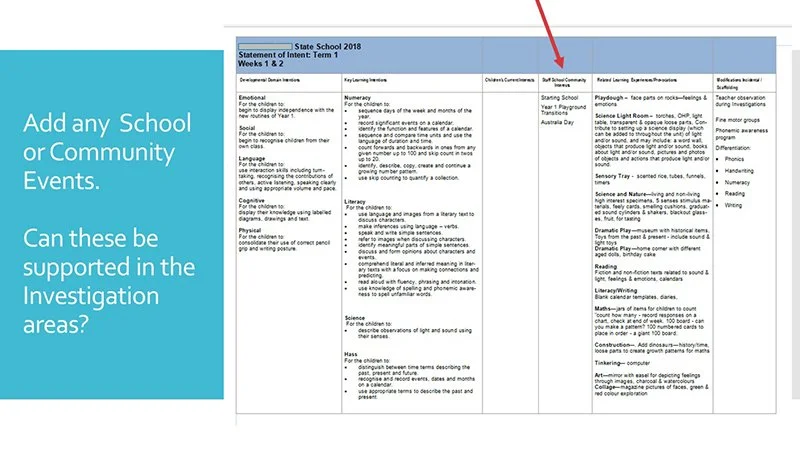
In Reggio Emilia classrooms, the local community plays an important role in education. You can build and strengthen your school and community culture just like they do in Reggio classrooms by incorporating culture and traditions into your investigation areas and teaching lessons.
To make sure your learning provocations are respectful and inclusive, always consider the culture and traditions of the children in your classroom and those in the broader local community. Add any ideas you have to that second last column – Related Learning Experiences and Provocations.
Step 5 for Writing a Statement of Intent
Finally, you add your children’s current interests to the Statement of intent. Then you can brainstorm ways any of the topics the children are interested in can be added into your planning.
You will get to know your children very well in a play based learning environment. Play based learning environments give teachers ample opportunities to observe and interact so it’s very easy to discover your children’s wonders and interests.
Use the information you gain from your daily interactions with your children to design learning invitations which are personalised, and you know your children will be eager to engage with.
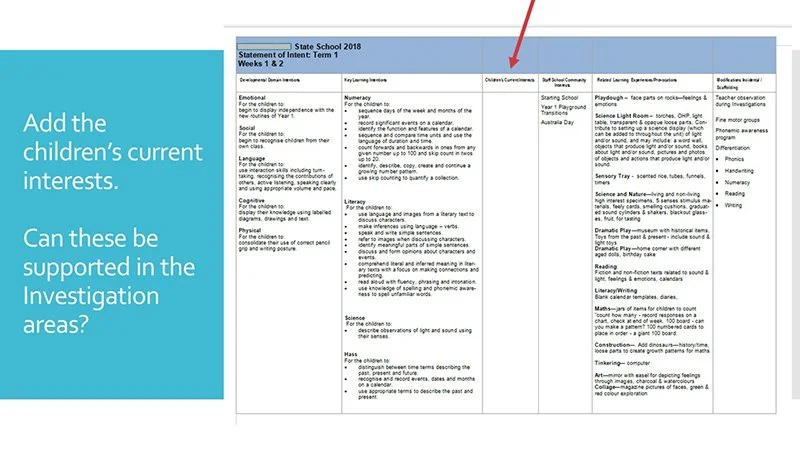
Even just adding resources and materials which are of particular interest to your children will optimise engagement both in explicit lessons and during investigations.
Using the children’s interests as a catalyst into the design of an investigation area is the perfect way to encourage targeted children to a specific area too. You probably know the children that will most benefit from a certain learning experience, so if you can put something in the learning invitation that will attract them, you are certainly going to have a much higher chance they will visit and engage with the planned provocation.
Of course, it is impossible to cater for every child’s personal interests. It isn’t practical or desirable. Design spaces which cater to general interests. Investigation areas and learning invitations should be age appropriate and designed for the group in general and don’t need to be for specific individual children.
Step 6 for Writing a Statement of Intent
Yes, there’s one important last step. Take the Statement of Intent completed together as a cohort and revise it to suit your particular class. Your children may have different interests. There will no doubt be children in your class at different levels of development. You might even have access to different resources.
Plan a Statement of Intent that is truly personalised by editing the Related Learning Experiences and provocations column.
Your Next Step: Bring Your Planning Together
Once you have your Statement of Intent, your planning starts to feel clearer, more manageable and much more purposeful. You’re no longer guessing what to teach next and you have a plan that connects your curriculum, your students and your play-based learning approach.
If you’re ready to see how everything fits together, your next step is to read: Planning for Play: Balancing Curriculum & Child-Led Learning
This will help you bring your Term Overview, Statement of Intent and weekly planning into one simple system you can confidently use every day.
Now that you have a purposeful and valuable planning document you will be using and referring to over the fortnight, we always keep a digital copy of our Statement of Intents and we modify them each year. It’s so good to have a growing bank of investigation and learning provocation ideas to refer to each year.
If you liked this process for writing a Statement of Intent, you can download it as a PowerPoint presentation HERE in my Free Resource Library. It includes all the pictures and information in this blog post as well as how to write a Term Menu.

Now you know how to write a Statement of Intent for your play based learning classroom, please help others to do it too…
Just CLICK the sharing box below.👇