
Growth Mindset for Kids: A Teacher’s Guide
Discover how to teach a growth mindset for kids with practical strategies, activities, and resources to build resilience, confidence, and persistence.
“I can’t do this.”
If you’re anything like me, you’ve heard those words more times than you’d like to from children in your classroom. Some kids just refuse to even try, while others give up at the first sign of difficulty. As teachers, it can feel frustrating. Especially when we know they’re capable of so much more if only they’d give themselves the chance.
The truth is, many young kids develop negative thoughts about their own abilities surprisingly early. They decide they’re not a math person, or that they’re just not good at drawing. These beliefs chip away at their confidence and hold them back from trying new things or chasing their big dreams.
This is where mindset matters. When children learn that mistakes are simply part of the learning process, everything shifts.
A fixed “I can’t” can transform into the growth mindset version: “I can’t yet.” That one small word – yet! It is powerful enough to change how a child approaches challenges, new subjects, and even tricky phases of learning.
Over the years in my own classroom, I’ve seen the big impact a growth mindset can have on young minds. A child who once avoided math problems now proudly tackles them, not afraid of a wrong answer. Another, who used to refuse writing tasks, begins to take risks and enjoy experimenting with new skills. The shift isn’t just about academics though. It’s about building resilience, confidence, and a love of learning too.
In this post, I’ll share:
What a growth mindset is and how it’s different from a fixed mindset.
Why it’s especially important to nurture in the early years.
Practical strategies and classroom activities you can use to embed it into your daily routine.
By the end, you’ll have the tools to create a classroom where your students see challenges as opportunities, mistakes as part of learning, and persistence as the best way forward.

What Is a Growth Mindset in Children?
The idea of a growth mindset comes from the research of Dr. Carol Dweck, an American psychologist and professor who has spent decades studying how our beliefs about learning shape our success. Through her research, she identified two very different types of mindsets: fixed and growth.
A fixed mindset is the belief that intelligence or talent is an innate ability. Something we are simply born with. Children with a fixed mindset might say things like:
I’m just not a math person.
I can’t draw.
I’ll never be good at this.
These types of statements show how limiting a fixed mindset can be. Instead of seeing mistakes as part of the learning process, children fear them and avoid taking risks.
On the other hand, a growth mindset approach is built on the understanding that skills can be developed through hard work, persistence, and the right strategies. With this right mindset, children see challenges as opportunities. Some examples of growth mindset in children might sound like:
I can get better if I keep practising.
Mistakes help me learn.
This is tricky now, but I’ll figure it out.
For young kids, the concept can be explained in simple terms: Your brain is like a muscle. The more you use it, the stronger it grows.
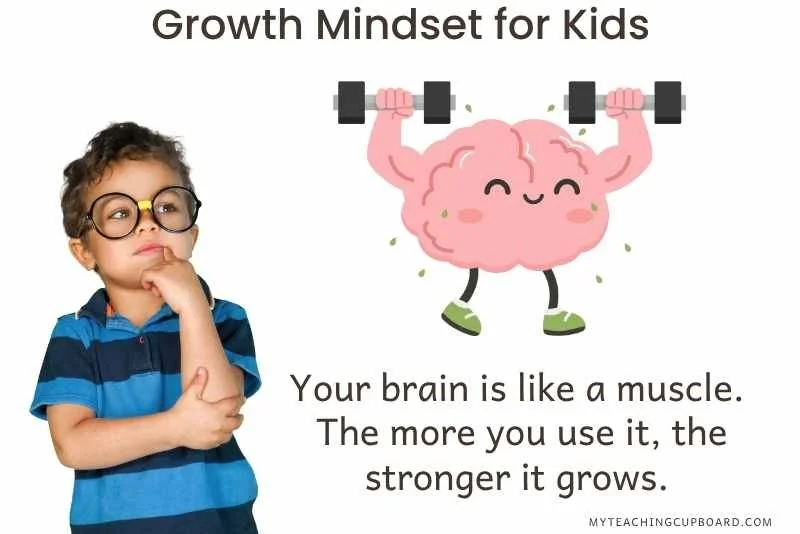
Every time children try new things or practise a new skill, their brain makes new connections. Over time, these connections make learning easier, and confidence grows.
Helping children understand this difference is one of the most powerful ways we can support them. When they realise they’re not limited by their “innate ability” but can improve with effort, they begin to believe in their own abilities and see themselves as learners.
Why Growth Mindset Is Important for Kids
When children develop a growth mindset, the benefits go far beyond the classroom. They build confidence, resilience, and a positive attitude that helps them approach learning with curiosity instead of fear.
Instead of avoiding challenges, they’re more willing to take risks, try new subjects, and practise new skills.
One of the most important shifts happens when children understand that mistakes are simply part of the learning process.
I’ve seen students go from crossing their arms and saying, “I can’t do it,” to proudly showing their classmates, “Look, I tried a different way and it worked!” That change in belief makes an absolutely huge difference!
It turns frustration into motivation.
The impact is just as strong in social and emotional learning (SEL). Children with a growth mindset cope better in the face of setbacks. They’re more open to feedback, more persistent when things feel tricky, and more likely to encourage their peers. This doesn’t just lead to better grades in academic settings. It also supports stronger friendships, teamwork, and a classroom culture where everyone feels safe to take risks.

Over time, these small shifts add up. A child who learns that effort pays off is more likely to embrace challenges later in life - whether it’s a new subject in school, a tricky phase of adolescence, or even chasing big dreams in their future career.
Studies by Dr. Carol Dweck and other researchers show that children with a growth mindset not only achieve more academically, but they also develop stronger coping skills and report higher levels of wellbeing. When children see challenges as opportunities, they tend to experience greater happiness and approach life with a more positive attitude.
Put simply: mindset matters.
When children believe in their ability to learn and grow, they unlock not just academic success, but the confidence and resilience to thrive in all areas of life.
The Power of Words: Growth Mindset and Praise
When it comes to shaping children’s beliefs, words matter heaps!
A single powerful word or positive message can completely change how a child sees themselves.
Think about the difference between fixed praise and growth mindset praise for kids:
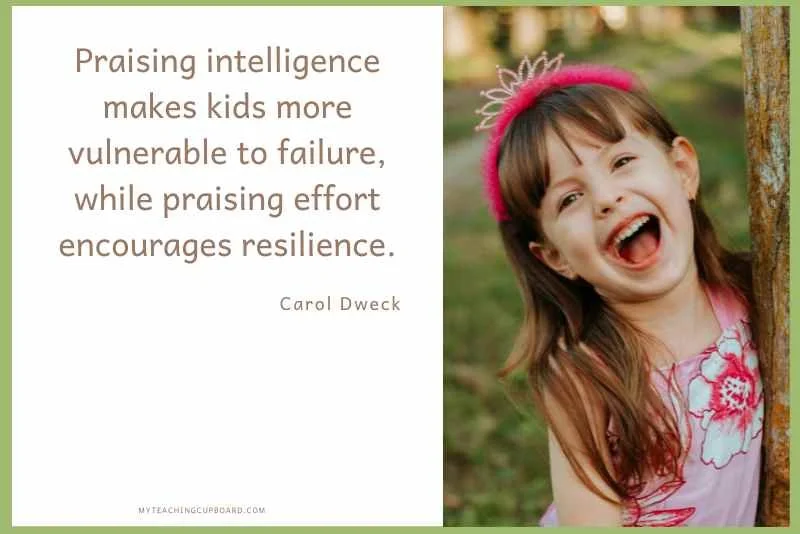
You’re so smart (fixed praise) sends the message that success comes from natural talent.
You worked really hard on that (growth praise) reinforces effort, persistence, and the value of trying new strategies.
That difference is subtle but powerful. It teaches children that progress comes from student’s efforts, not from being a “math person” or having special abilities.
I’ve seen this first-hand in my classroom. A child once said, “I’m just not good at writing.” By consistently reframing her language with growth praise like: “You’re building your ideas step by step, and each time it gets easier”, she began to believe she could improve. Her confidence shifted, and so did her work.
The same applies to positive self-talk vs negative thoughts. Children who constantly tell themselves, “I can’t do this,” begin to internalise failure. When we replace those thoughts with affirmations such as “I can try” or “I can’t do it… yet,” we introduce the Power of Yet - a mindset that transforms setbacks into opportunities.
This is why the positive words for children we use daily matter so much.
They don’t just shape how children approach the next math problem or writing task - they also shape how they see their own abilities and their place in the learning process. They begin to see themselves as capable learners and that’s a HUGE shift in the classroom.
If you’d like more practical examples, I’ve written a blog post you will like. It’s on Using Affirmations to Develop a Growth Mindset for Children. In this blog post I share how I introduce affirmations in class and build routines around them.

4 Key Elements of Cultivating a Growth Mindset in the Classroom
Please don’t think that building a growth mindset can be done in a one-off lesson. It’s a journey – try to weave small, intentional moments into your everyday classroom life.
Here are four practical steps you can follow. I have found that using these strategies make the biggest difference.
1. Introduce Growth Mindsets
The first step is to introduce the concept of growth mindset in a way that makes sense to young kids. Age-appropriate explanations work best. I often tell my students, “Your brain is like a muscle. The more you practise, the stronger it grows.”
There are some excellent tools to help with this. The Class Dojo Growth Mindset videos, including the five-episode video series, are a great way to start conversations about effort and persistence.
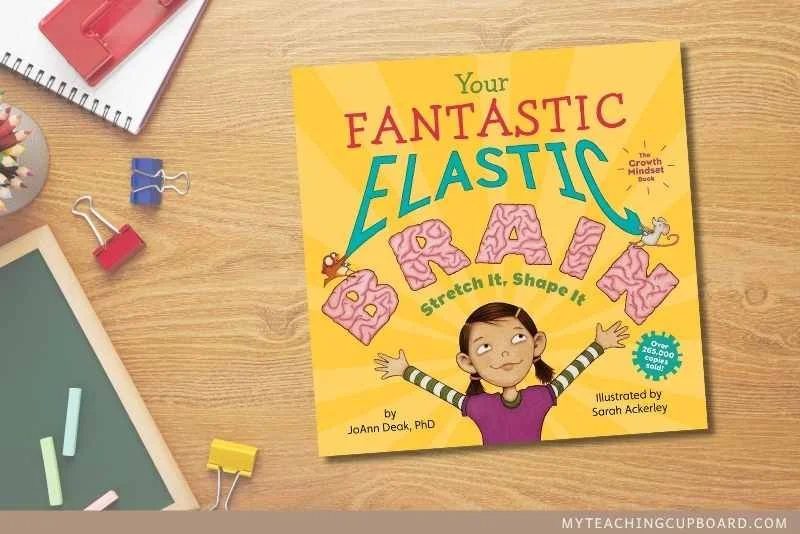
Picture books also work beautifully: Your Fantastic Elastic Brain and The Bad Seed are each a great book for sparking discussion and modelling the difference between fixed and growth thinking.
By beginning with simple language and stories, children start to see that their brains can change and grow whenever they practise and try new things.
2. Notice Growth Mindsets
Once you’ve introduced the idea, the next step is to notice when children are showing growth mindset behaviours in action. This means being intentional with the praise you give.
Instead of focusing on results, highlight student’s efforts, persistence, and problem-solving.
For example:
You tried a tricky phase of this new subject and you didn’t give up.
I can see how you tried a different strategy to solve that puzzle - that’s a growth mindset in action!
Pointing out these moments in a meaningful way helps children connect their words and actions to the growth mindset messages you’ve already introduced.
3. Model a Growth Mindset
Children learn best by watching the adults around them. That’s why modelling is such a powerful step in cultivating a growth mindset.
Share your own challenges honestly. For example: “When I tried knitting for the first time, it wasn’t easy. I was pretty frustrated, but I learnt more and got better each time I tried.”
I also like using role models from books and media.
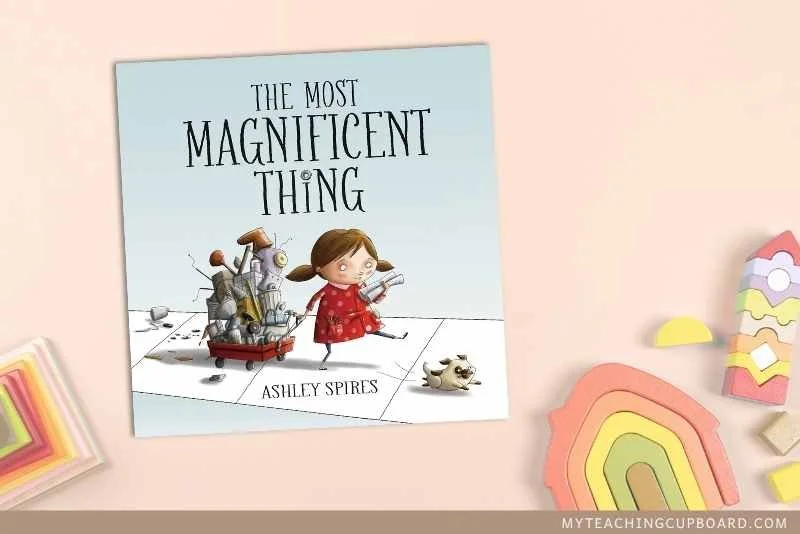
The Most Magnificent Thing is one of my favourites for showing perseverance through mistakes.
Even familiar characters can help.
Cookie Monster’s “Power of Yet” is a perfect child-friendly video to show that we’re all still learning.
You might also share the classic story of a young girl starting a lemonade stand where not everything works straight away, but persistence pays off.
Here’s how the story goes:
A young girl wants to start a lemonade stand.
The first day, hardly anyone stops by and she feels discouraged.
She experiments with a different strategy (moving to a busier spot, adding a sign, changing the recipe).
With persistence and hard work, she starts to see better results.
The lesson: success didn’t come instantly, but through trying new ideas and not giving up.
It’s a growth mindset story showing how setbacks, problem-solving, and persistence lead to progress.
👉 If you’d prefer a published book example instead, there’s a great children’s picture book called Lemonade In Winter: A Book About Two Kids Counting Money by Emily Jenkins. It follows two kids setting up a lemonade stand in winter. This book covers some early maths concepts, but still highlights perseverance.

When we model this kind of thinking, children see that setbacks and effort are part of the learning journey for everyone.
4. Practise Growth Mindsets
Finally, children need regular practice to make growth mindset part of their everyday routine. This can be as simple as:
Daily use of affirmations during morning meeting.
Reflection time on Fridays where students share what they found hard and how they overcame it.
Encouraging journaling, drawing, or role-play activities that highlight persistence and problem-solving.
I also often use physical exercises or short “Zen Den” brain breaks to give children a chance to reset, calm down, and try again with a fresh perspective.
Even a fun activity like a class affirmation chant can reinforce the message that effort and persistence are what matter.
If you’d like more practical routines, I’ve written a whole blog post on Using Affirmations to Develop a Growth Mindset for Children. I think you’ll like how I break down introducing and practising positive affirmations step by step.
6 Practical Strategies and Growth Mindset Classroom Ideas
The best way to embed growth mindset in the classroom is through small, consistent routines. Here are six growth mindset activities that are easy to set up and can make a big impact in your classroom.
1. Morning Affirmation Circles
Start each day with an affirmation the whole class can repeat together. It might be as simple as: “I can learn new things,” or “Mistakes help me grow.” This simple practice really has a big impact. It sets a positive tone and encourages positive self-talk right from the start.
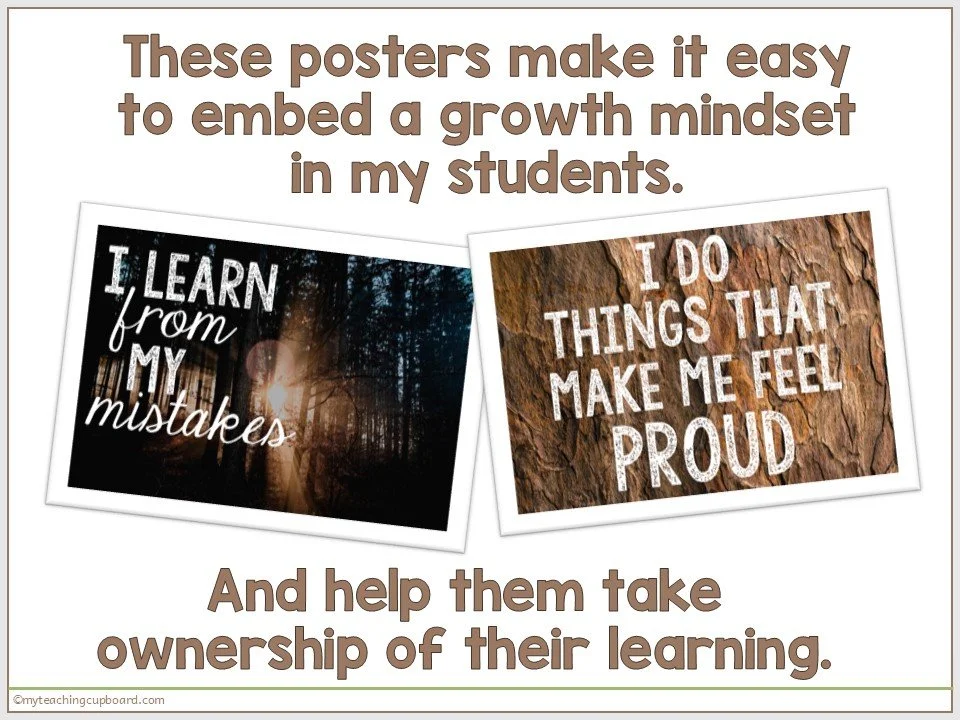
👉 For ready-to-use affirmations, check out my 120 Growth Mindset and Affirmation Posters This beautiful nature-themed resource includes a lesson plan and weekly routine you can implement straight away.

Inspire resilience and confidence with 120 printable growth mindset posters for kids. Includes a lesson plan, checklist, and worksheet to build student motivation.
Create a Classroom That Never Gives Up
Some students quit at the first sign of difficulty. Others shy away from trying in case they make a mistake. You know they’re capable of more but they just need the right tools to believe it.
This Growth Mindset Affirmations Pack gives you those tools.
You’ll get 120 printable, nature-themed posters plus a done-for-you lesson plan, observation checklist, and student reflection worksheet so you can turn positive thinking into daily classroom practice - without adding hours to your planning!
What’s Inside this Growth Mindset Resource
120 Growth Mindset Posters - Calming, nature-inspired theme with affirmations that encourage resilience, perseverance, and self-belief.
Ready-to-Teach Lesson Plan - Step-by-step guide for introducing the growth mindset affirmations, sparking discussion, and linkingit all to real experiences.
Printable Observation Checklist - Quickly record student growth mindset behaviours to support assessment and reporting.
Student Reflection Worksheet - A draw-and-write template for students to illustrate a time they succeeded at something hard and write their chosen affirmation.
Why Teachers Love This Growth Mindset Pack
Saves Time because all the prep is done — simply print and go!
Fits Your Curriculum: Supports ACARA Personal and Social Capability outcomes.
Engages Students: Visuals, stories, and personal connections make the affirmations meaningful.
Encourages Independence: Students learn to notice and name their own growth mindset and learning behaviours.
How to Use These Growth Mindset Posters
Weekly Focus: Introduce one affirmation each Monday using the lesson plan.
Daily Practice: Refer to the poster during circle time, morning meeting, student challenges or transitions.
Ongoing Assessment: Use the included checklist to track progress and celebrate growth.
Friday Reflection: Students complete the worksheet to show how they demonstrated a growth mindset.
With this pack, you’ll go beyond decorating your classroom. You’ll be building a culture of persistence, positivity, and peer encouragement.
Download your Growth Mindset Affirmations Pack today and start the shift from “I can’t” to “I can — and I will.”
2. Journaling or Colouring Pages
Encourage your students to reflect on their learning with a journal entry or a mindful colouring activity. Prompts like “What new skill did I practise today?” or “One mistake that helped me learn was…” make the learning process visible.
👉 Check out my Growth Mindset Bundle. It includes 51 colouring pages and matching posters that are perfect for this type of activity.
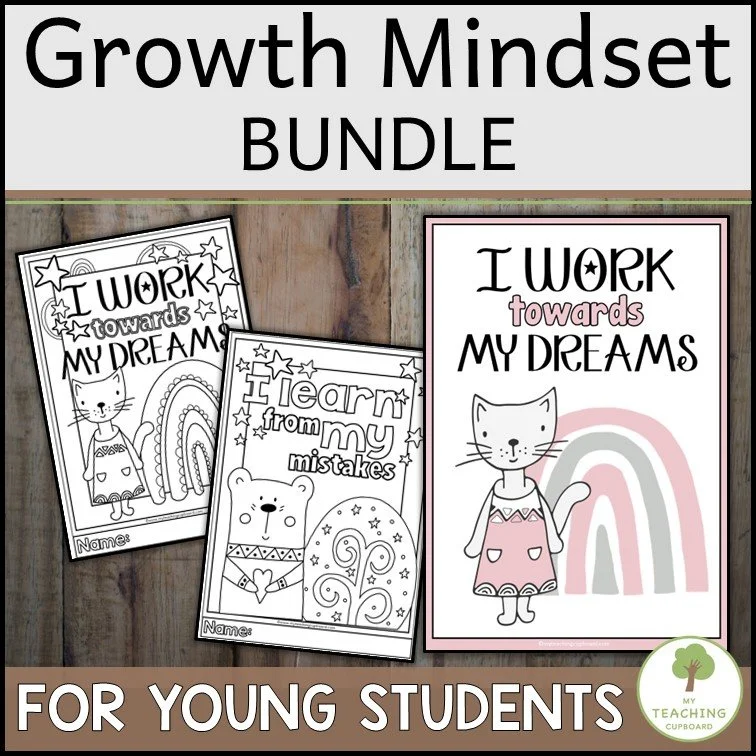
This bundle will help you teach a growth mindset to your early childhood students. Use the 51 Positive Affirmation & Growth Mindset Colouring Pages for mindful colouring activities and display the 53 Matching Growth Mindset Posters as motivational inspiration in your classroom.
Work on social and emotional learning in a fun and purposeful way by promoting positive thinking and resilience through these Growth Mindset Positive Affirmations.
Developing a growth mindset in children is so important because it will help your students overcome obstacles, develop persistence and see challenges as opportunities to learn. When your children develop a growth mindset instead of a fixed mindset, they will tackle new tasks with a positive attitude.
All teachers want that!! Teaching children with positive growth mindsets is a joy.
These resources are designed with younger children in mind. The growth mindset quotes and illustrations featured in these cute animal themed teaching resources will appeal to children in preschool, kindergarten, and grades 1 and 2.
YOU WILL RECEIVE 3 FILES CONTAINING:
53 cute animal themed growth mindset posters
26 matching Growth Mindset Colouring Pages
25 matching Positive Affirmation Colouring Pages
AND 2 FREE BONUS Colouring Book Covers. 1 for a Growth Mindset Colouring Book and 1 for a Mindful Colouring Book.
BOTH US AND ENGLISH SPELLING INCLUDED
Each growth mindset colouring page and each poster is A4 or legal paper size.
Instructions are included for you to enlarge or reduce the printout size to suit your needs.
QUICK & EASY PREP
USEFUL FOR:
Whole Class Growth Mindset Lessons
Morning Work
Early Finishers
Mindful Monday Activities
Mindfulness Coloring
Calm Down Corner
Social & Emotional Learning
Buddy Class Activity
Homework
Developing Positive Self Talk
Character Education
Classroom Decoration
SAVE MONEY WHEN YOU PURCHASE THIS BUNDLE
This amazing bundle has 51 mindful colouring sheets and 53 matching cute animal
themed growth mindset posters and positive affirmations you can use in your classroom.
SAVE MONEY on all these resources when you purchase the bundle.
3. Role-Play: Celebrating Mistakes
Set up role-play activities where children can act out a different situation. Choose one where a mistake leads to learning. For example, acting out trying a tricky puzzle, making a mistake, and then finding the solution. This makes it clear that mistakes are simply part of learning.
4. Reflection Fridays
End the week with a growth mindset reflection circle. Ask each child to share one moment where they used persistence or tried a new material. This helps students notice their own growth mindset behaviours and celebrate progress together.
5. Anchor Charts and Posters
Keep growth mindset reminders visible. Anchor charts, posters, and student-made displays are a practical strategy to reinforce key messages like “The Power of Yet” or “Effort = Progress.”
👉 Check out all my poster packs and resources.
They are all designed as ready-made classroom tools, so you don’t have to spend hours creating your own resources from scratch.
6. Peer Encouragement and STEM Tasks
Group challenges, like simple STEM activities, are a great way to promote teamwork, persistence, and creative problem-solving. Encourage your children to give positive feedback to their peers, so they see effort and collaboration as valuable skills.
These small routines don’t take much time, but together they create a classroom culture where mindset matters. Even trying one or two of these new ideas can make a noticeable difference in how your children see themselves as learners.
Common Challenges Teachers Face (and Solutions)
Even with the best planning, there are always hurdles when it comes to teaching mindset. Here are a few common misconceptions and challenges I’ve come across, along with simple solutions you can try.
Children Who Give Up Easily
Some children carry strong negative thoughts about their learning, or quickly decide they’re not a “learner.” Some might even avoid challenges altogether.
Solution: Encourage the language of “I can’t yet.” Adding that small word changes the message from failure to possibility. Over time, children begin to see effort and persistence as part of their mindset and the learning process.
Limited Time for Social and Emotional Learning
Many teachers worry there isn’t enough time to fit growth mindset lessons into an already packed timetable.
Solution: Use short, daily routines. A two-minute affirmation at the start of the day, a quick reflection before dismissal, or pointing out persistence in the middle of a lesson or at reflection time after a play based investigations session all reinforce growth mindset without adding extra to your workload.
Ready-to-use tools, like my Growth Mindset Posters and Lesson Plans, make it simple to integrate without hours of preparation.
Parents Questioning Growth Mindset
At times, families may wonder whether mindset is just another buzzword. They might even assume it means only giving children praise.
Solution: Explain that growth mindset is not about empty praise, but about teaching children that success comes from effort, persistence, and trying different strategies.
Classroom displays, newsletters, or sharing student work are great ways to show families how these mindset beliefs play out in meaningful, everyday learning.
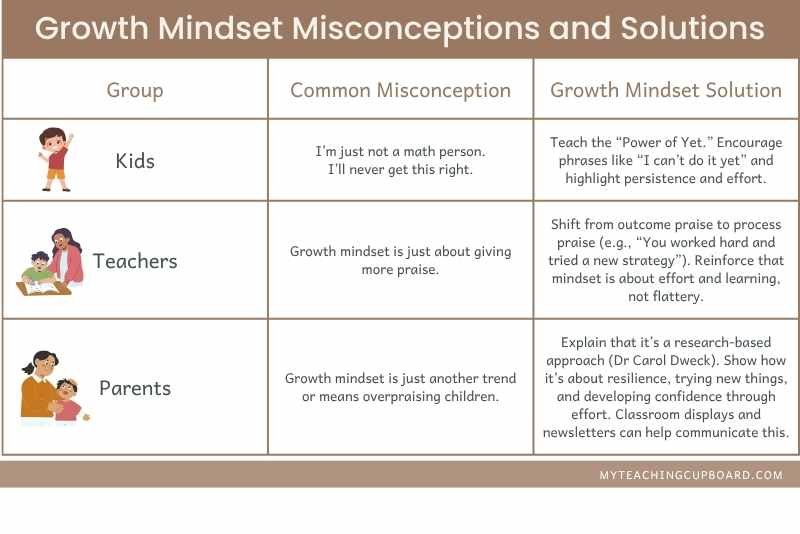
By anticipating these challenges and having clear responses ready, you can strengthen both your teaching practice and your conversations with families.
Growth Mindset Resources for Teachers
If you’re ready to bring a growth mindset into your classroom, there are plenty of quality resources available to support you. Here are some of my favourites, along with tools I’ve created especially for early years teachers.
Books to Share With Kids
Stories are one of the most effective ways to introduce mindset concepts to young children. These titles are excellent for sparking meaningful discussions:
Your Fantastic Elastic Brain by JoAnn Deak – A wonderful introduction to how the brain grows stronger with practice.
The Bad Seed by Jory John – A playful story about change and making better choices.
The Most Magnificent Thing by Ashley Spires – A favourite for showing persistence in the face of mistakes.
The Dot by Peter H. Reynolds – A simple but powerful message about creativity and having a go.

Free Programs and Videos
MindUp - Developed by The Goldie Hawn Foundation is a program that uses neuroscience research to teach children all about their brains, self-regulation, and resilience.
Class Dojo Growth Mindset Videos - A free five-episode video series that introduces growth mindset through fun animations and child-friendly stories.
PLUS My Growth Mindset Resources
Ready-to-Use Classroom Tools - I’ve designed resources to save you time and make teaching growth mindset simple and engaging:
Growth Mindset Bundle - Includes 53 posters, 51 colouring pages, and bonus covers to create affirmation or mindful colouring books perfect for preschool and kindergarten.
120 Growth Mindset and Affirmation Posters - With a lesson plan, observation checklist, and student reflection worksheet, these resources are perfect for grades 1 to 3.
These ready-made classroom resources are designed for preschool to Year 3, giving you everything you need to build a consistent routine around affirmations, self-talk, and reflection.

More Practical Tips
If you’d like more strategies and examples, you might enjoy these blog posts:
Creating a Classroom That Never Gives Up
A growth mindset can completely transform the way children see themselves as learners. With the right mindset,
mistakes become learning opportunities
challenges spark persistence
and effort is celebrated as part of the learning process.
When we teach our young kids that success isn’t about being a “natural” but about practise and perseverance, we give them valuable skill sets that last well beyond the classroom.
They gain confidence, resilience, and a positive attitude towards learning and that makes a big difference in how they approach both school and life.
As teachers, we know that mindset matters.
Helping your kids shift from “I can’t” to “I can’t yet” is one of the most powerful and meaningful ways we can support them.
Ready to bring growth mindset into your classroom?
👉 Explore my Growth Mindset Resources and check out my practical blog posts on affirmations and classroom strategies to start building a classroom culture where persistence and positivity thrive.
If you found this guide to building resilience and confidence and a growth mindset for kids useful, other teachers might too so please consider sharing it…