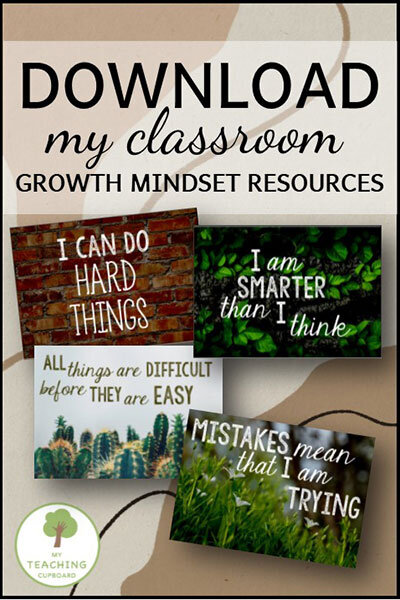
Using Affirmations to Develop a Growth Mindset for Children
Learn how to use affirmations to build a growth mindset for children with my easy classroom routines, examples, and resources. Boost student confidence and resilience.
“I can’t.”
We’ve all heard it! a child staring at a math problem, shutting down before even trying. It’s sooo frustrating, because we can see their potential! But a fixed mindset has already taken hold.
When children believe their abilities are set, they stop taking risks and lose confidence before they’ve even begun.
Unfortunately, these patterns can develop at a young age. Without the right tools, children may start to believe they’re simply “not good at” certain things, and those beliefs can follow them into later years.
But we can help. Small language changes can make a big difference.
I’m a big believer in promoting a growth mindset with the children in my class. Children with growth mindsets are not only a delight to teach but studies show they have much better outcomes than students with fixed mindsets. In this blog post I’ll share with you all the resources I use in my classroom to develop a growth mindset in the children I teach.
One of the simplest (and most powerful) strategies I’ve found is using affirmations.
When children learn to replace negative self-talk with positive statements, the positive effects ripple across their learning, their relationships, and their willingness to try new things.
Affirmations are an easy way to start building positive mindsets in your young kids, and over time, they can completely transform the way your students see themselves as learners.
What is a Growth Mindset? (A Quick Recap for Teachers)
The idea of growth mindset comes from the work of Dr. Carol Dweck, an American psychologist and professor of psychology at Stanford University. Through her research, Dr. Dweck and her colleagues studied how children’s implicit beliefs about learning shape their success. This research has become known as mindset theory.
Dr. Carol Dweck and her colleagues at Stanford University studied the mindsets of children and then identified two different types – Growth and Fixed mindsets.
Growth mindset occurs when we believe our intelligence and abilities can be improved upon with effort and the right strategies. A willingness to confront challenges, a passion for learning and viewing failure as a springboard for growth are all characteristics associated with a growth mindset. Not surprisingly, this type of mindset is strongly linked to greater happiness and achievement in life. In contrast, those with a fixed mindset believe their intelligence and abilities cannot be altered in a meaningful way. As a result, mistakes are often seen as failures rather than opportunities to grow and learn. When stuck in a fixed mindset, we may fear new experiences, avoid risks, and feel the need to repeatedly prove ourselves over and over.
Growth mindset occurs when we believe our intelligence and abilities can be improved upon with effort and the right strategies.
a willingness to confront challenges
a passion for learning
viewing failure as a springboard for growth
These are all characteristics associated with a growth mindset. Not surprisingly, this type of mindset is strongly linked to greater happiness and achievement in life.
In contrast, those with a fixed mindset believe their intelligence and abilities cannot be altered in a meaningful way. As a result, mistakes are often seen as failures rather than opportunities to grow and learn. When stuck in a fixed mindset, we may fear new experiences, avoid risks, and feel the need to repeatedly prove ourselves over and over.
For example:
A child with a fixed mindset might say, “I’m just not a math person.”
A child with a growth mindset would say, “With hard work and practice, I can learn this new skill.”
It’s easy to see how these different types of mindsets can lead children down very different paths. A growth mindset approach leads to resilience, persistence, and a love of learning, while a fixed mindset can limit confidence and motivation.
One of the common misconceptions is that mindset is fixed but the truth is, children can learn and strengthen their mindset beliefs over time.
So how do you promote that growth mindset?
One of the simplest and most effective ways is by introducing affirmations into your daily classroom routines.

Why Affirmations Are a Great Way to Build Growth Mindsets for Children
The words children hear (and the words they say to themselves) have a powerful impact on how they see their own abilities.
Words matter.
One of the most effective ways to shift children’s thinking is through positive self-talk, and affirmations give us a simple, structured way to build this habit.
Another worthwhile activity we do is to discuss negative and positive self-talk. Self-talk is usually grounded in your conscious thoughts and your core beliefs. Negative self-talk is extremely damaging to children's self-worth and has a detrimental influence on their mindset.
Teaching children to replace these negative messages with affirmations like “I can try new things” or “Mistakes help me learn” makes a huge difference in how they approach learning.
Affirmations work because they reshape mindset beliefs in a way that’s both child-friendly and practical. When we combine them with process praise, highlighting student’s efforts, persistence, and sustained effort rather than natural ability, children begin to believe that their hard work will pay off.
For example, saying “You kept trying even when the puzzle was tricky” reinforces the idea that success comes from effort, not from being instantly good at something.
I’ve found that affirmations are especially helpful when students face new material or new challenges. Instead of giving up after a wrong answer, they learn to reframe mistakes as part of the process. Over time, this mindset not only supports progress in academic settings, but also has positive effects in social and emotional learning (SEL). Children become more resilient, more willing to try again, and more supportive of their peers.
Simply put, affirmations make growth mindset work in the classroom.
They’re a daily reminder that every child is capable of learning, improving, and tackling new opportunities with confidence.
How to Use Affirmations in the Classroom (Step-by-Step)
I use class affirmations to encourage positive self-talk in the children.
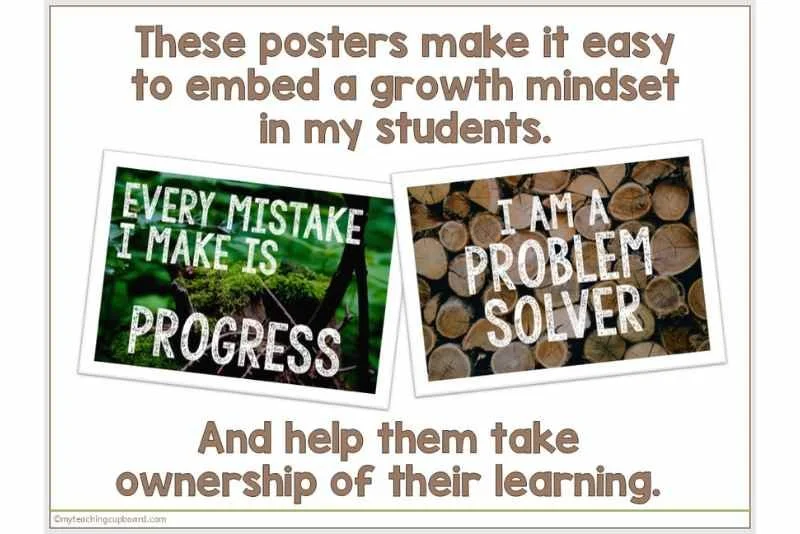
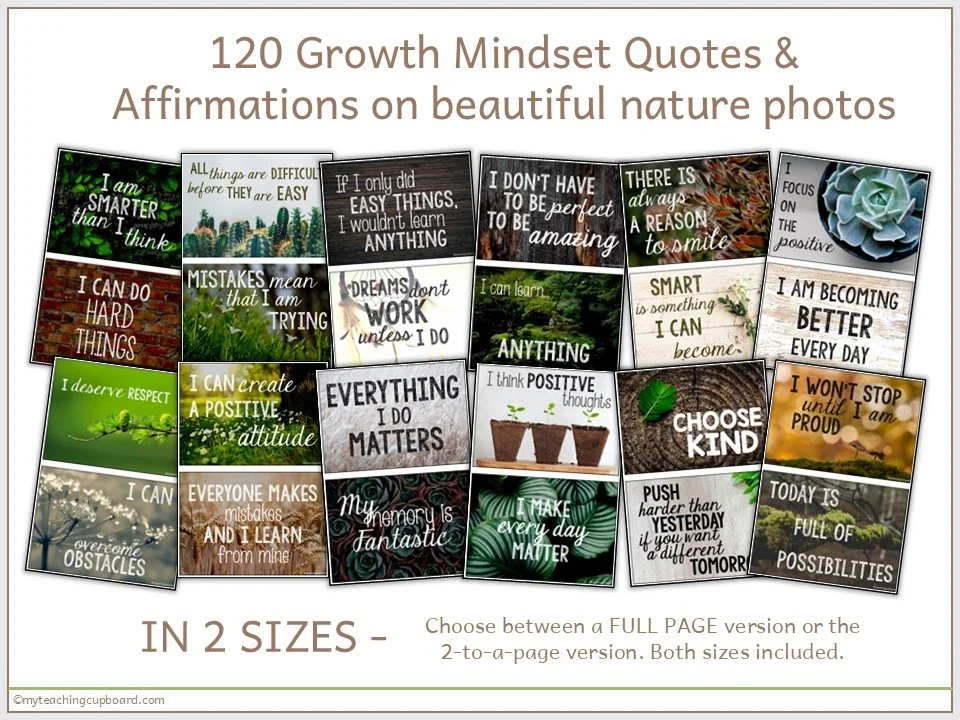
My Affirmation Posters are perfect for introducing and developing these messages. In fact, I’ve designed 120 motivational growth mindset posters with a calming, nature-inspired theme that have become a treasured part of my classroom.
They sit alongside our visual timetable and learning intentions, and I find that displaying just one or two at a time makes them far more meaningful.
Here’s the step-by-step approach I use to make affirmations a quality program that builds persistence, resilience, and confidence.
Step 1: Introduce It
Each Monday, I choose a new affirmation and display it on the main classroom whiteboard. We spend time unpacking its meaning, telling stories, and making personal connections to times in our lives when it might apply.
For example, if the affirmation is “I can learn new skills,” children might recall their first time tying shoelaces or tackling a tricky puzzle.
Growth mindset videos, like the free Class Dojo series, are also a great way to spark discussion. They help children see that mindset isn’t just words on a poster and is something they use in different situations every single day.
When we introduce the affirmation, we repeat it together three times in a row. This ritual makes the words stick and sets the tone for the week.
Step 2: Notice It
Affirmations become powerful when children start linking them to their own actions. Throughout the week, I watch for moments where my students show persistence, take on new experiences, or try a different strategy.
For example:
You said this spelling word was tricky, but you kept going. That’s a growth mindset approach!
You tried a different way to solve the problem, and it worked. That’s persistence in action.
When we notice and name these behaviours, we show children that affirmations aren’t just words. They are part of the learning process. This kind of constructive feedback reinforces the idea that effort and persistence matter most.
Step 3: Model It
Children are more likely to adopt growth mindset behaviours when they see us using them too.
I often share my own challenges openly: "When I first started teaching at this school, the new curriculum content on letter sounds was hard for me at first, but with practice, I got better at teaching it."
Books and movement activities can also make modelling engaging. Picture books like The Most Magnificent Thing show how persistence leads to progress, while physical exercises like a stretch paired with saying an affirmation out loud can keep the practice active and fun.
Even something as simple as a teacher admitting, “I made a mistake, but that’s okay because I’m still learning,” shows children that persistence and sustained effort are valuable skills, no matter our age.
Step 4: Practise It
Consistency is key.
We revisit the affirmation daily, often during circle time, tuning-in, or at our morning meeting. On Fridays, my students complete a reflection (either drawing or writing about a moment when they demonstrated the week’s affirmation).
Sometimes an affirmation resonates so strongly that I leave it up for an extra week, before moving it to a permanent display area in the classroom.
Over time, this builds a bank of affirmations children can return to whenever they need encouragement.
To keep the growth mindset practice engaging, I mix in fun activities like group chants, journaling, or even quick Zen Den brain breaks where we combine movement with repeating an affirmation.
Posters are great too. They act as visual cues - a reminder that persistence and effort are always within reach.
Using affirmations in this structured way supports not only academic growth but also effective social and emotional learning. Children learn to reframe mistakes, practise goal setting, and tackle new challenges with a more positive outlook. And as a teacher, I’ve found that having a set of resources ready to go makes it so much easier to embed this practice (without hours of extra planning and prep).
Affirmations in Action: Classroom Examples
Affirmations make the biggest impact when they move beyond classroom posters and become part of everyday classroom life. Here are a few simple but powerful ways I use them with my students:

Display One Affirmation at a Time
Rather than overwhelming children with too many options, I display a single poster on our whiteboard next to our visual daily timetable. Focusing on one message at a time makes it easier for the children to remember and apply. A single powerful word or short phrase often sticks far better than a long list.
Link Affirmations to New Challenges
When we face a math problem, a writing task, or even a first time activity like trying out a new piece of equipment, I refer back to the affirmation we’re working on.
For example, if the affirmation is “I can do hard things,” I’ll pause and say: “This feels tricky now, but remember what we’ve been saying all week - you can do hard things.”
Hearing it in context like this helps the students connect the affirmation to real learning.
Role-Play After a Wrong Answer
We sometimes act out what to say when something doesn’t go as planned.
Instead of focusing on a wrong answer, my children practise responding with affirmations like:
That’s part of the learning process - I’ll try again.
I made a mistake, but mistakes help me grow.
I have found role-play helps take the fear out of making errors and replaces it with language that encourages persistence.
Class Chants to Build Community
One of my students’ favourite routines is our affirmation chant.
We stand together and say our weekly affirmation like, “I can do hard things” in a strong, united voice. This kind of positive reinforcement builds not just individual confidence, but also a sense of belonging. The whole class feels like a team, and I hear them reminding each other to keep going when things get tough.
These small practices take only minutes, but they truly do have a big impact. When affirmations are woven into your daily routines, they become more than a pretty classroom decoration and more like living reminders that persistence and effort matter.
Ready-to-Use Growth Mindset Affirmation Resources
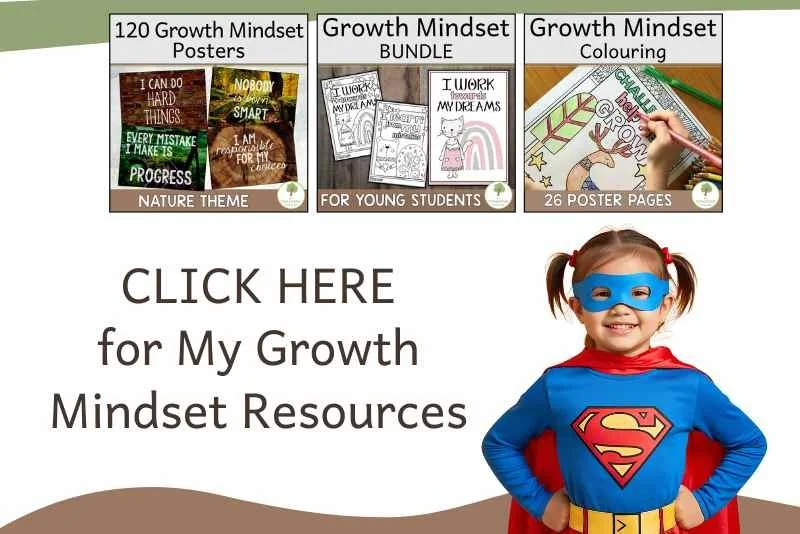
If you’d like to take the guesswork out of setting up affirmations, I’ve created some resources that make it so simple to bring growth mindset into your classroom daily routine.
These resources are designed specifically for early years classrooms, so you can build confidence and resilience without adding hours to your planning and prep.
120 Growth Mindset and Affirmation Posters
Inspire resilience and confidence with my 120 printable growth mindset posters for kids. Each affirmation is child-friendly and in a nature-themed, calming design. They will encourage self-belief and perseverance.
This pack gives you everything you need to turn positive thinking in grades 1 to 3 into daily classroom practice.
What’s Inside:
120 Growth Mindset Posters – calming, nature-inspired affirmations to boost persistence and resilience.
Ready-to-Teach Lesson Plan – step-by-step guide for introducing affirmations, sparking discussion, and linking to real-life experiences.
Printable Observation Checklist – quick and easy way to track growth mindset behaviours for assessment and reporting.
Student Reflection Worksheet – a draw-and-write template where students record a time they used persistence and match it to an affirmation.
Why Teachers Love This Pack:
Saves Time – all the prep is done; simply print and go.
Fits Your Curriculum – aligned with ACARA Personal and Social Capability outcomes.
Engages Students – visuals, stories, and personal connections make the affirmations meaningful.
Encourages Independence – students learn to notice and name their own growth mindset behaviours.
With this pack, you’ll go beyond decorating your classroom. You’ll be building a culture of persistence, positivity, and peer encouragement.

Inspire resilience and confidence with 120 printable growth mindset posters for kids. Includes a lesson plan, checklist, and worksheet to build student motivation.
Create a Classroom That Never Gives Up
Some students quit at the first sign of difficulty. Others shy away from trying in case they make a mistake. You know they’re capable of more but they just need the right tools to believe it.
This Growth Mindset Affirmations Pack gives you those tools.
You’ll get 120 printable, nature-themed posters plus a done-for-you lesson plan, observation checklist, and student reflection worksheet so you can turn positive thinking into daily classroom practice - without adding hours to your planning!
What’s Inside this Growth Mindset Resource
120 Growth Mindset Posters - Calming, nature-inspired theme with affirmations that encourage resilience, perseverance, and self-belief.
Ready-to-Teach Lesson Plan - Step-by-step guide for introducing the growth mindset affirmations, sparking discussion, and linkingit all to real experiences.
Printable Observation Checklist - Quickly record student growth mindset behaviours to support assessment and reporting.
Student Reflection Worksheet - A draw-and-write template for students to illustrate a time they succeeded at something hard and write their chosen affirmation.
Why Teachers Love This Growth Mindset Pack
Saves Time because all the prep is done — simply print and go!
Fits Your Curriculum: Supports ACARA Personal and Social Capability outcomes.
Engages Students: Visuals, stories, and personal connections make the affirmations meaningful.
Encourages Independence: Students learn to notice and name their own growth mindset and learning behaviours.
How to Use These Growth Mindset Posters
Weekly Focus: Introduce one affirmation each Monday using the lesson plan.
Daily Practice: Refer to the poster during circle time, morning meeting, student challenges or transitions.
Ongoing Assessment: Use the included checklist to track progress and celebrate growth.
Friday Reflection: Students complete the worksheet to show how they demonstrated a growth mindset.
With this pack, you’ll go beyond decorating your classroom. You’ll be building a culture of persistence, positivity, and peer encouragement.
Download your Growth Mindset Affirmations Pack today and start the shift from “I can’t” to “I can — and I will.”
👉 Download the Growth Mindset Affirmations Pack today and start the shift from “I can’t” to “I can — and I will.”

Big Growth Mindset Bundle
If you’re looking for a suite of resources to make affirmations part of your social and emotional learning program in preschool and kindergarten, my Growth Mindset Bundle is a perfect fit.
This bundle includes:
53 Matching Growth Mindset Posters – motivational inspiration for classroom displays.
51 Positive Affirmation & Growth Mindset Colouring Pages – mindful practice activities for calm corners, early finishers, or whole-class lessons.
26 Matching Growth Mindset Colouring Pages + 25 Positive Affirmation Colouring Pages – perfect for reflection activities.
2 Free Bonus Covers – to create a Growth Mindset or Mindful Colouring Book.
Quick & Easy Prep – Useful For:
Whole class growth mindset lessons.
Morning work or early finishers.
Mindful Monday activities.
Calm down corners.
Buddy class activities.
Homework or character education.
Developing positive self-talk and classroom decoration.
These resources are designed with preschool and kindergarten students in mind. The cute animal illustrations and simple growth mindset quotes appeal to younger learners and make the affirmations more relatable.
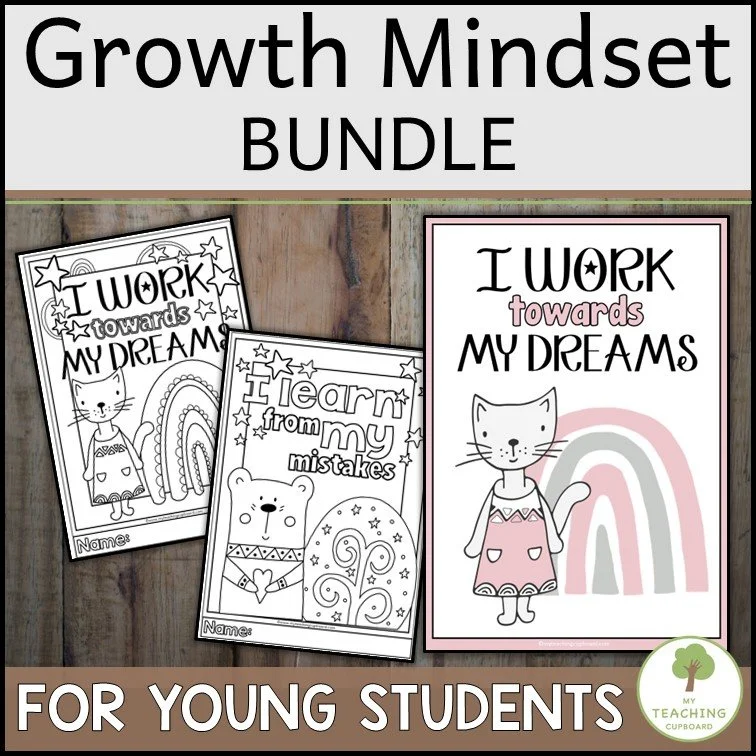
This bundle will help you teach a growth mindset to your early childhood students. Use the 51 Positive Affirmation & Growth Mindset Colouring Pages for mindful colouring activities and display the 53 Matching Growth Mindset Posters as motivational inspiration in your classroom.
Work on social and emotional learning in a fun and purposeful way by promoting positive thinking and resilience through these Growth Mindset Positive Affirmations.
Developing a growth mindset in children is so important because it will help your students overcome obstacles, develop persistence and see challenges as opportunities to learn. When your children develop a growth mindset instead of a fixed mindset, they will tackle new tasks with a positive attitude.
All teachers want that!! Teaching children with positive growth mindsets is a joy.
These resources are designed with younger children in mind. The growth mindset quotes and illustrations featured in these cute animal themed teaching resources will appeal to children in preschool, kindergarten, and grades 1 and 2.
YOU WILL RECEIVE 3 FILES CONTAINING:
53 cute animal themed growth mindset posters
26 matching Growth Mindset Colouring Pages
25 matching Positive Affirmation Colouring Pages
AND 2 FREE BONUS Colouring Book Covers. 1 for a Growth Mindset Colouring Book and 1 for a Mindful Colouring Book.
BOTH US AND ENGLISH SPELLING INCLUDED
Each growth mindset colouring page and each poster is A4 or legal paper size.
Instructions are included for you to enlarge or reduce the printout size to suit your needs.
QUICK & EASY PREP
USEFUL FOR:
Whole Class Growth Mindset Lessons
Morning Work
Early Finishers
Mindful Monday Activities
Mindfulness Coloring
Calm Down Corner
Social & Emotional Learning
Buddy Class Activity
Homework
Developing Positive Self Talk
Character Education
Classroom Decoration
SAVE MONEY WHEN YOU PURCHASE THIS BUNDLE
This amazing bundle has 51 mindful colouring sheets and 53 matching cute animal
themed growth mindset posters and positive affirmations you can use in your classroom.
SAVE MONEY on all these resources when you purchase the bundle.
👉 Grab the Growth Mindset Bundle and watch your students tackle new challenges with confidence and a positive attitude.
Quick Tips for Teachers (Common Mistakes to Avoid)
Affirmations are simple, but like anything in the classroom, they work best when used well.
Here are a few mistakes I’ve seen - and some tips on how to avoid them.
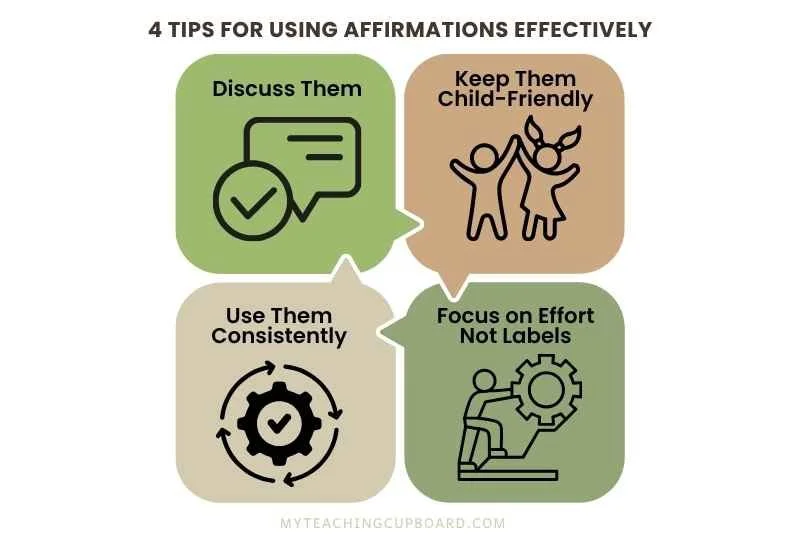
Don’t Skip the Discussion
Affirmations need to mean something to children. Simply displaying words on the wall isn’t enough.
Take time to talk about what the affirmation means, tell stories, and let your students share their own connections.
Keep Them Child-Friendly
Avoid affirmations that are too long or complicated.
Young children respond best to short, age-appropriate phrases like “I can try” or “Mistakes help me learn.” These are easy to repeat and remember.
Make It Consistent
The best way to make affirmations stick is to practise them daily. A quick two minutes in your morning circle or a reflection on Friday is far more effective than a once-off lesson.
Focus on Effort, Not Labels
Avoid empty praise like “Good job.” Instead, use constructive feedback and process praise:
I noticed how you kept trying even when it was tricky.
You used a new strategy and that helped you improve.
This reinforces the message that progress comes from effort and persistence and NOT natural ability.
💡 Want to go deeper with growth mindset in the early years?
Check out my full guide: Growth Mindset for Kids: A Teacher’s Guide
It’s packed with practical strategies, play-based activities, and helpful resources to build resilience, confidence, and persistence in your students - all while keeping learning meaningful and age-appropriate.
The Big Impact of Affirmations on Young Kids
Affirmations are such a simple tool, yet they can have a huge impact in the classroom. They help children build confidence, resilience, and persistence.
Aren't these the very qualities teachers love?
It isn't difficult to help your students to approach learning with courage and curiosity.
When used consistently, affirmations shift children from a fixed mindset to a more positive mindset. Instead of shutting down at the first sign of difficulty, they begin to see mistakes as part of the learning process and challenges as opportunities to grow.
As teachers, we play an important role in making words meaningful. The language we model and the routines we create can either limit children’s beliefs or open the door to growth.
By weaving affirmations into everyday practice, we show our students that effort, persistence, and self-belief really do matter.
👉 Want affirmations that really work? Download my Growth Mindset Resources
— a selection of ready-to-use posters, lesson plans, and worksheets - all designed for PreK–3rd grade.
Help your students embrace new challenges, develop valuable skills, and build confidence that lasts a lifetime!