
5 Easy Ways to Foster a Growth Mindset in Children
Help young children develop a growth mindset with these five practical strategies that build resilience, confidence, and a love of learning. Includes teacher tips, classroom ideas, and resources to support your students.
I once had a student who burst into tears every time she made a mistake. It broke my heart - but it also made me realise just how important it is to teach children that getting things wrong is not only okay, but it’s actually a natural part of the learning process. In fact, it’s often the first step to getting it right!
As early childhood educators, we know the importance of a growth mindset. You’ve probably heard the name Carol Dweck more than once. She is a psychologist who researched mindsets and made the distinction between a fixed mindset (believing abilities are static) and a growth mindset (believing abilities can be developed). It is her research that shows how a growth mindset is linked to greater success and intrinsic motivation.
But here’s the thing - in a classroom full of young children, how do you actually teach mindset in a meaningful way? Especially to a small child who already believes they “just aren’t a maths person” or who gives up after the first try!
Here’s something important for us to remember: growth mindset in children isn’t something reserved for older students. It begins right here in the early years when they’re still forming ideas about their own abilities, the learning process, and what to do in the face of challenges.
In this blog post, I’ll share five practical and age-appropriate strategies to help you foster a strong growth mindset in your early years classroom. You’ll also find research-based insights, real examples from my own play-based teaching experience, and links to resources (including a freebie) to help you get started right away.
Helping children develop resilience, positive self-talk, and a love of new challenges doesn’t have to be difficult. You just need the right tools, a little deliberate effort, and a belief that every child can grow - with time, hard work, and encouragement.
1.Encourage Effort, Not Just Ability
"Wow, you tried a different way when it didn’t work the first time!"
In the early years, what we praise matters. When we focus too much on results like giving compliments for good grades, or calling a child “clever”, we may unintentionally reinforce a fixed mindset.
Children begin to associate success with being naturally smart rather than with the hard work, persistence, and positive attitude it takes to truly learn something new.
Instead, try shifting your praise to effort.
Phrases like, “You worked really hard on that,” or “I love how you didn’t give up,” help children build positive self-talk and see learning as an ongoing process rather than something you’re either good at or not.
When I’m observing children during investigation time, I’m always listening for those little moments. Like when a child stacks a tricky block tower that keeps falling, but they try again with a different approach. That’s the perfect time to affirm their persistence and reinforce that learning takes time and not just talent.
And it’s not just about verbal praise either.
The way we respond to challenges in math problems, creative play, or even social conflicts sets the tone for how our children view effort. A small child struggling to tie a knot in the tinkering area or write their name on a sign-in sheet might not succeed on the first try, but they’re learning something far more powerful: resilience.
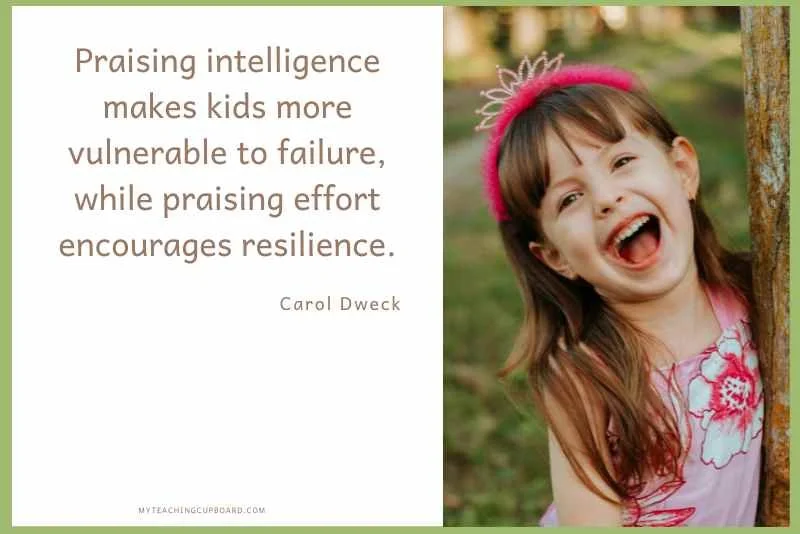
“Praising intelligence makes kids more vulnerable to failure, while praising effort encourages resilience.” – Carol Dweck
If you're looking for growth mindset activities that support this shift in thinking, check out this blog post I wrote:
👉 Affirmations & Growth Mindsets for Children
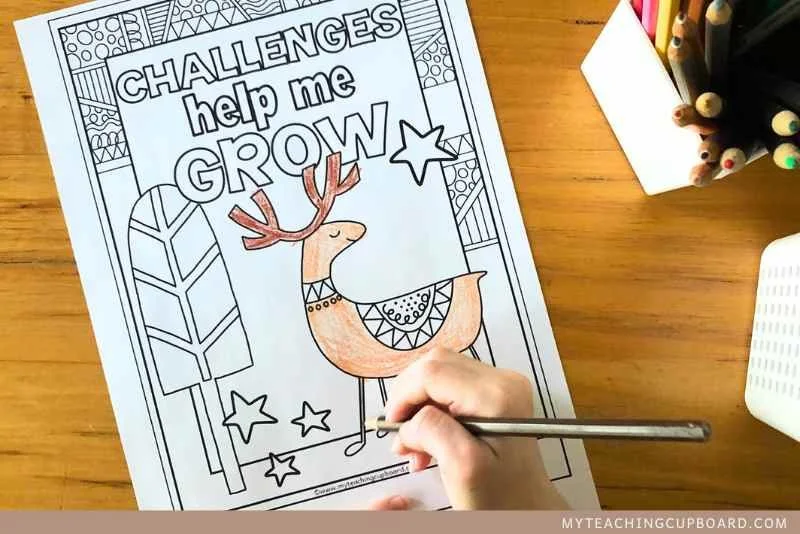
In this blog post, I share how I use growth mindset journals, mindful colouring, and positive affirmations to help my children reflect on their efforts and build confidence - even in the face of setbacks.

Over time, your class will begin to echo your language.
You’ll hear things like, “Next time I’ll…” or “I just need more practice.” That’s the best way to know the message is sticking.
And honestly? It’s a great way to foster a classroom filled with children who are excited to face new challenges because they believe they can grow.
2. Model a Growth Mindset in Your Classroom
"I don’t know the answer... yet... but I can learn it!"
If you want to see a growth mindset in children, the most important thing you can do is model it yourself. Children, especially younger kids, learn far more from watching us than from listening to what we say.
When we demonstrate a willingness to try new things, learn from mistakes, and stay calm in the face of challenges, it sends a powerful message: it’s safe to take risks here.
I often model this during whole-group teaching by thinking aloud. If I make a mistake while writing a sentence or solving a math problem, I’ll say something like, “Oops! That’s not right. Let me try a different approach... hmm... maybe if I read it again?”
It’s a subtle shift, but using language like “I haven’t figured it out yet” helps children understand that learning is an ongoing process, not something they’re expected to master on the first try.
One of the simplest ways I embed mindset modelling into my daily routine is by displaying visual reminders.
I use my 120 Growth Mindset and Affirmation Posters around our classroom, especially near our visual timetable, calm-down space, and in investigation areas. The nature-themed affirmations like “Every mistake I make is progress” or “I am a problem solver” become part of our shared classroom language.
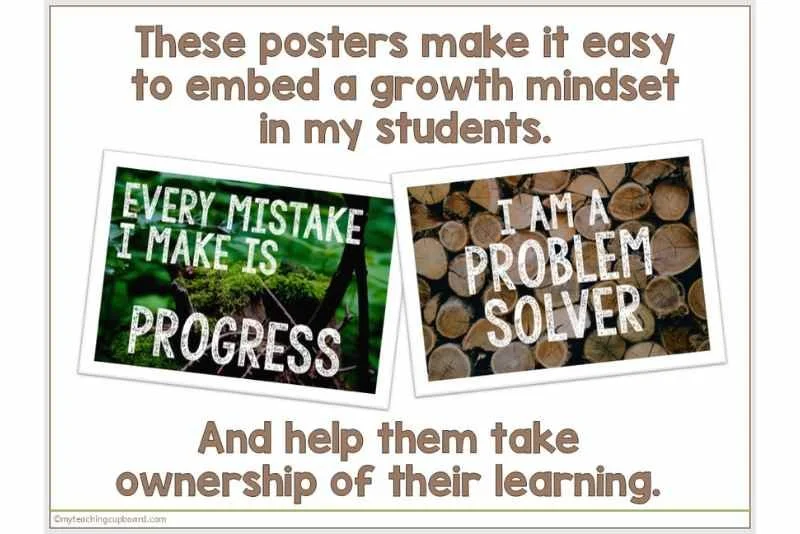
Children become what they see. If we model curiosity and persistence, they will too.
Sometimes, I’ll pick one poster to focus on for the week. We discuss what it means, share examples, and reflect on it during reflection time. I’ve found this to be a fun activity that deepens understanding and builds new connections - especially when children start applying the messages to real-life situations with peers or family members.
Want to download my beautiful set of print-ready posters you can use in your own classroom?

Inspire resilience and confidence with 120 printable growth mindset posters for kids. Includes a lesson plan, checklist, and worksheet to build student motivation.
Create a Classroom That Never Gives Up
Some students quit at the first sign of difficulty. Others shy away from trying in case they make a mistake. You know they’re capable of more but they just need the right tools to believe it.
This Growth Mindset Affirmations Pack gives you those tools.
You’ll get 120 printable, nature-themed posters plus a done-for-you lesson plan, observation checklist, and student reflection worksheet so you can turn positive thinking into daily classroom practice - without adding hours to your planning!
What’s Inside this Growth Mindset Resource
120 Growth Mindset Posters - Calming, nature-inspired theme with affirmations that encourage resilience, perseverance, and self-belief.
Ready-to-Teach Lesson Plan - Step-by-step guide for introducing the growth mindset affirmations, sparking discussion, and linkingit all to real experiences.
Printable Observation Checklist - Quickly record student growth mindset behaviours to support assessment and reporting.
Student Reflection Worksheet - A draw-and-write template for students to illustrate a time they succeeded at something hard and write their chosen affirmation.
Why Teachers Love This Growth Mindset Pack
Saves Time because all the prep is done — simply print and go!
Fits Your Curriculum: Supports ACARA Personal and Social Capability outcomes.
Engages Students: Visuals, stories, and personal connections make the affirmations meaningful.
Encourages Independence: Students learn to notice and name their own growth mindset and learning behaviours.
How to Use These Growth Mindset Posters
Weekly Focus: Introduce one affirmation each Monday using the lesson plan.
Daily Practice: Refer to the poster during circle time, morning meeting, student challenges or transitions.
Ongoing Assessment: Use the included checklist to track progress and celebrate growth.
Friday Reflection: Students complete the worksheet to show how they demonstrated a growth mindset.
With this pack, you’ll go beyond decorating your classroom. You’ll be building a culture of persistence, positivity, and peer encouragement.
Download your Growth Mindset Affirmations Pack today and start the shift from “I can’t” to “I can — and I will.”
Using these posters and this kind of positive reinforcement creates a ripple effect. You’ll begin to notice children adopting the same language. Comforting a friend by saying, “It’s okay, just try again,” or proudly declaring, “I used to get it wrong, but I kept practising!”
And that, to me, is the profound impact of embedding growth mindset into your classroom culture.
3. Create a Safe Space to Embrace Mistakes
"Mistakes mean your brain is growing!"
One of the common misconceptions in early childhood is that learning should be neat and error-free. But as educators, we know the learning process is full of ups and downs and it's often the stumbles that create the biggest leaps in understanding!
Children need to know that getting something wrong (or even giving a wrong answer) is not a bad thing. In fact, it’s a starting point.
Helping them reframe mistakes as opportunities builds confidence, resilience, and a stronger growth mindset in children.
I often use our reflection time at the end of the day to chat with my students about challenges they faced. We talk about what was tricky, what didn’t go to plan, and how they felt.
Over time, they learn that making mistakes is part of learning something new, whether it’s a math skill, building a Lego tower, or navigating a social situation.
In my classroom, I also use dramatic play and role play to explore these ideas. For example, at home corner, we might act out what happens when something spills or breaks and how we can try again. These low-pressure, high-engagement scenarios are a great way to explore problem-solving and positive self-talk.
Dweck’s research shows that normalising mistakes helps develop academic tenacity.
We also bring mantras into our daily routine. Sayings like “Mistakes help me learn” or “I can try again next time” during circle time sets the tone that deliberate effort is more important than instant success.
To support this, I love using my Growth Mindset Bundle.
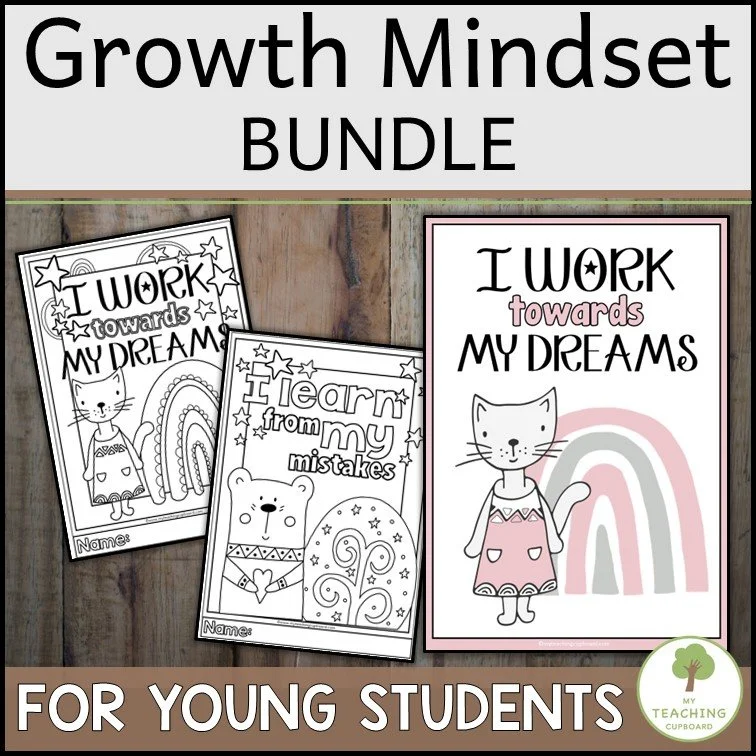
This bundle will help you teach a growth mindset to your early childhood students. Use the 51 Positive Affirmation & Growth Mindset Colouring Pages for mindful colouring activities and display the 53 Matching Growth Mindset Posters as motivational inspiration in your classroom.
Work on social and emotional learning in a fun and purposeful way by promoting positive thinking and resilience through these Growth Mindset Positive Affirmations.
Developing a growth mindset in children is so important because it will help your students overcome obstacles, develop persistence and see challenges as opportunities to learn. When your children develop a growth mindset instead of a fixed mindset, they will tackle new tasks with a positive attitude.
All teachers want that!! Teaching children with positive growth mindsets is a joy.
These resources are designed with younger children in mind. The growth mindset quotes and illustrations featured in these cute animal themed teaching resources will appeal to children in preschool, kindergarten, and grades 1 and 2.
YOU WILL RECEIVE 3 FILES CONTAINING:
53 cute animal themed growth mindset posters
26 matching Growth Mindset Colouring Pages
25 matching Positive Affirmation Colouring Pages
AND 2 FREE BONUS Colouring Book Covers. 1 for a Growth Mindset Colouring Book and 1 for a Mindful Colouring Book.
BOTH US AND ENGLISH SPELLING INCLUDED
Each growth mindset colouring page and each poster is A4 or legal paper size.
Instructions are included for you to enlarge or reduce the printout size to suit your needs.
QUICK & EASY PREP
USEFUL FOR:
Whole Class Growth Mindset Lessons
Morning Work
Early Finishers
Mindful Monday Activities
Mindfulness Coloring
Calm Down Corner
Social & Emotional Learning
Buddy Class Activity
Homework
Developing Positive Self Talk
Character Education
Classroom Decoration
SAVE MONEY WHEN YOU PURCHASE THIS BUNDLE
This amazing bundle has 51 mindful colouring sheets and 53 matching cute animal
themed growth mindset posters and positive affirmations you can use in your classroom.
SAVE MONEY on all these resources when you purchase the bundle.
I designed this resource especially for younger children - preschool, kindergarten and first grade.
It includes mindfulness colouring pages and matching growth mindset posters that help young children regulate emotions and reflect on what it means to try, fail, and grow.
I just love our quiet moments of colouring while we repeat affirmations like “I believe in myself” or “I don’t give up.” It can make a profound impact - especially for younger children who may struggle with negative thoughts when things don’t go to plan.
We have a weekly routine I call Mindful Monday. It’s such a great way to start the week! It includes calm, mindful activities like affirmations and colouring and has become essential for setting a positive tone for the days ahead.
You can read more about how I run it here in this blog post: Classroom Mindful Monday
If you’d like to bring this calming practice into your own classroom, I’ve created a FREE set of Mindful Monday Printables that you can download when you join my email list. These ready-to-use pages are perfect for introducing mindfulness, growth mindset activities, and positive self-talk in a fun, age-appropriate way.
👉 Click here to grab your FREE Mindful Monday Printables
My free pack includes some samples from my Growth Mindset Bundle and is a great way to weave affirmations and mindfulness into your daily routine. If you love the freebie, the full bundle has over 100 beautiful posters and colouring pages to support your students all year.

Creating a classroom culture where it’s safe to make mistakes doesn’t just support academic performance - it builds emotional safety, trust, and a sense of belonging.
When young children feel safe to try, fail, and try again, they’re more likely to engage with new material, persist with math problems, and take on new challenges even when the task feels hard. That sense of safety empowers them to take learning risks, ask questions, and explore different approaches - all of which lead to deeper understanding and stronger outcomes.
Research shows the effects of a growth mindset include better reading skills, improved math skills, and greater motivation across different ages - not just in primary school, but continuing through middle school and the teenage years.
It all starts with children believing their own abilities can grow with effort. And that belief begins in our classrooms, with the messages we send every single day.
4. Provide Opportunities to Try, Fail, and Try Again
"Let’s try that puzzle again in a different way!"
Children can’t develop a growth mindset if everything comes easily. Real growth happens when we create space for struggle - the right kind of struggle. Not so hard it leads to frustration, and not so easy it becomes boring. Just enough challenge to stretch their thinking and keep them engaged in the learning process.
In my classroom, I design play-based provocations and STEM invitations that allow children to test ideas, encounter failure, and try again.
Whether it’s building a tower that keeps toppling, figuring out how to build a faster ramp, or solving a tricky pattern in a loose parts setup - these are all opportunities to explore new skills and face new challenges in a safe, supported way.
It’s important to let children revisit their work over time too. The first time they attempt a task, they may not succeed. But when they come back to it with a fresh perspective or different materials, they start to realise that success often takes time, hard work, and creative thinking.
“Challenges are what make learning meaningful and memorable.”
Try asking questions like:
Can you build a bridge that doesn’t fall down?
How many ways can you make this tower more stable?
What happens if you change the shape of the base?
These types of open-ended questions not only build problem-solving skills but also teach children that failing is not the end - it’s a signal to try a different approach. Over time, you’ll see them develop the confidence to face setbacks, regulate negative thoughts, and find their own way forward.
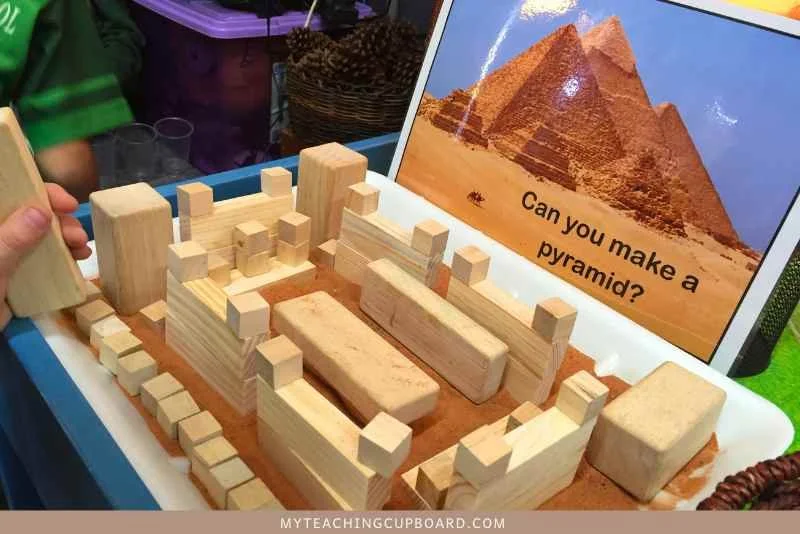
If you’d like some ready-to-use ideas for these types of challenging learning invitations, my STEM Building Prompts are full of age-appropriate challenges designed to stretch your children’s thinking while keeping the experience playful and engaging. They’re a great way to support your students in developing persistence, curiosity, and a strong growth mindset.
5. Use Affirmations and Language That Builds Belief
"I can do hard things." "I am a problem solver."
Daily affirmations may seem like a little thing, but over time, they have a profound impact on how children see themselves as learners.
When we regularly use positive self-talk and empowering language, we’re building confidence and we’re shaping beliefs.
In my classroom, we use affirmations every day - during our morning meeting, while transitioning between activities, or even as part of our calm-down time. I introduce one affirmation at a time and talk with the children about what it means.
We share examples from our own lives and connect it to what’s happening in the classroom. That might be learning to write a new letter, building a tricky STEM project, or bouncing back from a low grade on a simple assessment.
Pairing affirmations with visuals makes them even more powerful.
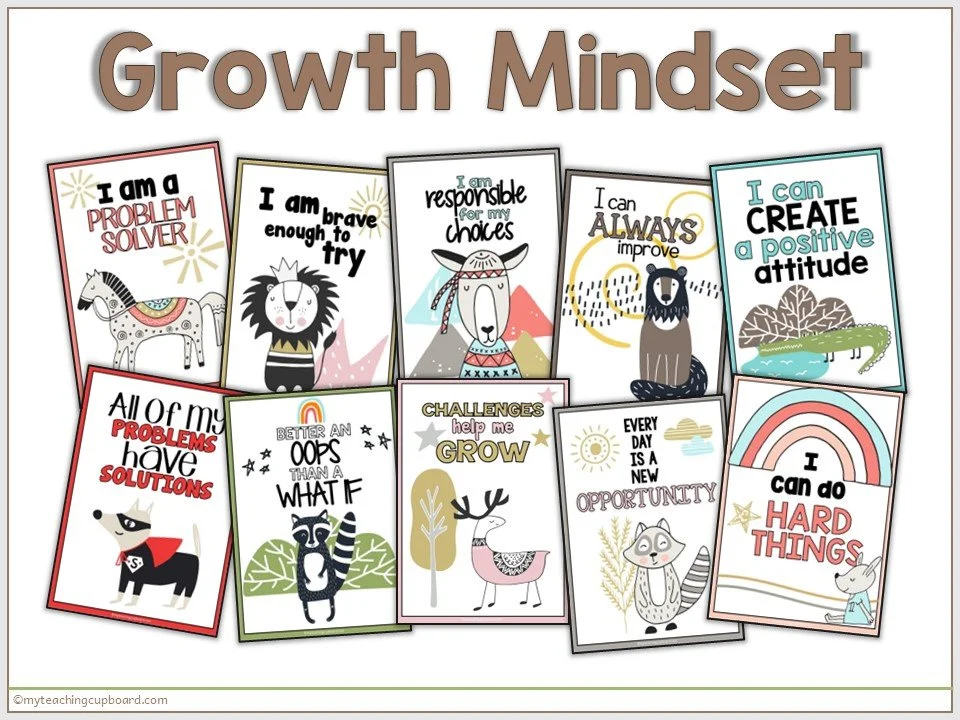
I display these types of posters next to our visual timetable, near our learning intention wall, and in our investigation areas. I’ve found that younger children respond especially well to visual cues, and when they see the same messages reinforced throughout the day, those ideas really stick.
If you’d like a simple way to start using affirmations in your own classroom, my Growth Mindset Bundle includes matching colouring pages and growth mindset posters that make it easy to build this into your existing routines.
For even more variety, my 120 Growth Mindset and Affirmation Posters offer nature-themed messages you can rotate throughout the year.
Both are designed with early childhood in mind, using messages that are age-appropriate and visually engaging.

Over time, you’ll hear these affirmations echoed in your classroom conversations. A child quietly whispering, “I can try again,” after a difficult moment might seem small, but it shows they’re beginning to internalise a positive mindset—and that’s what a growth mindset in children is all about.
💬 Frequently Asked Questions
What are the 5 characteristics of a growth mindset in children?
Children with a strong growth mindset tend to show persistence, resilience, self-belief, a willingness to take risks, and openness to feedback. These traits help them stay engaged in the learning process, even when things don’t go to plan.
Can a growth mindset be taught to young children?
Absolutely. In fact, I truly believe the early years to be the perfect time to begin. Young children are already forming beliefs about themselves and their own abilities, and we can shape those beliefs through our words, actions, and classroom culture.
Use real-life modelling, daily affirmations, and consistent messages during play and learning.
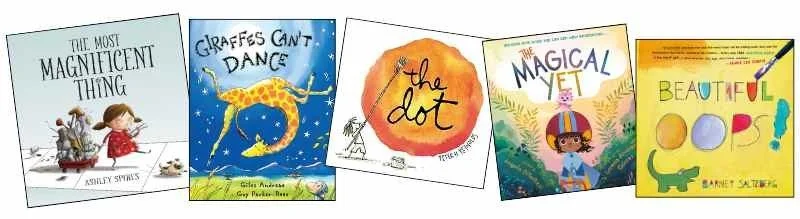
Here are some age-appropriate picture books I love for introducing growth mindset ideas:
The Most Magnificent Thing by Ashley Spires
Giraffes Can’t Dance by Giles Andreae
The Dot by Peter H. Reynolds
The Magical Yet by Angela DiTerlizzi
Beautiful Oops by Barney Saltzberg
These books spark wonderful discussions and help children reflect on mistakes, perseverance, and trying new things.
What do children with a growth mindset focus on?
They focus on effort, progress, and problem-solving and NOT perfection. These are the children who keep building even when the tower falls, who look for new connections, and who cheer on their peers rather than compare themselves. You’ll notice they’re motivated by the challenge, not the good grades.
How do I know it’s working?
You’ll start hearing mindset language popping up during your day:
That didn’t work, but I have another idea.
I’ll try again tomorrow.
This is hard, but I can do hard things.
These subtle shifts in language reflect deeper shifts in mindset - and they’re a sure sign your work is having a positive effect.
Let’s Grow Their Thinking, Together
Fostering a growth mindset in children starts with us:
shifting our praise to focus on effort over ability
modelling perseverance in our everyday teaching
creating classroom environments where mistakes are welcomed
… when we give our children the confidence to take risks, try new things, and see themselves as capable learners.
When children develop a positive mindset, they stop fearing failure and start embracing challenge.
They begin to see effort as strength, mistakes as part of the learning process, and learning itself as a lifelong journey.
This mindset doesn’t just boost their academic achievement - it shapes how they face the world, interact with others, and believe in their own abilities.
And the best part?
You don’t have to overhaul your classroom to make it happen.
Want an easy way to start tomorrow?
👉 Download my FREE Mindful Monday Printables and introduce affirmations and mindful colouring into your daily routine. These simple activities are a great way to help children practise calm focus, build positive self-talk, and approach new challenges with confidence.
And if you’d like ready-to-use classroom displays and activities, take a look at my Growth Mindset Resources with posters, colouring sheets, and affirmations that make mindset teaching easy, meaningful, and fun. These resources will help you set up beautiful and purposeful classroom activities that reinforce positive thinking, resilience, and a love of learning.
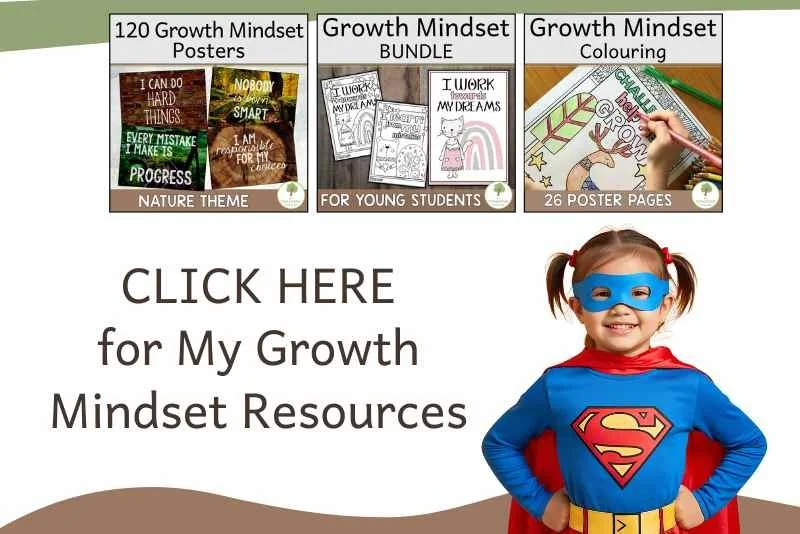
It’s the easy way to weave mindset into your daily routine - with no extra prep required.
If you are interested to see how I use these resources in a real, play-based classroom, check out this blog post: Affirmations & Growth Mindsets for Children
Ready to take the next step?
If you found these ideas helpful, you’ll love my comprehensive guide — Growth Mindset for Kids: A Teacher’s Guide
It dives deeper into how to teach a growth mindset in early childhood with research-backed strategies, play-based activities, and classroom resources to help your students build resilience, confidence, and persistence every single day.
You've already taken the first step by reading this post. Now imagine what your classroom could look like when your students start saying, “I can try again,” or “That didn’t work…yet.”
That’s the profound impact of fostering a growth mindset in children!!