
How to Make a Weighted Baby Doll for Dramatic Play
Looking for an easy way to make a weighted baby doll for your dramatic play space? Discover how this simple DIY can teach measurement and enhance play-based learning in early years classrooms.
We were knee-deep in our maths unit on hefting and measuring when I noticed something: my students believed that big things were always heavier and small things were always light. It’s a common misconception in early years maths, but I wanted to challenge that thinking in a way that felt hands-on and purposeful.
At the same time, our dramatic play baby nursery was one of the most popular spots in the classroom.
My young children were lovingly rocking, feeding, and dressing the dolls each day. But there was something missing there too. Every baby, no matter how different they looked, felt exactly the same.
And I thought: What if the dolls felt more real? More purposeful?
What if this well-loved imaginative play area could support not just emotional development, but maths too?
That’s when I had the idea to make my own weighted baby dolls - each one filled with a different amount of gravel but looking identical on the outside. Some were small and heavy. Others were large but surprisingly light.
I didn’t say anything to the children. I just placed them in the play area and let curiosity do its job.
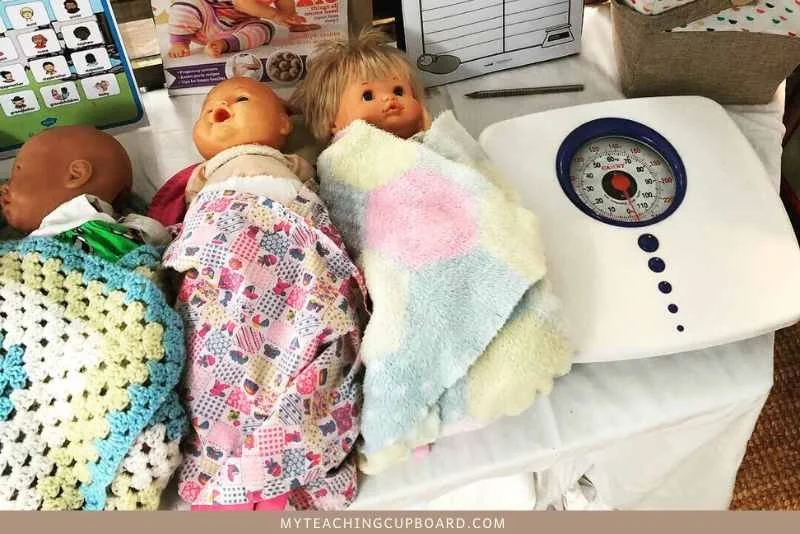
Straight away, the children began noticing:
This baby feels heavier, even though it’s smaller!
Let’s check on the scales.
Maybe this one has more inside it!
They were thinking critically, comparing weights, correcting misunderstandings - all while engaged in imaginative play. Hefting suddenly made sense. And because it was embedded in a familiar, meaningful context, the learning stuck.
Of course, the added weight also brought a beautiful realism to their play. The children held the dolls more gently, supported their heads, and rocked them with extra care. That emotional connection was just as powerful.
This simple DIY turned into one of the most effective cross-curricular provocations I’ve ever set up.
It supported:
Maths – through measurement, estimation, and data
HASS and Health – as we explored how people grow and change
Oral language and SEL – through rich vocabulary, empathy, and cooperative play
And best of all?
The kids were completely immersed - exploring, learning, and playing with purpose.
What Is a Weighted Baby Doll and Why Use One in the Classroom?
A weighted baby doll is simply a regular baby doll that’s been filled with a small amount of weight - usually gravel, poly pellets, or similar - to feel more like a real baby when held.
It’s a subtle change, but it transforms the way children interact with the doll during dramatic play and imaginative play.
You don’t need to spend a fortune either!
You can make your own weighted doll using budget-friendly materials and a simple DIY method that takes less than 20 minutes per doll.
In early years settings, weighted dolls offer so much more than just realism. Here’s why they work so beautifully in the classroom:
✔️ Teaches Hefting, Conservation, and Measurement Concepts
When children lift two dolls that look the same but weigh differently, it challenges their assumptions, and that’s exactly what we want.
They begin to:
Heft and compare
Estimate and measure
Grapple with conservation of mass (e.g. “this one’s smaller, but heavier”)
Ask meaningful maths questions
It’s hands-on problem-solving that deepens conceptual understanding and without a worksheet in sight.
✔️ Supports Realistic Role-Play
Children instinctively change the way they handle the dolls when they feel heavier. They support the head, rock them gently, and hold them with more care - just like a real baby. This deepens their role-play and helps them connect their own experiences to the world around them.
✔️ Builds Empathy and Responsibility
Weighted baby dolls encourage nurturing behaviour. Children become more invested in caring for their “baby,” often working cooperatively with others to feed, dress, and even book appointments for them in the dramatic play baby clinic.
✔️ Boosts Oral Language and Vocabulary
The novelty of a doll that looks “normal” but feels unexpectedly heavy sparks rich classroom discussions.
You’ll hear things like:
Why does this one feel heavier?
Maybe there’s something inside it!
Let’s use the scale and find out.
This natural curiosity fuels vocabulary development, sentence structure, questioning, and collaborative talk - all essential for early language learning.
✔️ Encourages Sensory Regulation
Something I didn’t expect was how the added weight had a calming, grounding effect for some children - particularly those with sensory processing needs or who benefit from deep pressure input. Holding or rocking a heavier doll can be a soothing, self-regulating experience.
✔️ A DIY Alternative to Expensive Waldorf Dolls
While Waldorf-style weighted dolls are beautiful, they’re often costly and time-consuming to make. Creating your own weighted baby dolls is a practical, affordable alternative that still delivers all the educational benefits - without the hefty price tag!
The Benefits of Weighted Baby Dolls in a Play-Based Classroom
If you’re wondering whether it's worth taking the time to make your own weighted baby doll for teaching, here’s a quick summary of the benefits they bring to your classroom:
Supports Maths Understanding
Young children learn to heft, estimate, compare, and measure - developing a stronger sense of mass and quantity through real, hands-on experiences.Encourages Empathy and Realistic Role-Play
The weight of the dolls prompts children to handle them more carefully, encouraging nurturing behaviour and responsibility.Promotes Language and Communication Skills
The novelty of the dolls sparks rich discussion and questioning - perfect for building oral language and expanding vocabulary.Enhances Social and Emotional Development
Caring for a baby - especially one that feels more lifelike and invites cooperation, turn-taking, and emotional connection.Provides Sensory Input for Self-Regulation
The gentle weight offers a calming effect for some children, making these dolls useful in both dramatic play and calm-down areas.
How to Make a Weighted Baby Doll
My Step-by-Step Guide
Making your own weighted baby dolls is simple, affordable, and incredibly effective for bringing maths learning into your dramatic play area. With just a few inexpensive materials, you can create dolls that look identical on the outside but weigh differently - perfect for exploring hefting, measurement, and the conservation of mass.
Materials You’ll Need:
4 plastic bodied toy baby dolls - Ideally with removable heads and a hollow plastic body. I avoid cloth body dolls as they’re more difficult to add weights to. They are also more difficult to clean.
➕ Tip: Make all the dolls look the same, but vary their internal weight for maths exploration.
➕ Want to go a step further? Try weighting a small doll more heavily than a large one to challenge children’s assumptions about size and weight.Gravel, poly pellets, or small clean stones
Pantyhose or knee-high stockings
A funnel or scoop
Kitchen scales (optional, but helpful if you want to make specific weights)
Step-by-Step Instructions:
Carefully remove the doll’s head
Most plastic dolls can be gently twisted or pulled apart at the neck. Work slowly so the neck doesn’t crack.Insert the pantyhose into the doll’s body
Feed the leg of the pantyhose inside the torso. Use a funnel or scoop to fill it with your chosen filler. I like gravel, pellets, or small stones. You’re aiming to create a soft “bean bag” type weight inside the torso.➕ TIP: If using scales, place the entire doll (including the detached head) on the scale to measure total weight as you go.
Tie a secure knot
Once you’re happy with the weight, tie a tight knot in the pantyhose and push it all the way into the body so it sits securely and out of sight.Reattach the doll’s head
Snap or twist it back on, using glue if needed to secure it. Just make sure the seal is child-safe and won’t pop off during play.Test and adjust
Weigh the completed doll if you want a specific weight - or simply check that each doll has a noticeably different heft when picked up. Adjust as needed before sealing everything up.
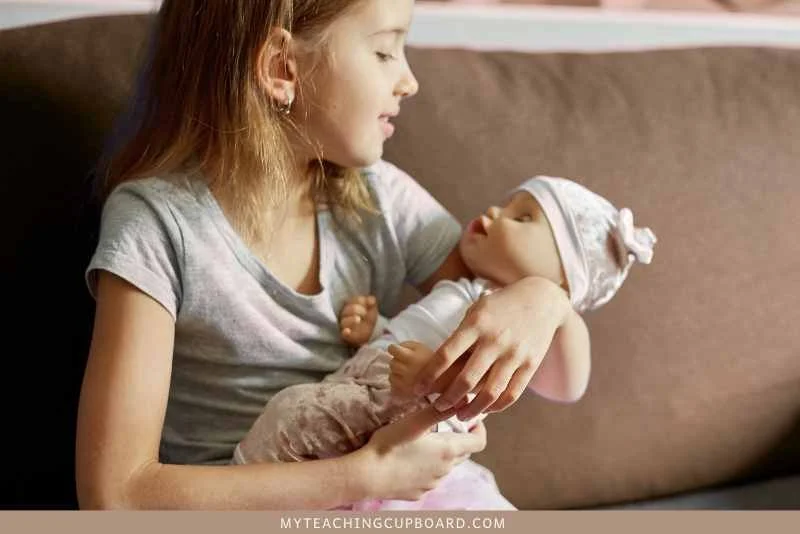
These DIY weighted dolls are durable, easy to clean, and a brilliant addition to your play-based learning environment.
In the next section, I’ll share ideas for where and how to use them across your classroom - including maths lessons, dramatic play, and calming spaces.
Where to Use Weighted Dolls in the Classroom
Once you’ve made your weighted baby dolls, you’ll find they’re incredibly versatile. You can use them in lots of different places and not just for dramatic play.
Here are three classroom-tested ways to use them across different areas of your program:
In the Dramatic Play Baby Nursery Area
This is where weighted newborn baby dolls shine. Adding a realistic weight transforms the entire baby care routine and deepens the children’s connection to their role-play. The added weight gives the dolls the feel of a real newborn baby. This realistic feel:
Encourages gentle handling, empathy, and nurturing behaviours
Children rock, feed, and weigh their babies
Promotes collaboration and expressive language as they work together to care for their dolls
Want a full dramatic play setup to match your dolls?
👉 Check out my beautiful Baby Nursery Dramatic Play Area Pack here
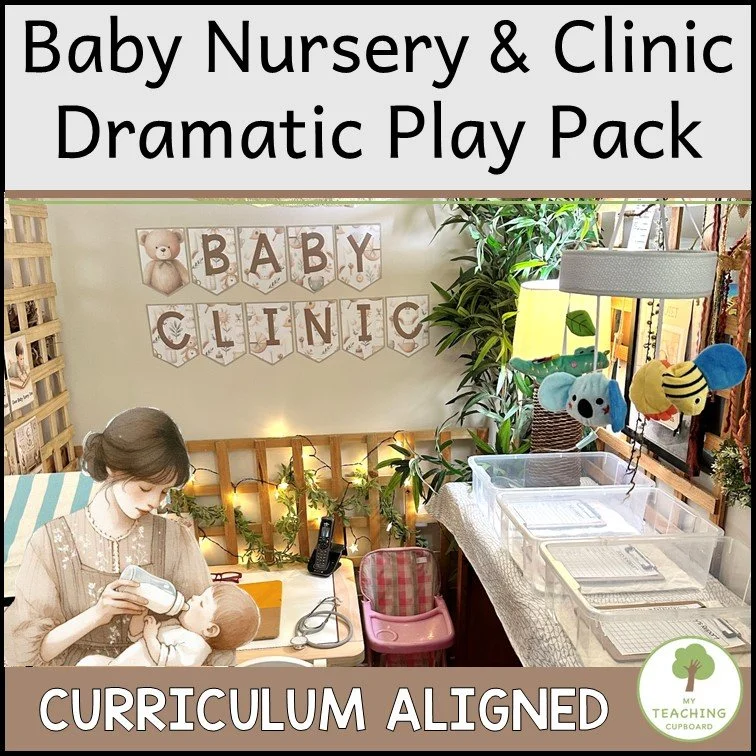
Looking for calm and purposeful dramatic play baby nursery printables? This beautiful neutral center brings baby care into your classroom with practical resources and curriculum-aligned learning.
Support Curriculum Through Pretend Play
Give your dramatic play area more…
This baby nursery dramatic play set transforms your imaginative play space into a real-world learning experience. Whether you’re exploring families in HASS, needs in science, or supporting social-emotional skills – this printable center helps you bring it all together through pretend play.
I designed this after watching my children spend days caring for our baby dolls with such intention - but the space was missing some curriculum structure. I needed a solution that looked beautiful, supported oral language, and aligned with our curriculum goals.
This is that solution.
What's Inside the Dramatic Play Baby Nursery Pack
Everything in this pack was created to build meaningful, child-led learning experiences around the theme of baby care.
Baby Nursery & Baby Clinic signs (square + bunting)
Illustrated posters of baby care routines and tasks
Check-up checklist and Sleeping Babies posters
Open & Closed signs
Role play name tags
Labels for baby food and medicine
Illustrated vocabulary cards
Illustrated task cards
Printable Baby’s Report forms
Baby name bracelets
Setup photos with teacher tips and notes
Printable posters listing Curriculum Standards
A curated prop suggestion list
Document wallet label to keep everything organised
This Dramatic Play Set Also Includes
🇦🇺 Australian Spelling and Terms + Curriculum Links (ACARA-aligned)
🇺🇸 American Spelling and Terms + Links to Common Core, NGSS & CASEL’s Five Core Competencies
Both versions are included so you can choose the one that works best for your classroom.
How to Use This Dramatic Play Pack in Your Classroom
Set up a welcoming dramatic play space in your preschool, kindergarten or gradeone classroom. Add dolls, clipboards, books, and dress-ups - and watch your students take on roles, use new vocabulary, and care deeply for their pretend babies.
This dramatic play baby nursery is perfect for:
Play-based HASS, Maths, Literacy and Science integration
Social-emotional learning and empathy building
Language development and communication skills
Calm, structured indoor play that still feels open-ended
Imagine your students writing baby reports, weighing dolls, managing a waiting area, or gently tucking their “patients” into bed.
Bring structure and curriculum learning into your baby nursery dramatic play setup — without losing the magic of pretend play.
If you are looking to set up a beautiful dramatic play baby nursery or clinic in your classroom, you will love these printables. Add your weighted dolls, clipboards, books, and dress-ups - and watch your students take on roles, use new vocabulary, and care deeply for their pretend babies.
2. In the Calm-Down Corner
Weighted dolls can also offer quiet comfort and emotional support - especially for children who benefit from deep pressure input or sensory regulation.
Adds a calming, familiar object for children to hold during quiet time
Encourages emotional self-regulation through soothing routines like rocking or hugging
Supports inclusive classroom practice for children with ASD or sensory needs
3. In Maths Lessons
Weighted baby dolls are the perfect way to explore measurement in a way that feels real and engaging. No need for separate “maths time” - just embed it into meaningful play.
Use for hefting, weighing, comparing, and estimating
Challenge students: “Which baby is the heaviest?” or “Can you order them from lightest to heaviest?”
Encourage recording: graph weights, create data tables, or make observational drawings
Discuss conservation: “Why is the smaller doll heavier than the bigger one?”
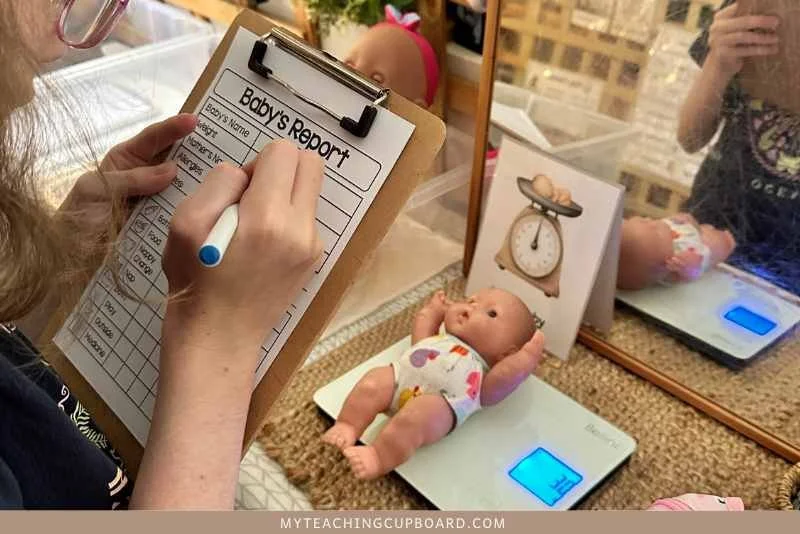
These dolls will help you integrate learning purposefully.
Whether your students are rocking a baby to sleep or analysing which doll weighs more, your students will be thinking, talking, and exploring deeply every step of the way.
Tips for Success with Weighted Dolls
Once you’ve introduced weighted baby dolls to your classroom, you’ll quickly see how much the children love them.
Here are a few helpful tips to make the most of them and keep things running smoothly.
Rotate dolls between centres to keep interest high and encourage different types of play.
Store them in small baskets with real baby accessories like bottles, bibs, and dummies to make the space feel inviting.
Use real baby blankets, nappies, and bottles to bring authenticity to your dramatic play setup.
Add clipboards, booking sheets, and baby clinic signs to strengthen literacy and communication links.
Keep a clean-up routine in place - use wipes to keep dolls clean and model good hygiene habits.
Want to make some more props for your baby doll play?
Read how I made my own soft, safe DIY baby bandages here:
👉 DIY Play Bandages for Dramatic Play

Small DIY = Big Classroom Impact
A weighted baby doll might seem like a simple DIY, but it’s one of the most powerful resources I’ve added to our classroom. We use them year after year and not just for dramatic play, but as part of our maths, literacy, and wellbeing programs.
The added realism draws children in and boosts engagement. It makes their imaginative play feel purposeful.
At the same time, hefting, comparing, and weighing the dolls directly supports the maths curriculum in a hands-on and meaningful way.
You’ll also see learning happening across the board - social and emotional development, empathy, oral language, problem-solving, and sensory regulation. All embedded in one small idea.
And the best part?
You don’t need fancy equipment or expensive dolls. Just a clever idea, a few simple materials, and a little time.
Ready to set up a beautiful, engaging Baby Clinic dramatic play area in your classroom?
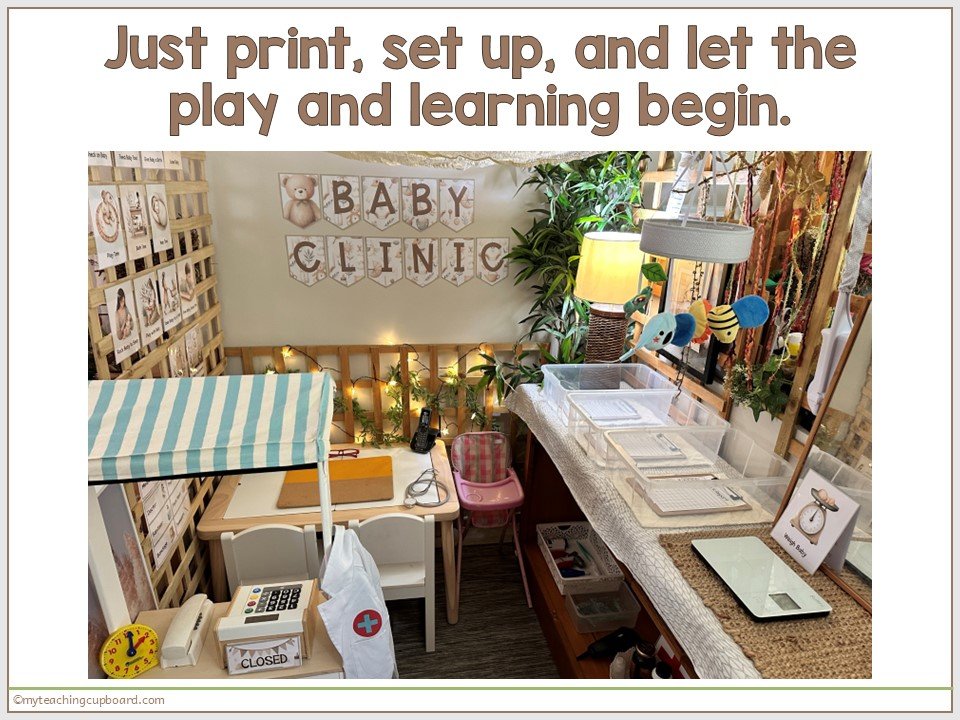
👉 Get my Baby Nursery Dramatic Play Area Pack - your weighted baby dolls will love it - and so will your kids!!