
Creating a Conducive Learning Environment in the Early Years
Discover how to create a conducive learning environment that sparks curiosity, collaboration, and deep play in early years classrooms.
Are you like me, drooling over the beautiful classrooms on Pinterest, making wish lists of all the classroom resources I simply need? A conducive learning environment is so much more than a Pinterest-worthy classroom or a fresh set of storage tubs.
In the early years, it’s an ecosystem — a living, breathing space where the social, temporal, and physical environments work together to support curiosity, belonging, and confident, independent learning.
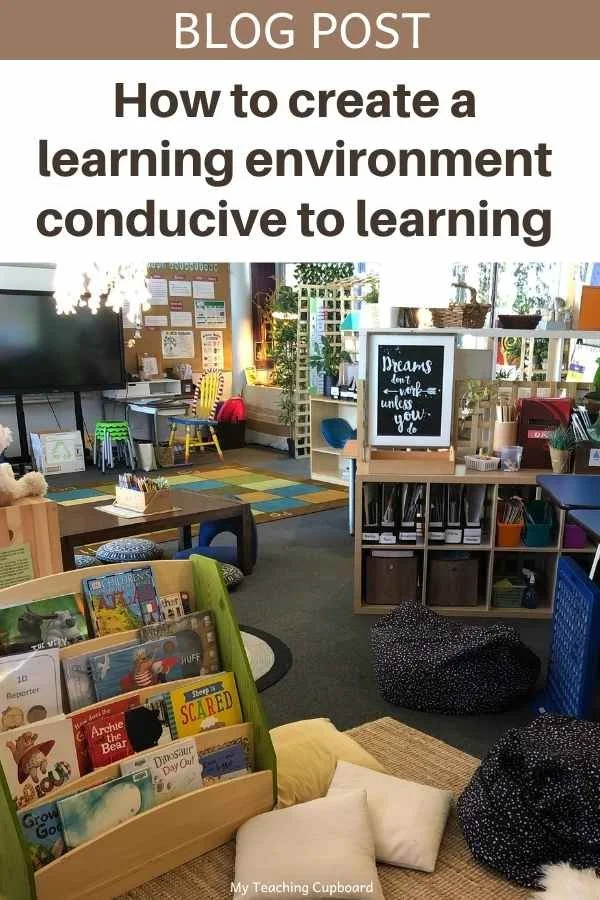
According to the Early Years Learning Spaces guide, early years teachers should deliberately, purposefully and thoughtfully make decisions about these environments to ensure they are motivating, engaging, flexible, inviting, challenging and supportive.
And if you’ve ever walked into a classroom like mine and felt that homely feeling - the kind that tells you the children feel safe, settled, and ready to learn, you already know how powerful the right environment can be.

When teachers visit my room, they often tell me:
My room looks lovely… but it still feels noisy and unsettled.
We never get too deep into play. Transitions and behaviour get in the way.
I need spaces that support calm focus, social interactions, and collaboration.
Here is what I have learned in my many years of setting up my classroom. A classroom can be visually beautiful but still not function as a positive learning environment.
A truly conducive environment reduces overwhelm, supports student motivation, and strengthens group work, individual work, and active participation.
It also nurtures positive relationships, builds a sense of belonging, and minimises common classroom management issues that interrupt the learning process.
From the lighting in the room (hello natural light) to the arrangement of materials, from consistent routines to culturally responsive spaces that honour different backgrounds and student perspectives, every detail influences student learning, emotional reactions, and even students’ academic performance.
A well-designed physical learning environment invites exploration.
A thoughtful temporal environment reduces stress and supports positive outcomes.
And a nurturing social environment strengthens wellbeing, social skills, and the strong sense of community children need for quality education.
This blog post will walk you step-by-step through how to re-tune these three interconnected layers (social, temporal, and physical) to create a supportive space where your children thrive.
I have found that even small tweaks can go a long way in creating a classroom that feels calm, intentional, and deeply aligned with how young children learn best.
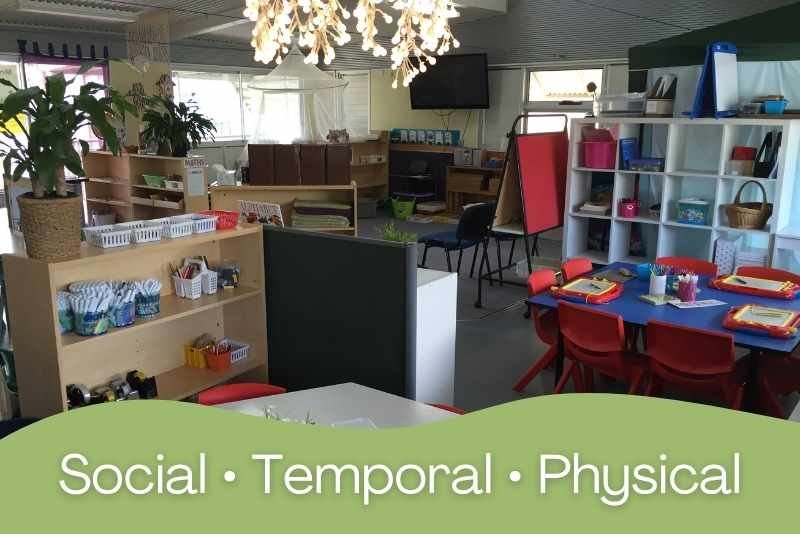
The Social Environment - Building Belonging and Connection
A conducive learning environment all starts with the people using it and not the furniture and resources. Before children can begin to collaborate, investigate, or take part in deeper learning, they need a positive learning environment where they feel seen, heard, and genuinely valued. This social foundation shapes their emotional reactions, their confidence to take risks, and their willingness to try their best - even when tasks feel challenging.
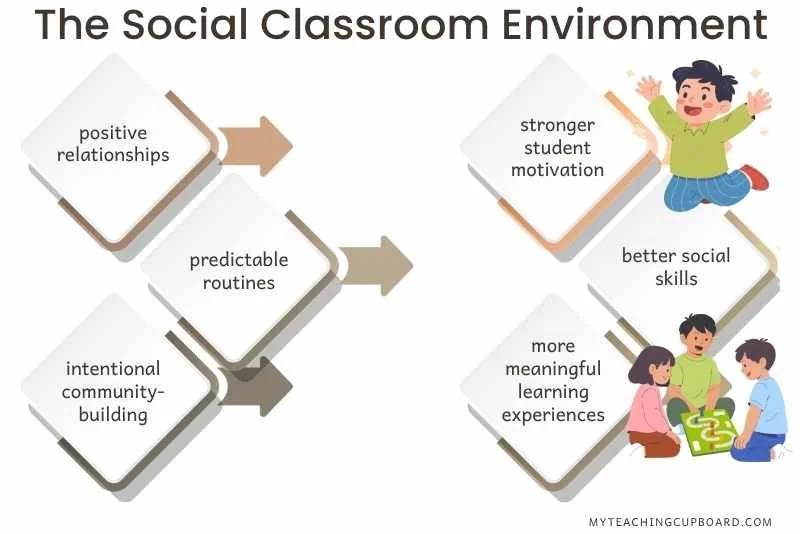
Across early childhood education, the research consistently shows that positive relationships, predictable routines, and intentional community-building lead to stronger student motivation, better social skills, and more meaningful learning experiences. When children feel a strong sense of belonging, they participate more fully, regulate more effectively, and contribute to group discussions with confidence.
This is the invisible architecture of your classroom. The interactions, expectations, and rhythms that quietly communicate to every child:
“You belong here. This is our space. You are safe to explore and learn.”
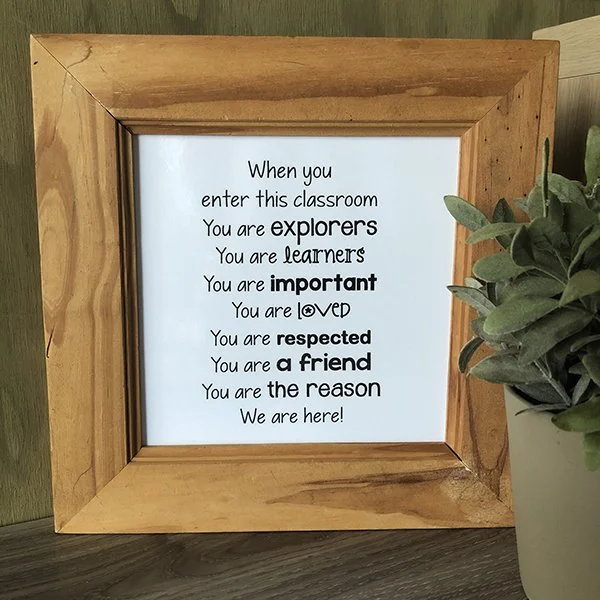
Like this quote? I have it right at our door so it’s the first thing we see when we walk in each day. You can download it for free from my Free Resources Library. It’s all ready for you to print and display in your classroom.
Build a Visible Culture of Care
A supportive social environment doesn’t happen by accident. It is cultivated intentionally through small, consistent practices that create a caring environment and encourage positive interactions.
Co-create simple expectations with children and display them visually so every child understands the classroom rules in a respectful manner.
Model emotional regulation and problem-solving aloud: “I’m feeling frustrated, so I’ll take a big breath.” This helps young learners internalise social-emotional learning.
Celebrate prosocial moments with constructive feedback: “Luca, you helped your friend tidy the blocks. That’s great teamwork.” Specific praise builds identity, ownership, and student participation.
These little strategies go a long way in supporting children’s overall well-being and also shape how they see themselves within the group.
If you want to have a productive school year, creating this type of environment and creating a classroom community really should be in your top priorities. I have a blog post: How to Build a Classroom Community that can help you.
In this blog post you will discover what a classroom community is and why building one is soooo important. If you are looking for ways to build a caring and cohesive classroom community, you will also love the ideas and activities I share in this blog post too.

Everyday Routines That Say “You Belong”
Simple, predictable routines help children settle, reduce anxiety, and build their confidence. This is especially important for young children with different learning styles or different backgrounds.
Visual timetables and predictable routines help all learners anticipate what’s next and feel secure in the learning process.
Classroom roles (photographer, reporter, line leader) give each child purpose, responsibility, and an active role within the learning community.
Morning Meetings and Reflection Time provide a supportive space for connection, emotional learning, and peer interactions. These routines are a great way to start and end the school day.
When children feel safe, valued, and connected, they are more able to engage in group work, take part in collaborative play, and contribute to classroom environment decisions.
“Relationships and emotional safety form the foundation of a conducive learning environment where curiosity can flourish.” — Age-Appropriate Pedagogies: Learning Environment
If you would like to discover how I create a peaceful learning environment in my classroom with calming routines, mindful spaces, and practical resources, head over to this popular blog post: Creating a Calm and Peaceful Classroom Learning Environment
I’ll give you practical ideas to help you reduce sensory overload, foster emotional growth, and promote student focus and I also tell you about some social and emotional learning tools that can help you to transform your classroom into a safe, calm space where students thrive.
The Physical Environment - Designing Flexible, Engaging Spaces
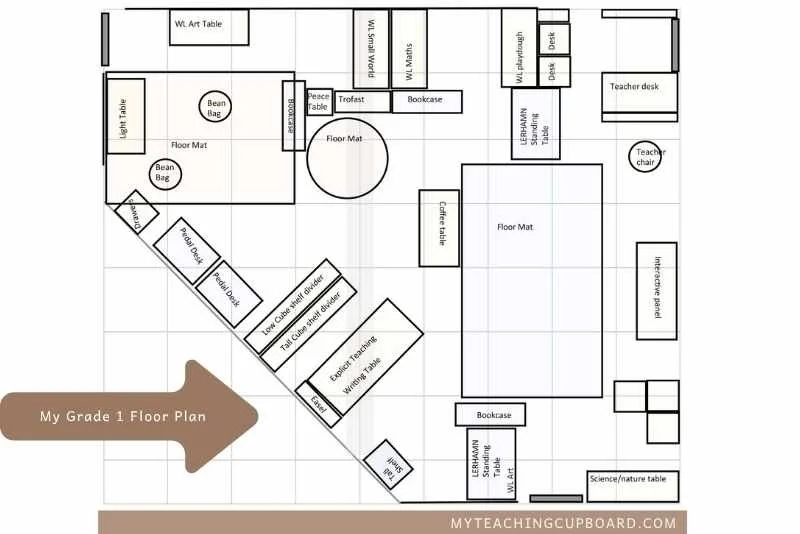
A truly conducive learning environment isn’t created by chance. It must be intentionally designed. It all starts with thinking about the spaces children move through every day.
The physical environment is the most visible layer of your classroom. It has a massive influence on student motivation, emotional reactions, behaviour, and the quality of your investigative play sessions. When your room is arranged thoughtfully, it naturally supports positive interactions, student motivation, and active participation without you needing to constantly “manage behaviour.”
Children learn best in spaces that are organised, predictable, and rich with invitation. When materials are thoughtfully arranged, and the physical environment is intentional, you’ll see calmer transitions, deeper engagement, and fewer classroom management issues as well.
The goal is not a showroom classroom…
The goal is a space where your young children feel calm, curious, and capable, and where the environment itself quietly guides their choices.
Create Purposeful Learning Zones
Design open-ended zones: dramatic play, construction areas, quiet nooks, and collaborative workspaces that cater to different learning styles.
Keep circulation paths clear to reduce sensory overload and frustration — a great way to support mental health and positive behaviour.
Use low shelves, natural light, and calming colours to help children self-regulate and stay focused.
Ensure that every zone supports different learning styles — individual work, small-group collaboration, and group projects.
👉 If you want some practical ideas for how to set up each zone in your classroom, my blog post: The 10 Essential Areas of a Play-Based Classroom is a great next read. It walks you through my proven strategies for arranging your physical learning environment so it supports focus, independence, and rich learning.
So if you are ready to transform your classroom for play-based learning, check out this detailed blog post outlining the 10 essential areas you need to create engaging and educational spaces for your students to learn through play and say goodbye to classroom management struggles.

Curate Materials with Purpose
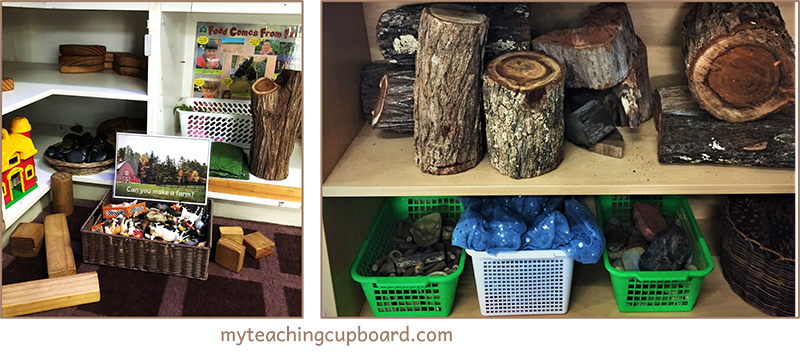
Place materials in open baskets or trays so children can self-select tools and resources.
Provide a thoughtful mix of natural, recycled, and open-ended materials (shells, buttons, sticks, lids) to support sensory exploration and fine-motor development.
Label containers with photos and words to promote autonomy, literacy skills, independence, and reduce pack-up stress.
Add tools that prompt literacy and numeracy during play. Think clipboards, sticky notes, price tags, tally sheets, and measuring tapes.
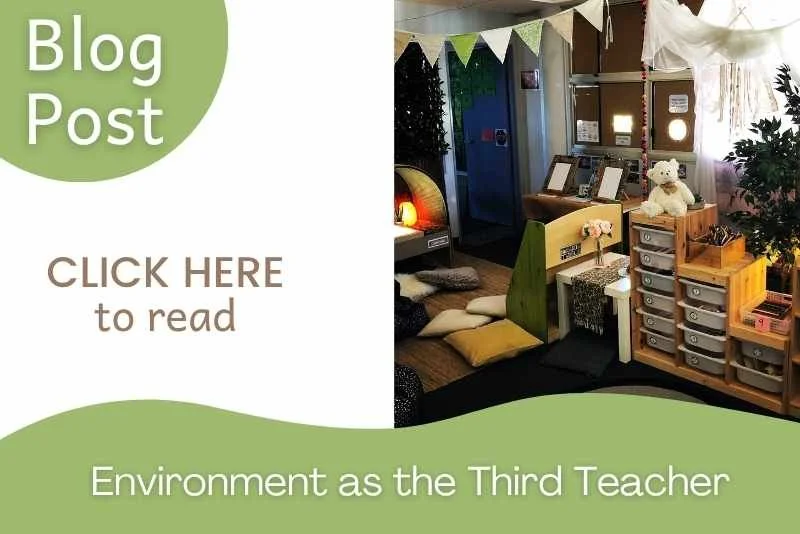
👉 If you’re creating provocations or if you’re looking for inspiration on designing calm, beautiful, and functional spaces, my blog post: The Environment as the Third Teacher explores how you can use the physical environment to communicate expectations, build a sense of belonging, and support quality education.
Invite Children’s Voice and Culture
Display student work and documentation at children’s eye level to strengthen ownership and pride.
Involve the children in rearranging shelves, setting up provocations, or stocking materials. This is powerful for building a sense of belonging.
Include culturally responsive resources and images to ensure every child’s background and identity is represented respectfully.
A conducive environment isn’t static. It should evolve with your learners. The Early Years Learning Spaces Tool reminds us that the best environments are carefully designed yet flexible enough to let children make meaningful choices, work independently, participate actively, and experience positive outcomes across the school day.
Reduce Overstimulation and Classroom Management Issues
Sometimes, what we label as classroom management issues are actually environment problems.
When the physical environment is too colourful, cluttered, noisy, or visually overwhelming, young children can experience emotional reactions, sensory overload, and difficulty concentrating.
A busy room can make it harder for students to regulate, participate, and give their best effort - no matter how strong your routines are.
A conducive learning environment should feel like a supportive space where children can think clearly, move freely, and feel emotionally safe. This is especially important for student mental health and for children with neurodivergent needs, trauma backgrounds, or heightened sensitivities.
Try:
Softening colour palettes to reduce visual noise
Using natural materials to create a grounding atmosphere
Minimising clutter so the physical environment supports focus
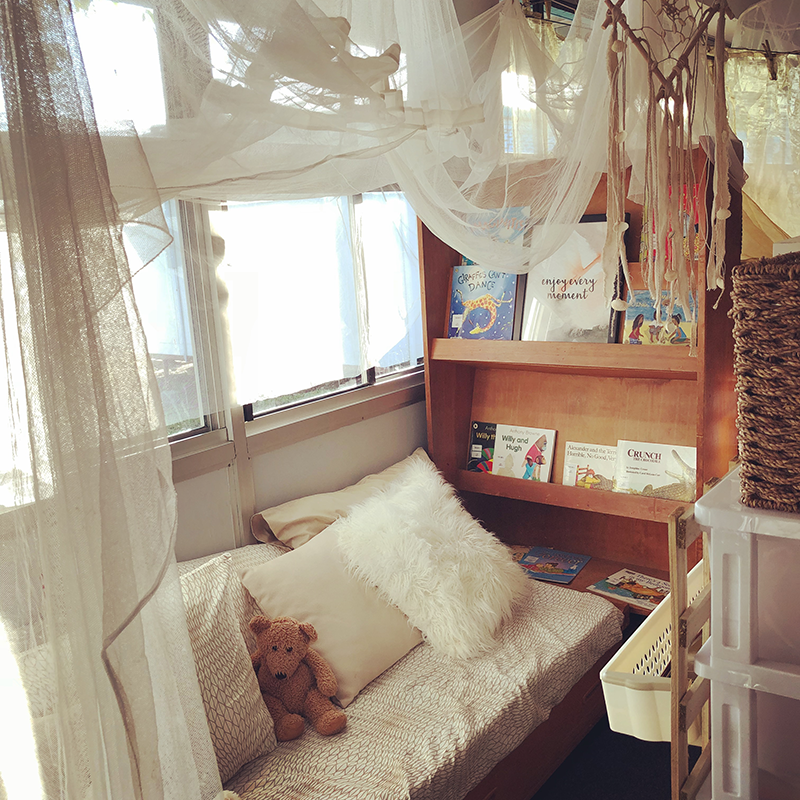
Offering cosy nooks and quiet corners for emotional support and self-regulation
Over the years, I’ve learned that creating a truly positive learning environment goes far beyond having just a “calm-down corner.” It’s more about creating an atmosphere where every child feels that strong sense of belonging, where the physical learning environment reduces stress instead of adding to it, and where children are free to learn in a healthy way.
If you’d like help creating a peaceful space that supports student motivation, social interactions, and overall well-being, check out my blog post: Creating a Calm and Peaceful Classroom Learning Environment. It breaks down the small environmental shifts that go a long way in helping children feel safe, regulated, and ready for rich learning.
A calmer room = calmer children.
Ensure the Environment Matches the Learning You Want to See
One of the most important (yet often overlooked) parts of creating a conducive learning environment is making sure your physical space actually reflects the learning behaviours you want to encourage.
Think about the type of environment children experience. The physical space communicates expectations long before you give any direction.
For example:
Want collaboration? Provide generous floor space, shared materials, and group work zones that naturally foster peer interactions and positive relationships.
Want persistence? Add timers, measuring tapes, challenge cards, or construction prompts to inspire problem-solving and student participation.
Want creativity? Offer art, construction, tinkering, and loose parts throughout the day and not just during scheduled “art time.” Creativity thrives in spaces where children feel free to explore, experiment, and take ownership of their learning experience.
Want autonomy and independence? Ensure tools are reachable, materials are labelled, and children can access resources without adult help.
When your environment reflects your learning goals, children’s academic performance, social development, and emotional confidence all grow. This alignment is a critical part of designing effective learning environments that honour different learning styles, individual needs, and the rights of all persons in your classroom community.
The Temporal Environment - Protecting Time for Deep Play
A truly conducive learning environment relies on time. Time to think. Time to negotiate. Time to problem-solve. Time to be in the learning process without feeling rushed from one activity to the next.
Time itself is a pedagogical tool.
Young children need long, predictable periods for exploration so they can enter a state of deep play, develop concentration, and strengthen cognitive skills.
In my own classroom, I’ve seen the transformation that happens when we stop squeezing play into tiny ten-minute pockets. When children can linger, revisit, and refine their ideas over an investigations session or even over several days, their creativity increases, their social interactions become richer, and their persistence skyrockets.
This is when the real magic — and the real learning — happens.
Structure for Flow, Not Rush
When your timetable supports flow rather than urgency, children experience a more positive learning environment and are far more able to self-regulate and engage deeply.
Try:
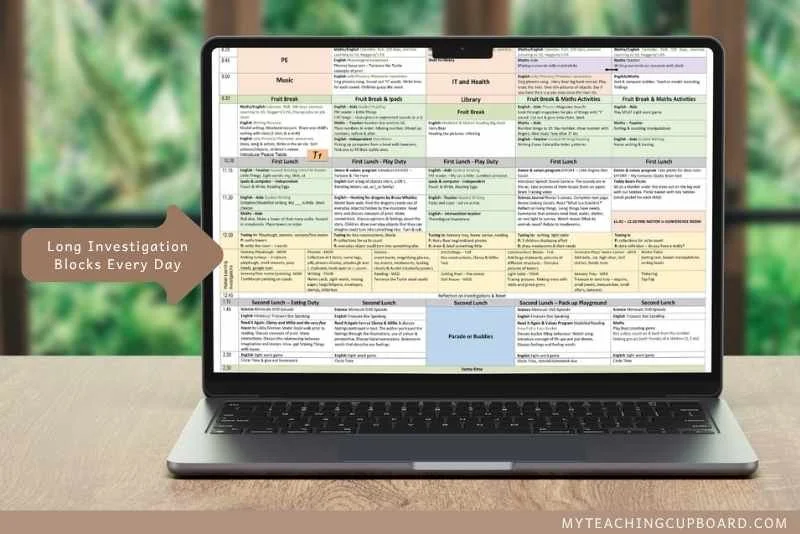
Protecting long blocks (45–60 minutes) for Investigation Time or inquiry-based play - These extended periods allow children to build stamina, practise social skills, and follow their interests in meaningful ways.
Balancing explicit teaching with child-led exploration - Using the “I do → We do → You do → Play” sequence gives children strong foundations while still honouring their agency and independence.
Teaching smooth transitions - Predictable, well-rehearsed routines reduce classroom management issues and give children emotional support during switches in activity.
This type of environment supports stronger student motivation, deeper engagement, and more successful learning outcomes across the early years.
Plan for Flexibility
A flexible temporal environment supports children’s curiosity and allows room for the unexpected. Flexibility is a key element of effective learning environments.
Leave pockets of “float time” for spontaneous discoveries or extended investigations. These little buffers go a long way in reducing stress and supporting a calmer classroom atmosphere.
Have provocations prepared to extend emerging interests: magnifying glasses after an insect find, scales during a balancing challenge, and natural materials when children show renewed interest in construction.
These intentional choices create a supportive space where children feel safe to explore, think, and take learning risks.
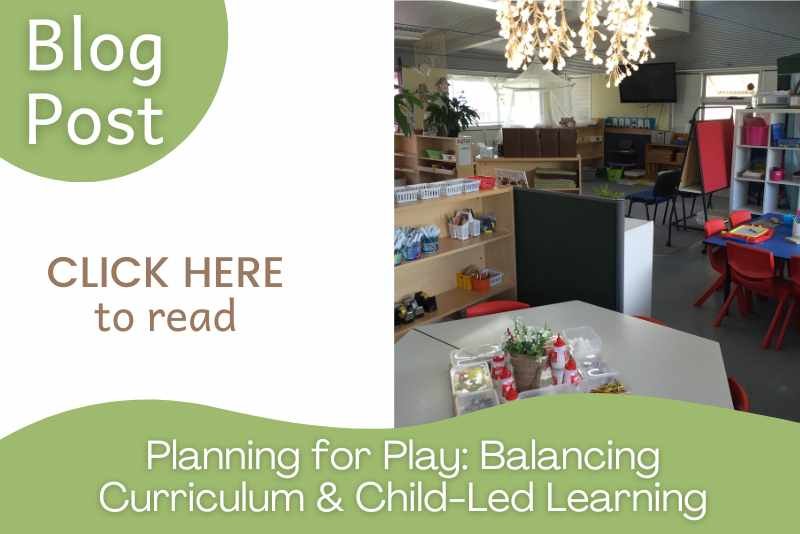
If you’d like to see how temporal, physical, and social environments all work together to create a truly supportive classroom atmosphere, you will find this blog post useful: Planning for Play in the Early Years. It outlines how to balance routines, agency, and intentionality so you can design a day that sets your children up for success.
Creating Calm and Purposeful Routines
Predictable routines are your anchor in a busy early years classroom. When children know what comes next, the whole learning process becomes so much smoother. You’ll see transitions settle, play deepen, and behaviours soften.
Calm routines aren’t about rigid schedules though. I’m talking more about creating a steady rhythm that supports student motivation, emotional regulation, and meaningful learning.
Try embedding simple routines such as:
Gentle sensory cues: soft music, dimmed lights, or breathing exercises to help signal transitions calmly and without creating overwhelm.
Transition rituals: a tidy-up song, a “one-minute warning,” or a visual countdown can significantly reduce anxiety and boost student participation.
End-of-session reflections: this is similar to a sharing circle. Ask questions like, “What did you discover today?” or “What will you continue tomorrow?” to help children process their experience and strengthen metacognition.
Planning-for-tomorrow prompts: invite your children to add ideas to a “What We’ll Explore Next” chart to build ownership and sustain momentum across the week.
These small yet intentional routines will help you shape a positive learning environment where your children feel secure, centred, and ready to learn. They also give you valuable insight into what’s working and what needs to be revisited.
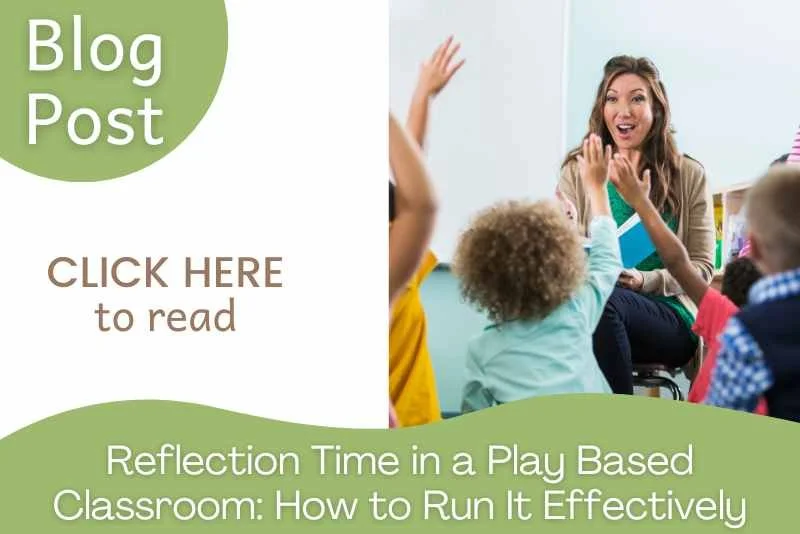
We always close our investigative play sessions with a reflection session. This is a non-negotiable part of play based learning where my children begin to recognise themselves as learners. They connect ideas, notice progress, and build the metacognitive skills that sit at the heart of a truly conducive learning environment.
Want to make reflection time meaningful rather than “one more thing to fit in”?
Take a look at my blog post: Reflection Time in a Play-Based Classroom: How to Run It Effectively.
You’ll learn why reflection is a vital part of a play-based program and how to use simple Walker Learning–inspired strategies to help your children connect their play to the curriculum — calmly and confidently.
Quick Wins - Low-Prep Provocations to Rotate All Term
Even small adjustments to your setups can make your classroom feel calmer, more intentional, and far more conducive to meaningful learning. You don’t need a total room overhaul. Just a handful of flexible provocations that spark curiosity and support student learning across the day.
Try rotating some of these simple, low-prep ideas:
Makerspace or Collage Trolley: paper strips, arrows, and dot stickers will invite children to create maps, pathways, and labels.
STEM Trays: tape, clips, ribbon for fix-it challenges that invite test-and-tweak problem-solving activities.
Dramatic Play: loose parts and some blank tags will encourage pricing in a play shop, counting and social skills like role negotiation.
Small World Trays: add small toy figurines and some sticky note speech bubbles to prompt literacy skills like creating dialogues, sequencing events and vocabulary building.
Blocks Area: wooden blocks and a tape measure are the perfect way to “build to spec,” record heights and compare lengths.
Each of these ideas for setups naturally invites children to talk, read, write, count, negotiate, and reason. These are the hallmarks of a truly conducive learning environment where deep play and deep thinking can flourish.
Want to take your learning provocations to the next level?
You can take your provocations even further and set them up with confidence and clarity. Just check out my blog post: 3 Steps to Setting Up Learning Provocations for Play-Based Learning for your next read.
This is a practical guide that walks you through creating intentional, engaging spaces that honour the curriculum and children’s developmental needs. It’s the perfect next step if you want provocations that run smoothly, spark curiosity, and lead to meaningful learning.

Evaluate and Evolve - Reflective Questions for Teachers
A truly conducive learning environment is never “finished.” Even the most thoughtfully designed classroom needs regular tuning.
Children grow, interests shift, and group dynamics evolve, and your environment should evolve with them.
Reflection for you doesn’t need to be complicated. Small observations can lead to powerful insights. Try reviewing your space each week using these guiding questions:
Social Environment Checks
Who feels included?
Who is hovering on the edge of play or group work?
Do children have opportunities for positive interactions and a strong sense of community?
Physical Environment Checks
Do materials genuinely invite curiosity and independence?
Are pathways clear, calming, and accessible for all children?
Does the physical environment support different learning styles (quiet, active, collaborative, individual work)?
Temporal Environment Checks
Do children have long enough blocks for deep play and sustained focus?
Are routines calm, predictable, and focused on supporting the learning process?
Is there enough flexibility for spontaneous discoveries or emerging interests?
These quick reflection prompts will help you tune in to what your children actually experience in the room so you can make meaningful changes that improve engagement, well-being, and student motivation.

🎁 Free Download: Learning Environment Audit Checklists
Instantly identify one small, high-impact change you can make this week with my learning environment checklists.
This printable includes Social, Physical, and Temporal environment checklists so you can evaluate your classroom with confidence and clarity.
➡️ Grab it HERE in my Free Resource Library.
Perfect Pairing: My Loose Parts Resources Collection
If you’re looking for easy ways to refresh your provocations without adding to your workload, my Loose Parts collection of resources are the perfect companion to this audit tool.
These printable resources help you create low-prep, high-engagement invitations that build fine-motor skills, language, creativity, and problem-solving — in any area of your conducive learning environment.
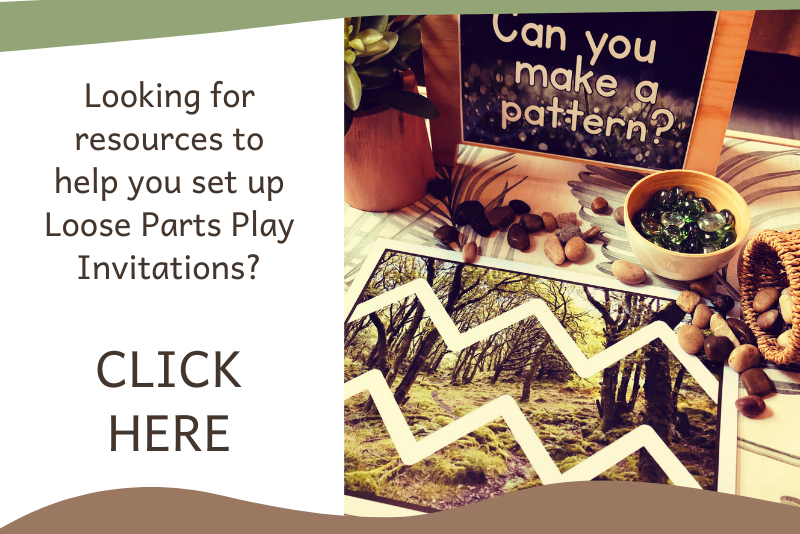
Play-based materials like my loose parts resources will help you to transform your classroom setups into a springboard for creativity and deep curriculum learning and give your children meaningful ways to explore, express, and think.
Calm Spaces and Deep Play = Lifelong Learners
When the social climate says “You belong,”
The physical layout says “You can,”
And the timetable says “Take your time,”
children flourish.
A conducive learning environment doesn’t require a full-on classroom redesign. It’s slowly built through intentional, achievable tweaks! The kind that make learning visible, relationships meaningful, and play purposeful.
Start small.
Shift one routine, one corner, one time block.
And watch what happens. You’ll begin to see calmer behaviour, richer language, and deeper learning across your day.
Your Next Steps: Build on What You’ve Learned
If you are looking to create an effective play-based learning environment that enhances student engagement and promotes academic success, head over to this blog post: Creating an Effective Play-Based Learning Environment

This blog post walks you through eight proven strategies to transform your classroom into an inspiring, well-functioning space. From setting clear expectations to designing zones that support collaboration, creativity, and deep thinking.