
The Perfect Loose Parts Play Setup for Early Childhood Classrooms
Discover how to set up the perfect early childhood loose parts play area with simple tips on choosing materials, designing spaces, and using provocations to spark creativity, problem-solving, and learning.
Setting up a dynamic, play-based learning environment can feel overwhelming for early childhood educators, especially when you’re balancing student engagement with curriculum goals in the early years of schooling.
You might be wondering:
How do I choose the right loose parts?
or Where should I even start setting up a loose parts area?
It’s easy to get stuck trying to make your loose parts learning invitations both engaging and educational for your young learners.
But I’ve got some good news for you!
You can set up an inspiring, curriculum-aligned loose parts play area with just a few simple components.
Early childhood loose parts play is most successful when the environment is intentionally set up to encourage independence, creativity and open-ended exploration. The way materials are organised and presented in the classroom can make a huge difference to how children use them and the types of learning experiences that develop.
In this blog post, I’ll guide you through what makes a perfect loose parts play setup, focusing on 3 key components every early childhood classroom needs. By the end, you’ll have a blueprint for implementing loose parts play that activates creativity, supports developmental growth, and keeps your students engaged and learning.

Whether you're just starting out in early childhood education or looking to expand your use of loose parts, this blog post will walk you through a starting point that’s both practical and inspiring.
New to Loose Parts?
If you're feeling unsure where to begin, I’ve put together a free Educator’s Guide to Loose Parts Play that walks you through everything step-by-step — what loose parts are, how to use them, and simple ways to get started in your classroom.
👉 Download the free guide here
What are Loose Parts?
The idea of loose parts was introduced by architect Simon Nicholson, whose theory of loose parts suggests that environments rich in different materials and endless possibilities support richer creative expression and learning experiences.
You can read more about loose parts and get over 150 ideas for types of loose parts you can use in the classroom here: Loose Parts Resources

What is the Perfect Loose Parts Play Setup for Early Childhood Classrooms?
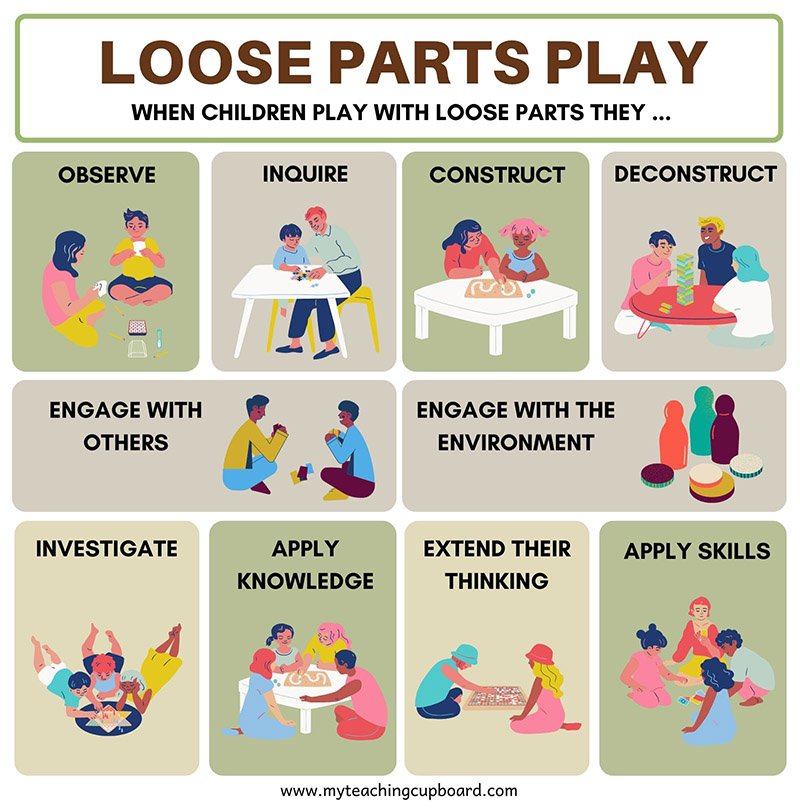
Loose parts play involves providing young children with open-ended materials they can manipulate, move, and arrange in different ways.
It’s a flexible form of play that aligns with the Reggio Emilia philosophy, allowing students to build, create, and explore their learning environment in unique ways.
In other words: Loose parts play gives children a foundation for deep, creative thinking, encouraging problem-solving and higher-order thinking.
The added benefit is that loose parts play is highly adaptable, meaning you can keep it fresh and relevant to different learning goals year-round.
If you’d like to learn more about the developmental and curriculum benefits of loose parts play, you can read more here on this blog post: Benefits of Loose Parts Play.
Step 1 – Thoughtful Selection of Loose Parts Materials
The key to effective loose parts play is offering a wide variety of materials - both natural materials and man-made materials - that children can use in different ways to express their own ideas.
The materials you choose are the heart of your loose parts setup.
These materials can include natural objects (like stones, sticks, and leaves) and small objects (such as buttons, bottle caps, or fabric scraps) that children can explore in open-ended play.
Items like pine cones, popsicle sticks, cardboard boxes, and even toilet paper rolls are just a few everyday materials that can be transformed in countless creative play scenarios.
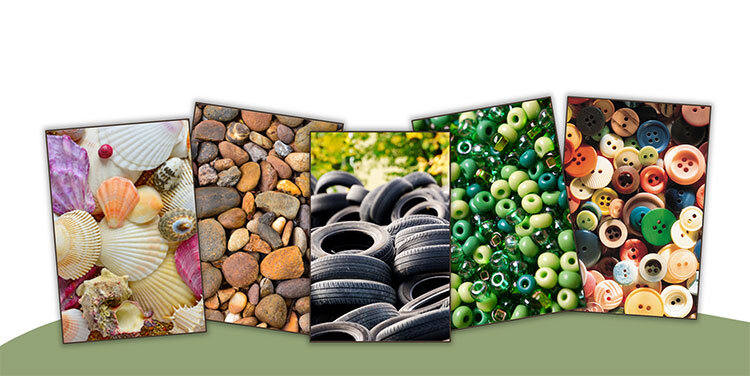
Sourcing from local hardware stores or thrift stores is a great way to build your loose parts collections on a budget.
Loose parts selection is crucial because materials that are diverse in size, colour, and texture will engage your students’ senses and support their curiosity and fine motor skills.
Many teachers starting with loose parts feel uncertain about which materials will yield the best learning outcomes. If materials are too limited, play might lack variety; if they’re overly specific, children may not use them in imaginative ways.
The key to building an engaging loose parts collection is starting small.
Gather everyday objects you already have and gradually add items from nature or other affordable sources. Choose open-ended materials that can be used in a variety of ways, encouraging children to problem-solve, build, sort, and engage in free play.

Step 2 – Defined Play Spaces and Accessibility
In a play-based classroom, the layout of your loose parts area influences how children interact with the materials. Defined, accessible spaces encourage independence, allowing students to choose materials that interest them.
You might have already tried creating a play area, but if your students aren’t actively engaging, the setup may need some adjustments.
Organisation is one of the biggest challenges when setting up loose parts. When materials are easy to access and easy to pack away, children can use them more independently and respectfully.
Consider labeling bins for different loose parts or setting up a display shelf that showcases materials in an inviting way.
If you are looking for some labels, I’ve got some that I think you’ll like. My Illustrated Loose Parts Labels are perfect for labelling your growing loose parts collection and with 264 illustrated labels in this comprehensive set, they are also great for getting ideas for loose parts to add to your collection.

Keep your loose parts play organised with these illustrated loose parts labels. Choose from 264 labels Illustrated with real photos. Already done for you or use the EDITABLE ppt slides also included to make your own classroom labels.
2 sizes of each label included.
Save yourself hours of time making your own labels and stop sorting through your loose parts collection trying to find what you’re looking for.
Bring structure and ease to your classroom's loose parts play with this complete set of classroom labels designed for loose parts organisation.
Perfect for teachers who want an orderly, visually inspiring space, this set includes real photo images on each label to support children in identifying and organizing materials independently.
What’s Included in this Set of Illustrated Labels?
264 Large and Small Labels: Get two sizes (large 9.3x10cm / 3.6x4in, small 5.5x10cm / 2x4in) to suit any storage container.
Editable PowerPoint Labels: Customise 6 large and 10 small labels with your own text and images.
Bonus Editable Parent Letter: Ready-to-send letter to request donations of loose parts, helping you build a rich collection with family support.
This extensive set covers 264 unique loose parts, including:
Natural Finds: Shells, stones, pinecones, and more (30 labels)
Collage Table Supplies: Pompoms, googly eyes, feathers (24 labels)
Stationery Items: Elastic bands, sticky notes (12 labels)
Toy Parts: Blocks, figurines, small toys (36 labels)
Op Shop Treasures: Scarves, curtain rings, beads (40 labels)
Recycled Items: Bottle tops, marker lids (30 labels)
Store-Bought Pieces: Glass gems, artificial plants (26 labels)
Outdoor Materials: Rope, pallets, sticks (30 labels)
Math Manipulatives: Counters, pattern blocks (24 labels)
Literacy Tools: Scrabble tiles, story stones (12 labels)
Why Teachers Love These Loose Parts Labels
Time-Saving: Ready-to-use labels help you organise your collection instantly, saving hours you’d spend making labels from scratch.
Flexible Use: Ideal for labelling loose parts on shelves, in storage containers, at learning provocations, or within investigation areas.
Kid-Friendly and Tidy: With clear, real-photo labels, children can confidently organise and return items, making clean-up a breeze.
Easy to Use: Just print, laminate, and attach to containers to create an organised, visually appealing space that lets your students focus on their learning.
If you are wanting a classroom where every loose part has its place (from natural finds to everyday items), this massive labels pack has plenty to choose from!

Organising your loose parts into labelled baskets or a treasure basket makes it easier for younger children (and older children alike) to access them. This setup invites children of all ages to engage in open-ended play and explore materials independently or collaboratively.
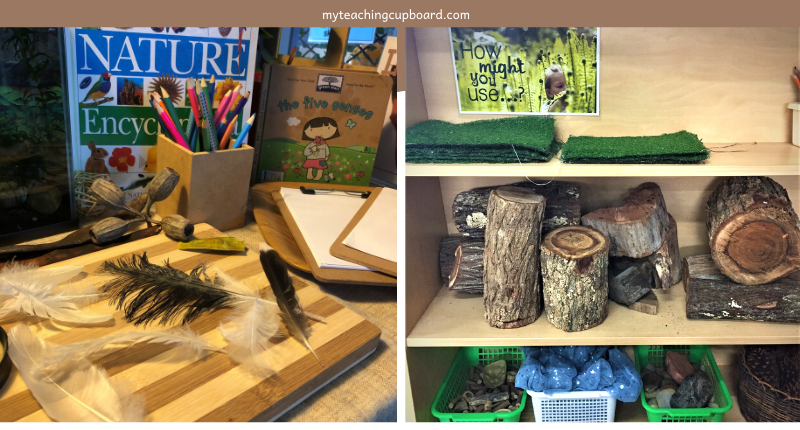
Without accessibility, even the most exciting loose parts won’t fulfill their purpose.
One helpful technique is to create a ‘materials rotation’ where you periodically switch out items, keeping your students interested while introducing new themes or curriculum concepts.

Step 3 – Provocations and Teacher Observations
Provocations are prompts or questions that encourage deeper exploration.
Think of them as gentle nudges that inspire children to experiment and try new ideas. For example, you might set up a provocation with natural loose parts and ask, “Can you make a pattern with these leaves and stones?”
Asking open-ended questions during children’s play not only sparks curiosity but also develops communication skills, language development, and social development. All essential aspects of child development.
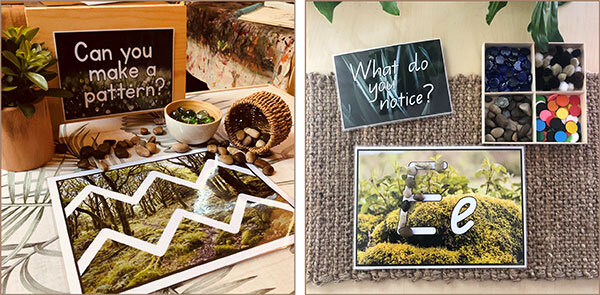
Provocations bring purpose to loose parts play, giving children a reason to experiment with the use of materials.
To effectively scaffold learning, teachers can observe and note each student’s interactions with the materials, helping to guide your future learning invitations.
These observations also provide insights for planning targeted skill-building activities that support social skills, cognitive development, and emotional development.
The process you can use to implement and observe provocations is:
Start with open-ended questions as children explore.
Take notes or photos of interactions to identify patterns in play.
Use observations to inform future provocations and extend learning.
Whether children are exploring symbolic play, dramatic play, or experimenting with physical phenomena like balance and movement, your role as an observer is essential.
The teacher’s role includes watching how students interact with materials like wooden blocks, natural loose parts, or even old tires, and noting signs of gross motor skills, hand-eye coordination, and collaboration.
Want to learn more about your role in loose parts play? Check out this blog post: The Teacher’s Role in Loose Parts Play

Frequently Asked Questions About Loose Parts Play Setups
How do you set up loose parts in early childhood classrooms?
Start small and keep the setup simple. Choose a small collection of loose parts and place them in baskets or containers on a shelf where children can access them independently. Add a tray, mat, mirror, light table or small space where children can explore the materials. Over time, you can add more materials and create different loose parts invitations or investigation areas around your classroom.
What materials do you need for loose parts play?
Loose parts can be made from natural materials or recycled materials. You might use items like pine cones, shells, stones, wooden blocks, bottle caps, cardboard tubes, fabric scraps, buttons, egg cartons, paper towel tubes, small containers and cardboard boxes. The best loose parts are open-ended materials that can be used in many different ways rather than materials that only have one purpose.
How do you organise loose parts in the classroom?
The easiest way to organise loose parts is to store them in baskets, trays, jars or small containers on open shelves so children can see and access the materials easily. Many teachers organise loose parts by type, colour, size or material. Clear organisation helps children pack away independently and encourages them to respect and care for the materials.
How do you introduce loose parts to children?
Introduce loose parts slowly. Start with one type of material and model how to use and pack away the materials. Talk about expectations, safety and how to care for the resources. During reflection or tuning-in time, discuss how children used the loose parts and highlight creative ideas you observed. Over time, children will begin using the loose parts in their own unique ways.
How many loose parts do you need?
You don’t need a huge collection to start loose parts play. A few baskets of different materials is enough to begin. It is often better to rotate materials rather than put everything out at once. This keeps the learning environment interesting and encourages children to explore materials in new ways. Over time, you can build your collection using recycled materials, natural materials and found objects.
Putting it All Together - Your Loose Parts Play Setup
There you have it - the 3 easy steps of a perfect loose parts play setup!
By focusing on
thoughtful material selection
accessible spaces
and strategic provocations
you can transform loose parts play into a dynamic, student-centered learning experience.
The open-ended nature of loose parts offers endless opportunities for creative thinking, problem-solving skills, and critical thinking. There’s no wrong way to play - just different ways to explore, create, and learn.
It may sound like a lot, but small steps make a big impact.
Start by gathering a variety of loose parts and defining your play space, then gradually add in provocations. This approach will support child-led exploration and enhance learning in meaningful, developmentally appropriate ways.

Whether you're building a sensory bin for outdoor play, adding natural objects to an outdoor classroom, or simply rotating your loose parts collections, there are so many great ways to invite children to play.
Even just a small collection of loose parts can nurture a child’s imagination and build an engaging classroom learning environment.
A well-set-up space makes a huge difference — but what really brings it all to life is how you present the materials to children.
Even small changes in how you set up invitations can completely shift engagement and the way children interact with the materials.
Interested in learning more?
👉 Read this blog post next: Loose Parts Invitation to Play

All ready to set up your perfect loose parts area?

Download my Loose Parts Play Starter Guide for a full list of materials, play prompts, and setup tips to make your classroom an inspiring space for early learners.
This is such a great resource and it's totally FREE!!