
Playdough Activities for Kindergarten Sensory Maths Play
This blog post is your go-to guide for all things related to playdough activities for kindergarten maths. You will discover the wonderful benefits of sensory maths play to teach and consolidate those essential early numeracy skills! Playdough is a play based teacher’s best friend, and for good reason.
In this blog post, you’ll see how easy it is to teach early years maths using playdough. You don’t need a pile of expensive resources either. I’ve got 10 simple and fun hands-on activities that use playdough in an easy way for you to create math activities you and your students will love. If you are looking for a way to integrate play-based pedagogy into your maths lessons, grab your rolling pin and read on!
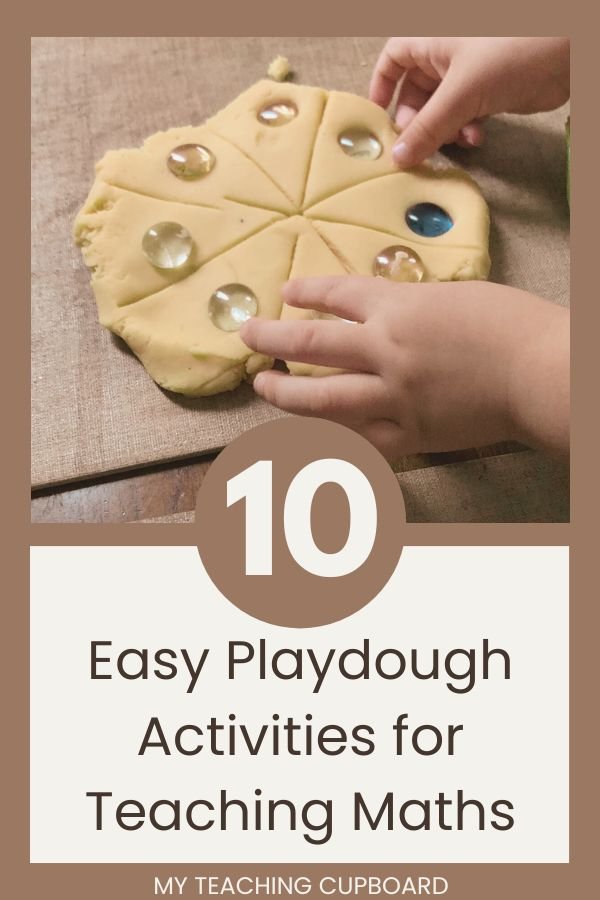
I love playdough, and so do my students. It is such a valuable learning tool that we have a designated playdough table set up in our classroom for the entire year. It is always a popular investigation area. I’d say it is a MUST-HAVE in any play-based classroom.

Benefits of Playdough
Playdough offers a tactile learning experience that's not only fun but also packed with benefits for young learners. Using playdough in the classroom goes far beyond developing fine motor skills. From cognitive development to emotional well-being, the impact playdough can have in your classroom is surprising.
Playdough and Cognitive Development
Creating shapes, patterns, and objects with playdough benefits the cognitive development of young children. It encourages creative thinking and imagination too. The hands-on learning experiences that happen when children play with playdough help them to make connections to more abstract math concepts like spatial reasoning, conservation and number sense.
Using playdough to teach shape, size, counting, and even basic operations prepares children for later mathematical understanding. It's an excellent tool for visualisation and for making abstract math concepts tangible.

A quote by Maria Montessori: "Never give the mind what you can give the hand." This aligns perfectly with the idea of learning through tactile experiences, like playdough activities.
Playdough and Fine Motor Skills
Moulding and shaping playdough requires precise hand and finger movements. Manipulating playdough is the perfect way to develop fine motor muscles. Play dough activities in themselves are fine motor activities. They can't be beat for developing those essential fine motor skills.
Young children will pinch, roll and flatten as they manipulate the dough. They will be giving their small muscles, particularly those in the fingers and hands, a good workout. Playdough is an excellent tool for improving fine motor skills and will have a positive impact on tasks like writing and cutting with scissors.
I have a set of illustrated play dough technique cards that I like to use at my playdough area. There are 20 printable cards in the set that illustrate various techniques for children to explore when they use clay, plasticine or play dough.
Each technique is clearly illustrated and will encourage your students to experiment with a variety of techniques as they manipulate the material you have offered. These cards are also an excellent resource for building your child’s vocabulary.

These play dough technique cards will make a great addition to your Art, Sensory play or Science learning areas. There are 20 printable cards illustrating various techniques for children to explore when they use clay, plasticine or play dough.
Each technique is clearly illustrated and will encourage your students to experiment with a variety of techniques as they manipulate the material you have offered. These cards are also an excellent resource for building your child’s vocabulary.
THIS SET CONTAINS:
4 cards to each A4 sheet
20 beautifully illustrated technique cards
BOTH Australian & American Spelling included
I have a play-based classroom, so these cards play a vital role in the learning provocations offered in both our Science, Sensory play and Art investigation areas.
In Science, we use the cards whenever we learn about materials, their properties and how we can change materials for a specific purpose.
In Art and Sensory Play, we display the cards consistently at the playdough table and the art area whenever we are exploring clay.
These educational cards feature original graphics designed by a professional graphic artist and so you won’t find these illustrations anywhere else.
You can design a purposeful and educational learning area with these display cards. They are one of those resources you will be using over and over in your hands-on learning invitations.
“This is a GREAT visual for my students to have and see in the classroom. Students not only hear me using the vocabulary, but they also will learn to read the vocabulary word they hear me use all of the time in class and can also see a picture of the word to better comprehend what the word means. Overall it is a GREAT tool to have in the classroom for all of my students.”
“I used these cards to provoke discussion around the playdough table linking it to our science inquiry of movement. They are beautifully produced cards and I especially appreciate the variety of skin tones.”
LOW PREP: Simply print and display!
CURRICULUM CONTENT DESCRIPTORS
ART: Use and experiment with different materials, techniques, technologies and processes to make artworks (ACAVAM107)
SCIENCE: Objects are made of materials that have observable properties (ACSSU003)
Science involves observing, asking questions about, and describing changes in, objects and events (ACSHE013)
Sensory Play and Playdough
The texture, smell, and colours of playdough offer rich sensory experiences. Your students will use their senses of touch and sight when they play with playdough. You can add essential oils to make scented playdough to activate student’s sense of smell.
It is the perfect multi-sensory activity! Playing with this squishy dough is not only stimulating but has also been shown to improve focus and retention in young learners. Who knew a blob of playdough could be so valuable!
Did you know a professional learning paper published by Early Childhood Australia suggests that sensory play has a significant impact on children's learning?
It states: Our senses are incredibly powerful tools to help us learn and grow. We can never ignore this in-built natural teacher! When we gather information using our senses and allow them to guide us, we are using our sensory pathways. These pathways have direct access to the strongest and most lasting parts of our memory (Stierwalt, 2020). As such, we should consider how to engage children’s senses when thinking about the types of play and programs to offer them.
It also says that a multi-sensory approach supports full and engaging play opportunities for all children. It also provides educators with the help they need when they are working alongside neurodiverse children of all ages. In short, use them (our senses) or lose them (the children).
Emotional and Social Benefits of Playdough
Working with playdough is such a calming activity. I’ve seen first-hand how it can help children with their emotional regulation. That’s why I always have a tub of playdough in our calm-down area. The act of pounding, squishing, and moulding can be incredibly satisfying and can help children manage feelings of anger and anxiety.
When children work together to create something with playdough, it enhances their social skills too. Young children learn to share, take turns and collaborate when they work together with playdough.
Sensory play experiences like playdough also provide children with a chance to build confidence and self-esteem. There is no right or wrong way to play with playdough.

What You Need for Playdough Math Activities
You don’t need a heap of resources for your students to play with playdough. Some playdough and a few small items like loose parts are all you need to get started.
In this post, we are focusing on play dough activities for sensory maths play. With this in mind, there are a few math-related resources you might like to collect and add to your playdough table.
Here’s a list of my favourites:
Loose parts like counters, glass gems and beads
Tools like Rolling Pins, pizza cutters and scissors
Cookie Cutters in Various Shapes and sizes
Number Stamps
Measuring Tools like timers, rulers and scales
Dice
Number charts, math posters and books
Oh, of course – don’t forget the playdough!
For a perfect homemade play dough recipe that'll last you a whole term, check out my Best Playdough Recipe blog post.
Best Homemade Playdough Recipe
If you're in the mood for a DIY project, making your own playdough is simpler than you think. I've already written a blog post on my tried and tested Best Playdough Recipe. It lasts me a good 10 weeks, and it’s super easy to make.
In my free resource library, I have a printable playdough recipe you can download and stick on your fridge. Even though this super easy playdough is long-lasting, I seem to be making a fresh batch of playdough every month or so. I like to change up the colour with food colouring, add essential oils for scent, or create a batch to match the season.
10 Easy and Fun Playdough Math Activities
So, we've looked at the incredible benefits of adding playdough into your teaching toolkit—now let's get to the fun part!
Here are 10 of my favourite easy, engaging, and educational ideas that will help you implement playdough math activities in your classroom. These activities are not just fantastic fun - they are carefully designed to help your students learn and consolidate essential math concepts. Each activity addresses specific kindergarten math learning objectives.
Hands-on learning at its best!
1. Playdough Number Flowers
The first of my engaging playdough math activities is one we use over and over in my own classroom. My Printable Playdough Number Flowers can be used in both play-based learning and explicit teaching lessons.

ACARA Learning Intention: name, represent and order numbers, including zero to at least 20, using physical and virtual materials and numerals (AC9MFN01)
This versatile resource isn’t just for the playdough table. The flowers make an excellent addition to sensory tubs, dramatic play spaces, and even your Science Nature table.
They represent numbers up to twenty in both numerals and words. I like to use them for quick math warm-ups or as a transition activity too.
Here are a few of the other ways we use them:
Give each child a flower. Ask each child to find their matching flower friend.
Ask them to put themselves in order (make a number line).
Sit in a circle and give clues to the secret flower eg: I’m the number before 7. The correct flower child stands up!
Great combined with counters or a number line at your playdough table, these Number Flowers can provide a multi-sensory approach to understanding number concepts.

If you are looking for ways to link your learning intentions into your classroom provocations, these Number Flowers will be a handy resource. I use them often in both my play-based provocations and in my explicit teaching lessons.
The .pdf file contains 42 number flowers in a variety of colours. They have been made using Queensland Beginner’s Font. Both numerals and words for numbers 0 to 20 are included. Designed to be printed on A4 paper or card. There are 6 flowers to each page. If you wanted them to be a smaller size, you could tile the printing to have 12 flowers to a page.
I designed them to be used at the play dough table as a provocation to teach number concepts. When we study living things (plants) in Science or when Spring comes around, they tie in nicely too.
Here are some of the ways I have used these Number Flowers in my classroom:
In sensory tubs (with sand, dirt, gravel or rice)
As a stimulus at the play dough table
With flower pots in the Dramatic Play space
As a display at the Science Nature table
With counters and a number line at the Math table
With some tins and cups at the Blocks area
As a game, math warm-up or transition activity—give each child a flower
(numerals & words) and ask them to find their matching flower friend
ask them to put themselves in order (make a number line)
Sit in a circle and give clues to the secret flower eg: I’m the number before 7. The correct flower child stands up
2. Playdough Math Mats
Hands-on learning is easy with my Reggio-inspired Loose Parts Number Mats. Designed to be used with a variety of materials, not just playdough. They can be used with loose parts like stones, counters, specialised math manipulatives and, of course – playdough!

If you are looking for a multi-sensory approach to teaching number concepts and numeral formation for numbers 1 to 20, you’ll want to get your hands on some playdough number mats.
ACARA Learning Intentions:
name, represent and order numbers, including zero to at least 20, using physical and virtual materials and numerals (AC9MFN01)
quantify and compare collections to at least 20 using counting and explain or demonstrate reasoning (AC9MFN03)
partition and combine collections up to 10 using part-part-whole relationships and subitising to recognise and name the parts (AC9MFN04)

Use these Loose Parts Number Mats with loose parts like stones, counters, play dough or math manipulatives to make setting up your next hands-on math exploration easy and educational. They are perfect for teaching number concepts to 20 through loose parts play.
Address Multiple Skills
Specifically designed for early childhood classrooms, these Reggio-inspired mats encourage creativity, critical thinking, and purposeful math talk - all while developing fine motor skills and foundational math skills at the same time!
Whether you're working on number recognition, pattern creation, or exploring quantities on ten frames, these mats are your go-to resource for educational and engaging play-based learning activities.
SAVE MONEY and COVER MORE LEARNING OBJECTIVES - Grab the BUNDLE of 100 Loose Parts Play Mats HERE!
What’s Included in This Loose Parts Number Mats Resource:
20 Number Mats: Featuring the numeral, number word, and ten frame for all the numbers from 1 to 20.
6 Font Options to Choose From: Queensland Beginner’s Font, NSW Foundation Font, SA Beginner’s Font, Tasmania Beginner’s Font, Victoria Modern Cursive (also for WA & NT), and a Standard Elementary Font.
3 Printable Learning Prompts: Use for guided math discussions and provocation questions.
8 Student Recording Sheets: Track student progress with multiple styles of recording sheets.
Teacher Observation Checklists: Easily document student learning during loose parts play with two styles of checklists.
Teacher Cheat Sheet of Math Questions to ask during loose parts play.
Teacher Reference List of all the skills and knowledge supported by these Loose Parts Number Mats.
60 Loose Parts Ideas: Comprehensive list of materials to inspire creative play and learning.
Tile Printing Instructions: Customize the printout size of your mats for various classroom setups.
Printable Document Wallet Label: Organize your resources neatly for easy access.
Why Teachers Love These Number Mats
Beautiful Nature-Inspired Design: Each mat showcases beautiful real-life nature photos to help you create calming Reggio-inspired provocations. This ensures they complement any classroom décor, and are especially useful for outdoor nature play.
Supports Correct Numeral Formation: With 6 different fonts, including ALL the Australian Curriculum fonts and a standard Elementary font, these mats ensure your students will learn the correct numeral formation that aligns with your curriculum.
Naturally Differentiated for Student Success: The open-ended nature of these mats invites students to work at their own pace and that will help them feel successful and stay on task without you having to hover over them.
Open-Ended to Foster Creativity: These mats encourage active exploration and allow children to engage use the materials in multiple ways, boosting both engagement and creative thinking during math activities.
Versatile for Any Classroom Setup: Whether you’re using them in small group rotations, independent work, or at numeracy centers, these mats are perfect for hands-on learning, fine motor development, and creative play. They adapt easily to a wide range of activities, from math lessons to art and sensory play.
Effortless Setup for Busy Teachers: With print-and-go convenience, all you need to do is print, laminate, and provide a few loose parts or playdough. You’ll be ready to implement engaging math activities in no time—perfect for busy educators who need flexible, ready-to-use resources.
Linked to ACARA Content Descriptions:
AC9MFN01: Name, represent, and order numbers to at least 20 using physical and virtual materials.
AC9MFN03: Quantify and compare collections up to 20 using counting strategies.
AC9MFN04: Partition and combine collections up to 10 using part-part-whole relationships.
AC9MFA01: Recognize, copy, and continue repeating patterns represented in different ways.
These Loose Parts Play Mats are Perfect for:
Hands-on math centers
Small group rotations
Fine motor skills development
Morning tubs or soft start activities
Busy bags
Early finishers
Numeracy centers
Assessment support
5-Star Reviews ⭐⭐⭐⭐⭐
"My students loved using this resource for one-to-one correspondence practice, counting on, and many more math skills.”
"A brilliant resource to invite Kindergarten children to start exploring numbers!"
Purchase your Loose Parts Number Mats today and provide an enriching, play-based learning experience that helps students build foundational math skills through sensory exploration and creative play.
SAVE MONEY and COVER MORE LEARNING OBJECTIVES - Grab the BUNDLE of 100 Loose Parts Play Mats HERE!
In my playdough number mats set, you will get:
A list of 60 loose parts ideas to use with the mats.
Instructions for tile printing the mats.
Two printable math learning prompts.
20 individual playdough or loose parts number mats featuring a numeral, number word, and ten-frame for numbers 1 to 20.
These mats are a great resource. They come in A4 size and are best printed in colour to take full advantage of the stunning, real-life nature photos.
I love how versatile this quick and easy resource is.
You can use play dough mats for:
Small group math rotations
Independent work
Early finishers
Busy bags or math trays
Morning work
Numeracy centers or Investigation areas
These mats make setting up a purposeful playdough center a breeze!
3. Making Playdough 3D Shapes
When it comes to concrete, hands-on learning, this activity is a good one. Not only does it combine the tactile experience of playdough with basic shapes and geometry, it's also incredibly easy to set up!
All you need is some play dough and a few toothpicks to teach your students all about 3D shapes.

You might like to add a 3D shape poster or text for your students to refer to.
Students simply roll the playdough into small balls to make the 'vertices' or corners of their shapes. They choose a 3D shape to build, such as a cube, pyramid, or tetrahedron.

Students build their 3D shapes by inserting the toothpicks into the playdough balls to form the 'edges' of their shape. The playdough balls make it easy to connect and hold the toothpicks in place.
Teaching Tip: Encourage the kids to count the vertices and edges, explore symmetry, and identify edges, corners and faces.
ACARA Learning Intentions: sort, name, and create familiar shapes; recognise and describe familiar shapes within objects in the environment, giving reasons (AC9MFSP01)
There are other learning outcomes you can expect from this activity too. Your students will not only learn about geometric terms like vertices, edges, and faces, but they will be developing their spatial reasoning, problem-solving and strengthening fine motor skills as well.
For younger children or those new to 3D shapes, make sure to start with simpler shapes like cubes and pyramids.
4. Counting Animal Tracks with Playdough
If you are struggling to make skip counting and number patterns engaging like I was, you will love this playdough activity. I designed this Animal Tracks provocation because my traditional methods of teaching skip counting were falling flat.

I made a set of cards that helped me to set up a math provocation with an imaginative twist. It had my students skip counting in no time. If ever I’m struggling to consolidate a particular skill in our investigation area, including something from the natural world always works a treat.
To set up this sensory play math activity in your classroom, you will need:
Playdough
Toy animals (with various numbers of legs)
If your students roll out the playdough flat on a table, they can use the toy animals to make tracks in the playdough. Place one of the Ten Frames with Animal Legs cards near the playdough area to guide your students as they make tracks in the dough.

These ten frames will be a great addition to your play dough table or math rotations. Add some animals and watch your learners make tracks in the dough. Help them learn about skip counting and number patterns in a hands-on way.
You will receive a .pdf file containing 8 cards along with the larger question prompt.They have been designed to be printed on A4 paper or card. The ten frames are 2 to a page so each ten frame card will be roughly A5 size. The larger question prompt is a full A4 page in length. If you wanted them to be a smaller size, you could tile the printing to have 4 frames to a page.
ACARA Learning Intentions:
quantify and compare collections to at least 20 using counting and explain or demonstrate reasoning (AC9MFN03)
partition and combine collections up to 10 using part-part-whole relationships and subitising to recognise and name the parts (AC9MFN04)
represent practical situations that involve equal sharing and grouping with physical and virtual materials and use counting or subitising strategies (AC9MFN06)
recognise, copy and continue repeating patterns represented in different ways (AC9MFA01)
This math playdough activity makes learning about number patterns and counting engaging and interactive.
5. Playdough Pizza – fractions, dramatic play

I set this playdough activity up at a dramatic play Pizza Shop. The kids loved it! If you're looking for a pretend play activity that's both engaging and educational, look no further than Making Pizza with Playdough. Not only is it heaps of fun, but it also consolidates several maths concepts, from counting and sorting to understanding fractions.
What You'll Need
Playdough (multiple colours if possible)
Buttons, counters, or other loose parts for toppings
Plastic knives or pizza cutters
Small round pizza trays
A play oven (get the kids to make one from a cardboard box)
Notepads to write down the orders
A Menu on display (hopefully made by the kids)
A big Pizza Shop sign (you guessed it – made by the kids)
Optional dress-up clothes, aprons, oven mitts and tea towels
When everything is all set up, the little chefs can roll out a piece of playdough into a flat circle resembling a pizza. Encourage your students to use loose parts like buttons and counters as toppings.
Want to sneak in a bit more maths? Ask your students to sort their toppings by shape, size, or colour and then count them. Challenge them to create patterns with their toppings. You could even create recipe cards for the pizza makers to follow.
And, of course, Pizza is the perfect tool to explore fractions. Your students will have so much fun learning how to divide the pizza into halves and quarters. What better way to help your students to visualise abstract concepts like fractions!
ACARA Learning Intentions:
quantify and compare collections to at least 20 using counting and explain or demonstrate reasoning (AC9MFN03)
represent practical situations that involve equal sharing and grouping with physical and virtual materials and use counting or subitising strategies (AC9MFN06)
6. Playdough STEAM Prompts
If you're on the hunt for an activity that's both engaging and challenging, STEAM Challenge Cards are the answer. STEAM or STEM challenges are open-ended activities that invite students to develop problem-solving skills and creative thinking in Science, Technology, Engineering, Art, and Math.
They're perfect for a play-based classroom and will add vigour to your investigation areas.

To get those young minds ticking, check out my 30 STEAM Challenge Cards.
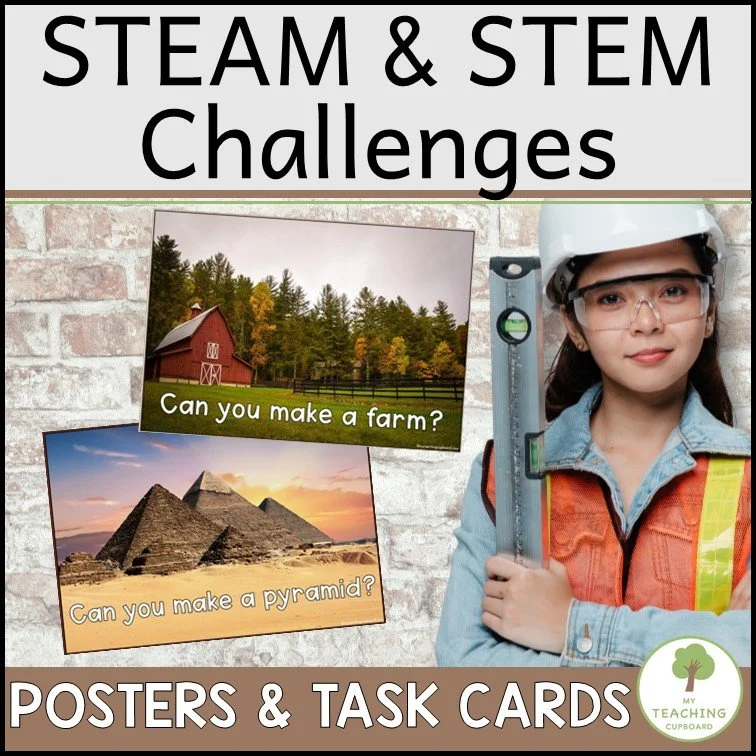
Need a better way to teach STEM without spending hours planning?
Want meaningful, hands-on learning that builds thinking skills and fits inside a play-based classroom?
These STEM & STEAM provocations were designed to give you back your time - while still challenging your students to think critically and creatively.
I created these open-ended task cards out of frustration. I wanted my students to develop their problem-solving skills, but I couldn’t keep up with designing new challenges every week. I needed something purposeful that aligned with our curriculum but didn’t require heaps of prep. Something that worked just as well during investigation time as it did during a whole-class lesson. So I made these. And I’ve used them ever since.
Save Time With Print-and-Go STEM Challenges
You don’t need to reinvent the wheel to bring real-world STEM into your classroom.
This collection of STEM and STEAM challenges make planning and setup easier, because:
They work with materials you already have in your classroom (think construction kits like lego, blocks, paddle pop sticks and paper scraps)
You can use them as a STEAM provocation in a learning area or a whole-class mini lesson
They are low-prep and flexible - just print and display!
No more scrambling for ideas during your next planning session or wasting time designing a complicated challenge. These prompts are ready when you are.
Designed With Real Preschool and Kindergarten Classrooms in Mind
I’ve tested these with small groups, the whole class, and during inquiry-based play.
They work because:
The prompts are open-ended and developmentally appropriate
They encourage collaboration, design thinking, and creativity
They support the engineering design process, early exposure to STEM concepts, and oral language development
And because each child brings something different, the prompts are innately differentiated!
This STEM & STEAM Provocation Pack Includes:
36 open-ended challenges in 2 sizes (poster + task card)
A Student planning sheet
2 student reflection and recording sheets
Task Card Box and Document Wallet labels to keep everything organised
Your students will:
Practice critical thinking, teamwork, and higher-order thinking.
Tinker, test, and problem-solve using everyday objects.
Engage with real STEM concepts through a fun, hands-on way that still feels like play.
And you’ll feel:
More prepared and less overwhelmed.
Confident that your activities are purposeful and aligned to curriculum outcomes.
Excited to teach STEM because you’re not planning from scratch every time.
Let these STEM provocations become your new favourite time-saving tool - and a go-to resource you’ll reach for all year!
These cards can be used in various ways - for whole-class activities, small groups, or individual students.
There’s a list of suitable building materials included in this downloadable resource. Playdough is one of them. It's a great medium for little hands and a cost-effective building material you can use with STEM or STEAM challenges.
So easy to use. Simply display a printable prompt and let the children decide whether they want to tackle the challenge on their own or with a friend or two.
You can either specify which building materials to use based on curriculum objectives or let the children pick from your classroom's resources.
Want a free sample of my STEAM Prompt Cards? There’s a free sample in my FREE Resources library. I created this library for my email subscribers. It has over 40 free resources for them to download and use in their Prep and Grade one classrooms. There are printables to help with planning, investigation areas, explicit teaching lessons and more. CLICK HERE to get instant access!

STEAM challenges promote problem-solving and provoke higher-order thinking and discussion. They really are great for hands-on learning and encourage children to think outside the box.
One of the best ways to get extra value from these cards is to encourage team efforts. Kids can bounce ideas off each other, consolidating their collaboration skills and working towards a shared goal.
ACARA Learning Intentions: identify and compare attributes of objects and events, including length, capacity, mass and duration, using direct comparisons and communicating reasoning (AC9MFM01)
Mathematics has its own value and aesthetic, and the Mathematics curriculum develops students’ appreciation of the power of mathematical reasoning as they develop mastery of the content in mathematics. It provides students with learning opportunities to develop mathematical proficiency, including a sound understanding of and fluency with the concepts, skills, procedures and processes needed to interpret contexts, choose ways to approach situations using mathematics, and to reason and solve problems arising from these situations. The curriculum clarifies the links between the various aspects of mathematics as well as the relationship between mathematics and other disciplines. ACARA Version 9
7. Making Playdough
One of the most popular activities in our play-based classroom is when the students get to make their very own play dough. It's so much fun!
More than that though, it is also a comprehensive learning experience. It blends math and science effortlessly. The kids get a real sense of accomplishment when they get to play with something they've made themselves too.

I’ve got some printables that make setting up this activity easy and educational.

Ever struggled with making procedure writing relatable and fun for your young learners? This is not just another worksheet resource. How to Make Playdough is an activity designed specifically for kindergarten and grade one students. It is a fun procedural writing activity that your students will remember forever. It is one my students talk about often. I love it because it covers so many learning objectives!
This How to Make Playdough resource is a comprehensive procedural writing pack designed for early years educators so they can easily and effectively teach procedural writing to their students.
Through the extremely engaging process of creating their own playdough, your students will learn all about the structure and vocabulary of "How to" writing.
This resource includes differentiated worksheets, illustrated procedure and vocabulary cards, posters and hands-on prompts, all designed to ensure your students understand and enjoy the process of writing a recipe procedural text.
My How to Make Playdough Procedure Writing Activity teaches:
Procedural Writing
Students will be able to understand and use the structure of procedural writing, including sequencing events and providing clear instructions.
Students will be able to use transitional language such as 'First', 'Next', 'Then', and 'Finally' to guide readers through the steps of a procedure.
Vocabulary Development
Students will identify and use specific verbs, nouns, and adjectives relevant to the procedure.
Students will use illustrated vocabulary cards to improve the descriptive language in their writing.
Maths
Students will measure ingredients using appropriate units of measurement.
Students will demonstrate an understanding of basic mathematical concepts like fractions (e.g., full, half) during the playdough-making process.
Science
Students will observe and understand the properties of materials as they explore the playdough ingredients.
Students will relate the playdough-making process to broader scientific concepts, such as the change in the state of matter.
Critical Thinking and Self-evaluation
Students will use a pre-writing graphic organiser to plan and organise their procedural writing task.
Students will use a checklist to self-assess their procedural writing for clarity, punctuation, spelling, and structure.
Students will use illustrated procedure cards and other visual aids to support and develop their understanding of the procedural writing process.
Collaboration and Social Skills
Students will work together in a hands-on playdough-making area to promote teamwork and build communication skills.
Creativity and Sensory Learning
Students will engage their senses of touch, sight, and possibly smell during the playdough-making process.
Students will develop their creativity by adapting or enhancing the basic playdough recipe with unique ingredients or colours.
From illustrated procedure cards to help students sequence a procedure to differentiated worksheets using the “First, Next, Then, and Finally” language, this resource has everything you need to teach procedural writing to your students.
THIS COMPREHENSIVE PROCEDURAL WRITING PACK CONTAINS:
Playdough bunting for a learning center or investigation area.
3 printable I Can Statements.
3 Posters
A learning provocation prompt to print.
Cards explaining curriculum-aligned grammar terms: verbs, nouns, adjectives and illustrations.
Cards illustrating full, empty, whole and half to integrate math objectives.
Printable illustrated procedure cards for students to discuss and sequence.
A pre-writing graphic organiser to help your students brainstorm how to make playdough before they even begin writing. This could also be used as a pre-test.
Printable Playdough Recipe Card – this is my tried and tested recipe and is guaranteed to make beautiful soft playdough.
Illustrated vocabulary cards. They illustrate all the ingredients, utensils and topic words students will use in their writing.
6 Differentiated worksheets including cloze passages and First, Next, Then, and Finally language.
Procedural writing checklist for students to self-check their writing.
A5 worksheets to prompt writing at a learning center or investigation area. Sized to fit small clipboards.
6 Differentiated one-page booklets for students to make. They also include First, Next, Then, and Finally language.
Linked to Maths: When students get to make their own playdough, they are introduced to real-world math concepts. They will learn to measure ingredients and visualise half fractions.
Explore Chemistry and Science too: Not only is this activity wonderful for procedure writing, but it is an engaging live science experiment too. Students will learn all about the properties of the ingredients and discover how matter changes state when they make playdough.
I know the challenges of making procedure writing engaging. Classroom activities and lessons need to be relatable and age-appropriate. That's why this activity isn't just another worksheet. It is a hands-on, full-sensory learning experience. Your students will be so engrossed in their learning they won’t even realise they are mastering the art of procedural writing. Plus, for you? It's all there – done for you! Everything you need - no fuss, just impactful learning.
This resource is available for immediate download and comes in two versions: one tailored to American students and another aligned with the Australian curriculum requirements. Each version uses spelling and terms specific to its respective country.
No need to worry about trying to remember ingredients or proportions. This resource has it all worked out for you with an easy-to-measure playdough recipe included.
ACARA Learning Intentions: identify and compare attributes of objects and events, including length, capacity, mass and duration, using direct comparisons and communicating reasoning (AC9MFM01)
I love how this math activity adds a literacy layer and guides the students through the process. There’s even a set of differentiated cloze worksheets included if you want to extend the literacy aspect.
Nothing beats real-world Math. Your students will learn to count and measure the ingredients and give them a hands-on way to grasp concepts like fractions and units.
We always do this activity when we are learning about Materials and Their Properties in science. It’s a great way for students to investigate chemistry concepts. As they measure and mix the ingredients, they learn about the properties of the ingredients and see how matter changes state.
Use these printables to Set Up a Make Your Own Playdough Investigation Area

This How to Make Playdough resource covers
Procedural Writing
Vocabulary Development
Maths measurement and fractions
Science properties of materials and chemistry
Critical Thinking and Self-evaluation
Collaboration and Social Skills
Creativity and Sensory Learning
From illustrated procedure cards to help students sequence a procedure to differentiated worksheets using the “First, Next, Then, and Finally” language, this resource has everything you need to teach procedural writing, measurement and terms like whole and half to your students.
8. Playdough Length and Height Challenge Cards

I designed these challenge cards specifically for our playdough table because I had students confusing the terms length and height. I also needed a way for my children to directly and indirectly compare and measure objects.

I designed these math challenge cards as stimulus prompts for children exploring concepts of length and height.
I initially planned to use them at my play dough table but they could really be used with any construction materials: lego, blocks, box constructions at the Art area. The cards would also be great STEM challenge cards.
I hope you enjoy using them in your classroom to investigate measurement concepts and to develop creative and critical thinking skills.
You will receive a .pdf file containing 14 challenge cards. They have been designed to be printed on A4 paper or card. There are 2 cards to each sheet so each card is around A5 size.
ACARA Learning Intentions: identify and compare attributes of objects and events, including length, capacity, mass and duration, using direct comparisons and communicating reasoning (AC9MFM01)
Each playdough challenge aims to develop both creative and critical thinking skills in young learners. They have a focus on the language and concepts of length and height.
They are specially designed to target fundamental mathematical understanding through hands-on learning experiences. A perfect addition to any play-based classroom.

9. Playdough Math Prompts

Well, these math prompts are a resource that has taken me hours to create, but all that effort was certainly worth it. There are a whopping 115 Math Provocation prompts to download and print. Everything you need to cover the entire spectrum of Number and Algebra for the Australian Curriculum's Foundation Stage (now aligned to version 9 of ACARA).
The prompts cover every conceivable angle of Number and Algebra.

These prompts cover all the ACARA Number and Algebra Learning Intentions:
name, represent and order numbers, including zero to at least 20, using physical and virtual materials and numerals (AC9MFN01)
recognise and name the number of objects within a collection up to 5 using subitising (AC9MFN02)
quantify and compare collections to at least 20 using counting and explain or demonstrate reasoning (AC9MFN03)
partition and combine collections up to 10 using part-part-whole relationships and subitising to recognise and name the parts (AC9MFN04)
represent practical situations involving addition, subtraction and quantification with physical and virtual materials and use counting or subitising strategies (AC9MFN05)
represent practical situations that involve equal sharing and grouping with physical and virtual materials and use counting or subitising strategies (AC9MFN06)
recognise, copy and continue repeating patterns represented in different ways (AC9MFA01)
Designed to make maths investigations quick and easy to set up, the prompts are perfect for hands-on math investigation areas, math centers, whole class activities, circle time, and much more. Not all the prompts have been designed with playdough in mind. There are even a heap of inspirational investigation area photos included to give you set-up ideas.

115 Reggio Math Provocations to teach ALL the Number and Algebra content descriptions for ACARA Foundation Stage. These hands-on learning invitations will make your play based math investigation areas quick and easy to set up.
NOW ALIGNED TO VERSION 9 OF The Australian Curriculum - ACARA.
YOU WILL RECEIVE:
32 Prompts to name, represent and order numbers including zero to at least 20, using physical and virtual materials and numerals (AC9MFN01)
3 Prompts to recognise and name the number of objects within a collection up to 5 using subitising (AC9MFN02)
15 Prompts to quantify and compare collections to at least 20 using counting and explaining or demonstrating reasoning (AC9MFN03)
8 Prompts to partition and combine collections up to 10 using part-part-whole relationships and subitising to recognise and name the parts (AC9MFN04)
10 Prompts to represent practical situations involving addition, subtraction and quantification with physical and virtual materials and use counting or subitising strategies (AC9MFN05)
10 Prompts to represent practical situations that involve equal sharing and grouping with physical and virtual materials and use counting or subitising strategies (AC9MFN06)
17 Prompts to recognise, copy and continue repeating patterns represented in different ways (AC9MFA01)
12 reproducible recording sheets to fit A5 clipboards
2 Bonus ten frame and part-part-whole templates
Instructions to tile print the prompts so you can change the printout size to suit your centers
Inspiring photos for ideas on how to set up your learning invitations
Lists of possible hands-on resources you can add to each center
All the math provocation prompts you need to set up hands-on Number and Algebra investigation areas in your Kindergarten or Prep classroom.
EASY TO PREP AND ORGANISE
A total of 115 different provocation prompts ready for you to print onto A4 sized card or paper. There is one prompt to each A4 sheet—instructions included for the option to print 2 or 4 to each sheet .
Inspirational photos included to help you set up engaging age appropriate learning invitations which are easy and quick to set up.
USE FOR:
hands-on math investigation areas
math centers
whole class or small group math lessons
as a circle time activity
busy bags
early finishers
informing assessment grades
These are for the Number and Algebra strand. There are also prompt Packs for the Measurement and the Geometry strands.
Math Provocations - Measurement Activities for Foundation Stage
This big bundle comes with 12 reproducible recording sheets to fit A5 clipboards, 2 bonus templates, inspirational setup photos, and lists of possible resources to add even more depth to each investigation area.
You’ll get:
32 Prompts for naming, representing, and ordering numbers
3 Prompts for recognising numbers through subitising
15 Prompts for quantifying and comparing collections
...and much more, covering part-part-whole relationships, addition, subtraction, repeating patterns, and other vital math skills. Check them all out HERE!

If you are in any way feeling overwhelmed by the prospect of planning hands-on activities for each and every math topic or looking for a way to integrate age-appropriate yet challenging math tasks into your play-based curriculum, this Math Prompts bundle can help you.
Believe me, I know how precious time is when you are an early years teacher! I’ve made my math provocations super easy to set up. Now I don’t have to worry about missing any part of the Number and Algebra strand either.

Simply print the beautiful provocation prompts on A4-sized paper or cardstock, grab a few math resources, and you're ready to go!
These prompts were so handy I made Prompt Packs for the Measurement and Geometry strands too!

56 math activities to teach ALL the Geometry content descriptions for Kindergarten ACARA Version 9 Foundation Stage. These engaging hands-on learning invitations will make your play based math learning centers or investigation areas quick and easy to set up. Includes activities for 2D and 3D shapes, lines, position and location.
NOW ALIGNED TO VERSION 9 OF The Australian Curriculum - ACARA.
YOU WILL RECEIVE:
40 Prompts to sort, name and create familiar shapes; recognise and describe familiar shapes within objects in the environment, giving reasons (AC9MFSP01)
16 Prompts to describe the position and location of themselves and objects in relation to other people and objects within a familiar space (AC9MFSP02)
10 reproducible recording sheets to fit A5 clipboards
Instructions to tile print the prompts so you can change the printout size to suit your centers
Inspiring photos for ideas on how to set up your learning invitations
Lists of possible hands-on resources you can add to each center
BONUS vocabulary cards
All the math provocation prompts you need to set up hands-on GEOMETRY investigation areas in your kindergarten classroom.
EASY TO PREP AND ORGANISE
A total of 56 different provocation prompts ready for you to print onto A4 sized card or paper. There is one prompt to each A4 sheet—instructions included for the option to print 2 or 4 to each sheet .
Inspirational photos included to help you set up engaging age-appropriate learning invitations which are easy and quick to set up.
USE FOR:
hands-on math investigation areas
math centers
whole class or small group math lessons
as a circle time activity
busy bags
early finishers
informing assessment grades
These are for the Geometry strand. There are also prompt Packs for the Measurement and the Number and Algebra strands.
Math Provocations - Measurement Activities for Foundation Stage

76 Reggio Math provocations to teach ALL the Measurement content descriptions for Kindergarten ACARA Foundation Stage. These engaging hands-on measurement activities will make your play based math learning centers or investigation areas so quick and easy to set up.
NOW ALIGNED TO VERSION 9 OF The Australian Curriculum - ACARA.
YOU WILL RECEIVE:
54 Prompts to identify and compare attributes of objects and events, including length, capacity, mass and duration, using direct comparisons and communicating reasoning (AC9MFM01)
22 Prompts to sequence days of the week and times of the day including morning, lunchtime, afternoon and night time, and connect them to familiar events and actions (AC9MFM02)
14 reproducible recording sheets to fit A5 clipboards
Instructions to tile print the prompts so you can change the printout size to suit your centers
Inspiring photos for ideas on how to set up your learning invitations
Lists of possible hands-on resources you can add to each center
BONUS vocabulary cards
All the math provocation prompts you need to set up hands-on MEASUREMENT investigation areas in your kindergarten classroom.
EASY TO PREP AND ORGANISE
A total of 76 different provocation prompts ready for you to print onto A4 sized card or paper. There is one prompt to each A4 sheet—instructions included for the option to print 2 or 4 to each sheet.
Inspirational photos also included to help you set up engaging age appropriate learning invitations which are easy and quick to set up.
USE FOR:
hands-on math investigation areas
math centers
whole class or small group math lessons
as a circle time activity
busy bags
early finishers
informing assessment grades
These are for the Measurement strand. There are also prompt Packs for the Number and Algebra and the Geometry strands.
10. Playdough and Loose Parts: The Ultimate Math Exploration Station
Sometimes, the simplest activities are the most effective. When it comes to teaching math skills in a play-based setting, playdough and loose parts can be a match made in heaven. Trust me, this can be the ultimate solution to keeping your little learners engaged while they acquire essential math skills.

What Can Kids Learn?
Playdough is such a great activity. It is often used in the classroom for fine motor development, but there are so many other important skills it can help you teach. The secret ingredient that can turn playdough into a math resource? Loose parts!
Counting and Number Sense: If you add loose parts like buttons or beads to your playdough table, your students will naturally explore and practice counting and consolidate their numerical understanding.
Sorting and Grouping: Add a small variety of loose parts to your playdough if you want to encourage your students to categorise items based on different attributes like size, colour, or type.
Patterns and Sequencing: Your students will use loose parts to create patterns in the playdough. It’s a fun and natural way to introduce algebraic thinking.

Measurement: Comparing the length or size of different loose parts, rolling playdough to make snakes, and squashing playdough into various containers are all examples of the various measurement activities children will naturally do at the playdough table.
Addition and Subtraction: Through playing with playdough and loose parts, children can get a hands-on understanding of basic arithmetic operations. They will add and take away the loose parts continuously – all while consolidating their conservation of number concepts.
Spatial Awareness: As they manoeuvre loose parts around in the playdough, young students explore their basic spatial concepts and develop a foundational understanding of geometry.
Problem-Solving and Critical Thinking: Open ended resources like loose parts and playdough are the ultimate resources for promoting creative and critical thinking skills.

How to Set It Up?
You don't need much to get started—a tub of playdough, a collection of loose parts like stones, buttons, and shells, and a space for exploration.
That’s it!
The beauty of this activity lies in its simplicity and the endless possibilities it offers.
ACARA Learning Intentions: Honestly? ALL of them!
Problem Solved!
The open ended nature of playdough and loose parts play ensures that it effortlessly incorporates a multitude of math skills into one simple, engaging setup. If you're struggling to find ways to include more math activities in your investigation time, or if you're on the lookout for a multi-purpose provocation that meets all the needs of your diverse learners, look no further. Playdough and loose parts are all you need.
This really is such a simple way to create purposeful math play!
Trusting Our Children: The Capable Learners in Math Exploration

One fundamental belief we should all share in a play-based approach is the image of the child as a capable learner. This perspective is essential, especially when implementing open-ended activities like the playdough and loose parts exploration above.
The Innate Curiosity to Learn
Our young learners come to us with a natural curiosity and an intrinsic desire to explore the world around them.
This reminds me of another quote from the inspirational Maria Montessori: The goal of early childhood education should be "to activate the child's own natural desire to learn." We often think we need to teach children, but what if we take a step back and allow them to learn? This small shift in teaching can open doors to meaningful and authentic learning experiences.
They Know What They Need
It's tempting to hover, to guide, and to instruct—after all, we're teachers, and that’s what we're trained to do. However, I have found over and over that the most powerful teaching moments come when we simply step aside.
Our children have an inherent sense of what they need to practice and will naturally gravitate towards activities that help them consolidate skills they're working on. Whether it's perfecting a pincer grip to pick up a tiny bead or counting groups of items, they are self-driven to practice the skills they need at that moment.
Children are Always Learning
The reality is that children are always learning! Just try and stop them – you can’t!
Learning is not something we can pause or rush. In every interaction, every question, and every exploration, they are absorbing, adapting, and advancing. We can't stop children from learning, so why not offer them enriching environments and trust them to lead their learning?
The Power of Observation
The educator’s role isn't to instruct as much as it is to observe. Through careful observation, we can glean insights into each child's unique learning journey. Our observations inform our next steps. They help us understand not just what the students are learning but how they prefer to learn too. These insights are golden when it comes to planning future activities and learning engagements.

Trust Them as Learners
So, as you set up your playdough activities for your sensory maths play, remember that it's not just about the materials or even the skills your students will gain. It's about respecting children as capable learners and trusting that they know what they need. Our job? To give them the space, time, and resources to do just that.
When we trust children as competent learners, we open doors to a world of intrinsic motivation and meaningful learning, a principle that perfectly aligns with a play-based pedagogy.

Another of my favourite Maria Montessori quotes, "The goal of early childhood education should be to activate the child's own natural desire to learn." And what better way to do that than through playdough activities?
I understand that planning and sourcing educational and fun playdough activities can be time-consuming. After all, we don’t want playdough play to become an afterthought or “busy work” in our classroom. The play-based learning activities you provide for your students should be purposeful, age-appropriate and aligned with your learning intentions.
To make your life easier, I have heaps of educational playdough resources in my store. From printable playdough mats designed for hands-on maths learning to fun playdough ideas for STEM challenges, you'll find so much inspiration and practical ideas to engage your students purposefully.
AND don’t forget about my Bonus Freebies
Who doesn't love a good freebie, especially when it adds value to your classroom? Alongside my 10 easy playdough math activities, I wanted to share some extra resources that you can download and use right now for free.

Organic Pattern Mats for Open-Ended Creativity
These Organic Pattern Mats are versatile and designed for open-ended play. Not only do they work great with playdough, but you can also use them with loose parts. Let your students' imaginations run wild as they explore different textures and forms. Download them HERE.

Christmas Playdough Number Mats
With the holiday season right around the corner, give your playdough table a festive makeover! My Christmas Playdough Number Mats will help your students develop their fine motor skills while also consolidating their understanding of number concepts up to 10. Download them for free HERE.

Ready to grab these free playdough mats and all the other playdough resources in my FREE Resource library? Click HERE to get access
Don’t forget to grab my fail-proof playdough recipe while you are there!
If you found this blog post on playdough activities for kindergarten sensory math play useful, other play-based kindergarten teachers might too.
Please consider sharing it…
Just CLICK the sharing box below.👇