Using Open Ended Questions to Support Teaching ACARA Science
Transform science lessons with open ended questions in science. Get classroom examples, inquiry prompts, and ideas aligned with the ACARA science curriculum.
We were mixing colours and the children shouted, “It’s turning purple!” I paused and asked, “Why do you think that happened?” Some children talked about “red and blue making purple”, others spoke about “stronger colours winning”, and a few had wonderfully creative theories involving magic potions. In that moment, the science lesson shifted from me explaining to them thinking.
But it doesn’t always feel like that.
Science in the early years can easily slip into fact-heavy teaching if we rely mostly on closed questions and quick right answers. When we ask questions like: “Is it floating?” or “What is this called?”, our children learn to give a one-word answer and wait for us to move on.
I know there is some pressure. We have to “cover” content from the ACARA science curriculum, fit experiments into short lessons, and make sure our students remember all the scientific terminology. It’s no wonder science can start to feel like delivering information instead of inviting curiosity.
However, when we use open ended questions in science, everything changes.
Open-ended questions fuel inquiry, discussion, and discovery. They encourage children to notice, wonder, predict, and explain in their own words.
Instead of rushing to the right answer, students share ideas, test possibilities, and build genuine scientific understanding through play, investigation, and hands-on experiences.
Whether you’re teaching whole-class science, exploring outdoors, or setting up science provocations, open-ended questions are one of the simplest and most powerful tools we have.
In this blog post, we’ll look at how to use open-ended questions in the early years classroom. I have some practical examples, question prompts, and play-based ideas you can use straight away. Oh and you can do all this AND still be meeting the benchmarks of the ACARA science curriculum.
What Are Open-Ended Questions in Science?
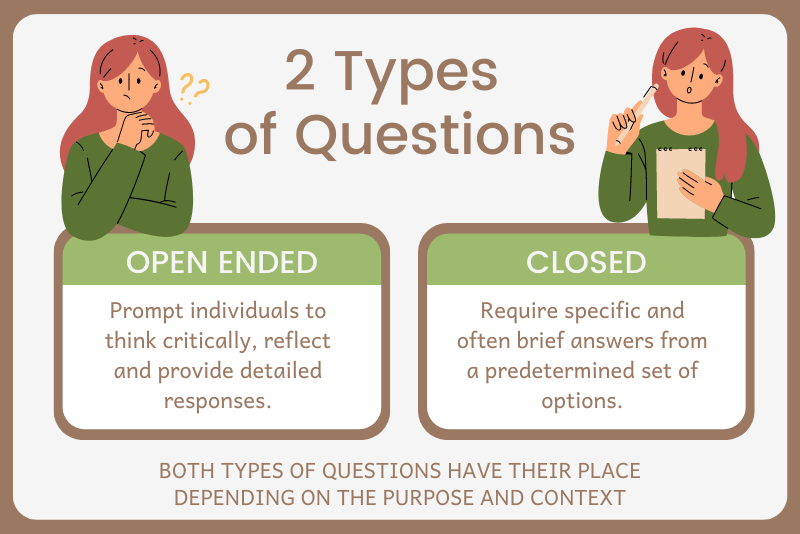
Open-ended questions in science are questions that invite thinking rather than a single right answer. They encourage children to observe, wonder, predict, and explain in their own words. Instead of asking for a fact, they ask students to share ideas, reasoning, or possibilities.
A simple way to explain it to children (and ourselves) is:
If a question can be answered with one word, it’s probably closed.
If it needs thinking, talking, or more than one possible response, it’s open-ended.
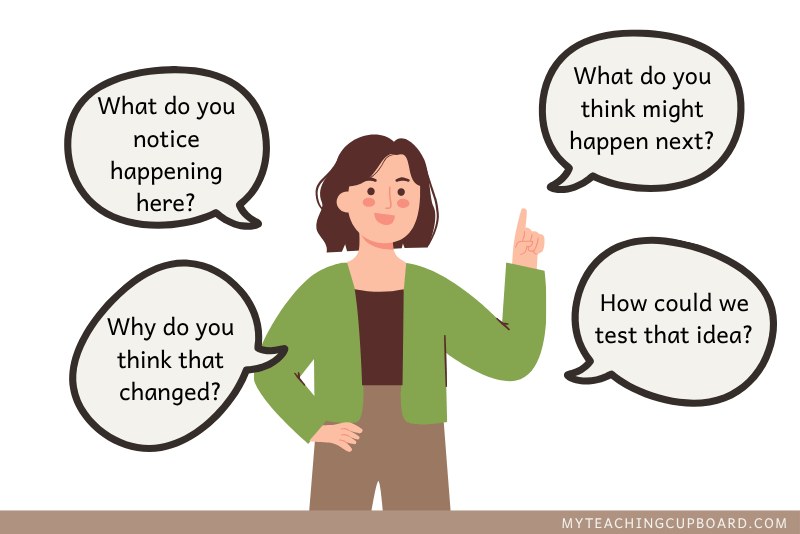
Open-ended science questions sound like:
What do you notice happening here?
Why do you think that changed?
What do you think might happen next?
How could we test that idea?
These types of questions invite our children to use observations, prior experiences, and growing scientific knowledge to build meaning.
Open-ended vs Closed Questions in Science
Closed questions certainly have a place in science. Especially when we’re checking vocabulary or specific facts. But they do tend to stop a conversation quickly.
For example:
Closed question: Is this magnet strong?
(likely answer: yes/no)Open-ended question: What do you notice about how this magnet works?
In the second example, students might talk about:
which materials it attracts
how distance changes its pull
what surprised them
how it behaved differently to what they expected
Here’s another example:
Closed question: Is the ice melting?
Open-ended question: What do you notice about the way the ice is melting?
The first question often leads to a one-word answer. The second invites open ended responses and meaningful answers about speed, shape, puddles forming, temperature, or alternative explanations children are testing in their minds.
Why Closed Questions Can Limit Thinking
Closed questions (or close-ended questions) usually focus on recalling a fact or naming something. They can unintentionally teach children that there is one right answer and the goal is to say it quickly.
Open-ended questions do something different. They support:
students’ understanding of scientific concepts
critical thinking
using scientific terminology in real talk
building explanations rather than guessing the right answer
They also help you hear student responses that show exactly how children are thinking, not just what they can label.
In science, that thinking process is just as important as the answer and it’s where inquiry lives.
How Open-Ended Questions Support the ACARA Science Curriculum
Open-ended questions are an important part of the curriculum. They actually help you teach it more effectively.
When children are encouraged to talk, wonder, predict, and explain their ideas, they are doing the exact thinking described in the ACARA Science Curriculum and the Early Years Learning Framework.
ACARA Science — predicting, observing, and explaining phenomena
In the early years, ACARA Science focuses on building:
observation skills
simple predictions
explanations of scientific concepts and everyday phenomena
talk about changes, patterns, and cause and effect
Open-ended questions are a powerful tool for this because they prompt children to look closely and describe what they notice, rather than racing to one correct answer.
For example:
What do you notice about the way this plant is growing?
Why do you think the shadow is longer now than it was before?
How could we find out if your idea is right?
Such questions encourage children to use evidence, test ideas, and talk through their thinking. These are key parts of science inquiry and students’ understanding of the application of knowledge, not just remembering facts.
How this looks in the early years (Foundation to Year 2)
In the early years of primary school (roughly ages 5–8), the ACARA Science curriculum focuses strongly on children developing an awareness of themselves and their local world. Young children are naturally curious — they want to touch, try, mix, tip, shake, build and pull things apart to see what happens. When we invite them to ask questions about what they notice, that curiosity turns into investigation.
Exploratory, purposeful play is at the heart of science learning in these years. Children learn through using their senses, watching closely, and talking about what they see.
Observation is the starting point, and from there they begin to describe, compare, sort and order what they notice. Open-ended questions support this beautifully because they encourage children to slow down, look again and explain their thinking in their own words.
In these early years, students explore key science understandings, such as:
comparing, sorting and classifying objects and materials
pushes, pulls, position and motion of objects
living and non-living things
needs, structures and growth of organisms
objects in the sky
changes on Earth and how they affect living things
Alongside content knowledge, ACARA places strong emphasis on Science Inquiry Skills. Children are encouraged to:
explore, be curious and wonder
ask questions and begin to investigate
describe what has happened
make and share observations
use simple evidence to support their ideas
Open-ended questions are a powerful tool for all of these outcomes.
Instead of telling children the answer, we invite them to think aloud, test ideas and consider an alternative explanation. This helps them learn that science is not just about the “right answer”, but about noticing, wondering and explaining.
In the early years, ACARA also highlights Science as a Human Endeavour. Children learn to:
recognise science in everyday life
notice the work of scientists in their community
care for and respect the environment
Open-ended questions such as, “Who uses this kind of science in real life?” or “How could we look after this place or living thing?” naturally support this strand.
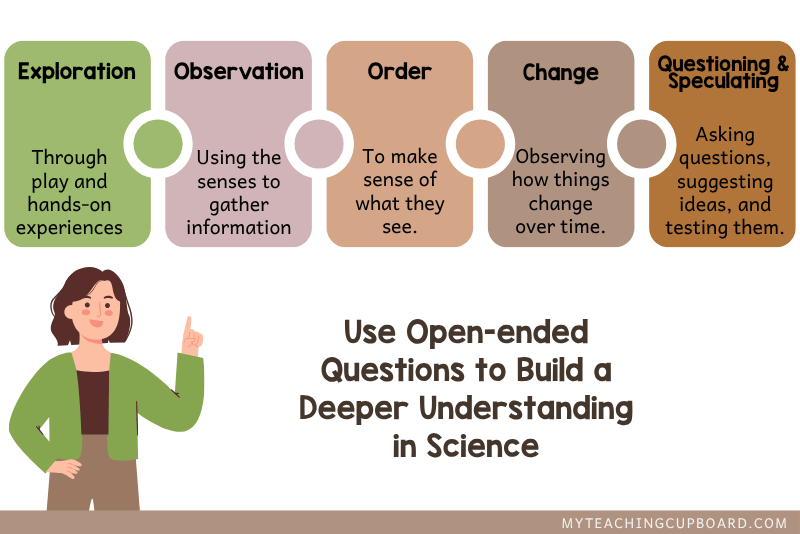
Across Foundation to Year 2, some key unifying ideas guide learning:
Exploration – investigating the things around them through play and hands-on experiences
Observation – using the senses to gather information, and noticing similarities and differences
Order – comparing, sorting and classifying to make sense of what they see
Change – observing how objects, materials, plants and animals change over time
Questioning and speculating – asking questions, suggesting ideas, and testing them through further exploration
Open-ended questions fit perfectly here because they encourage children to question, speculate and build deeper understanding rather than simply repeat facts. They help students feel that science is something they can do, think about and talk about and not just something they are told.
EYLF Outcome 4 — confident and involved learners
Outcome 4 of the EYLF describes children as:
curious
persistent
confident to explore ideas
able to follow their own questions and interests
Open-ended science questions help create exactly this kind of learner.
When we ask children to share ideas in their authentic voice, suggest an alternative explanation, or come up with their own questions, we show them that science is not just about adults having all the answers.
It’s about wondering, testing, and thinking in a variety of ways.
Children learn that:
there isn’t always one-word answer
their ideas are valued
they can contribute to classroom practice and discussion
This is the heart of inquiry-based learning.
Higher-order thinking — hypothesising, evaluating, and creating
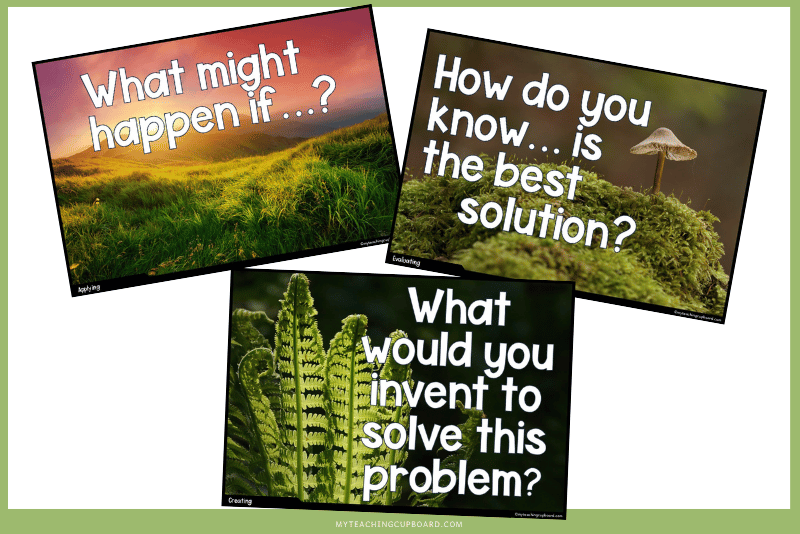
When we rely only on closed-ended questions, children mostly recall facts. Open-ended questions invite higher-order thinking described in Bloom’s taxonomy, including:
hypothesising — What do you think will happen if…?
evaluating — Which idea do you think is the best way to test it? Why?
creating — How could you design a new way to solve this problem?
In these moments, your children will not just be repeating scientific terminology. They will be using it in meaningful answers and real conversations. They begin to see themselves as capable scientists who ask good scientific questions, test ideas, and reflect on student responses to refine their thinking.
Open-ended questions help you meet curriculum goals while still keeping science playful, hands-on, and developmentally appropriate for young children.
How Open-Ended Questions Build Science Inquiry Skills
Open-ended questions spark interesting conversations and they actively build science inquiry skills.
When children are encouraged to notice, wonder, predict and explain in their own words, they are doing the real work of science, not simply repeating information. The type of question we ask shapes the kind of thinking children do.
Here’s how open-ended questions support each part of the inquiry process.
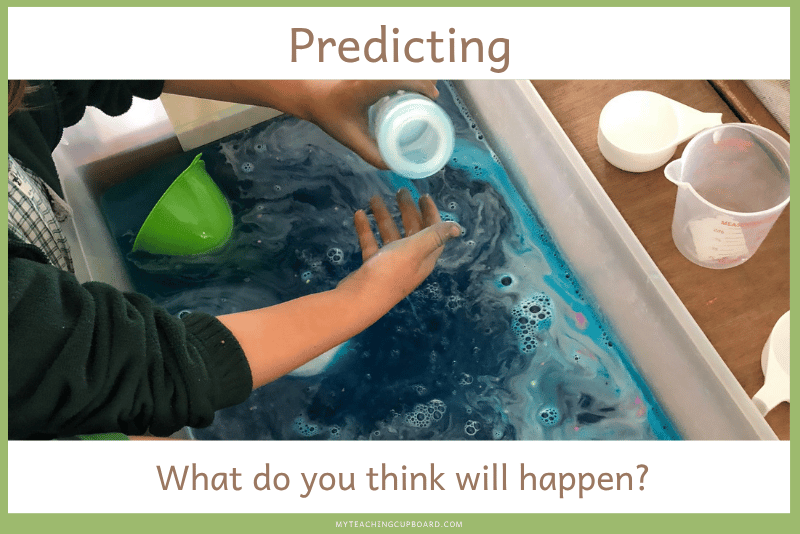
Predicting – “What do you think will happen?”
Prediction is more than guessing. When you ask an open question such as: What do you think will happen if we move it into the sun? Why? children draw on prior experiences and emerging scientific knowledge to make thoughtful suggestions.
They learn that a prediction doesn’t need to be the “right answer” and that it simply needs to be an idea they can later check, revise, or compare with the results. This encourages open ended responses instead of one-word answers.
Observing – “What do you notice?”
Observation sits at the heart of science. Instead of asking closed-ended questions like “Is it wet?” you might ask: What do you notice about what is happening?
This shifts students from naming to describing. They practise using scientific terminology, noticing patterns, differences, and changes. These kinds of open-ended science questions lead to richer student responses and more meaningful answers about what they are actually seeing, hearing, or feeling.
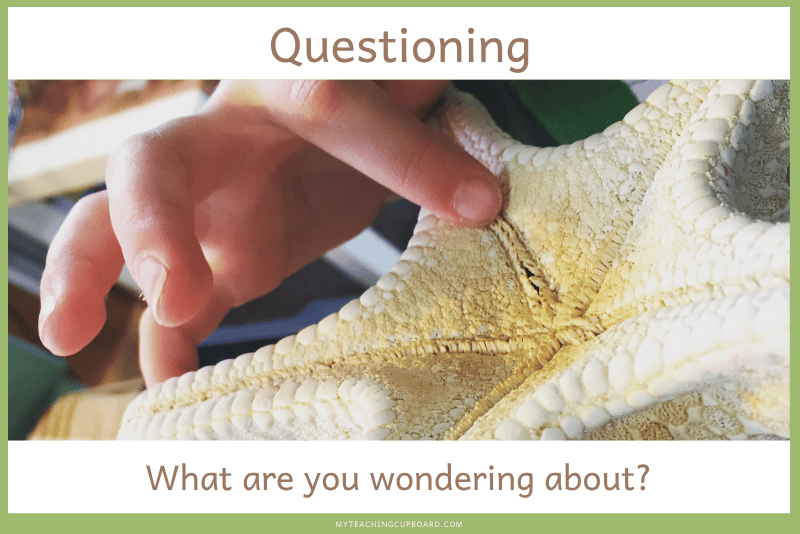
Questioning – “What are you wondering about?”
Good scientific questions often come from children themselves. When we model and encourage own questions, our students learn that science is about curiosity.
You might say:
What are you wondering about now?
Is there another question we could investigate?
This helps children move from answering to asking — a major step toward developing investigable questions and an authentic voice in science discussions.
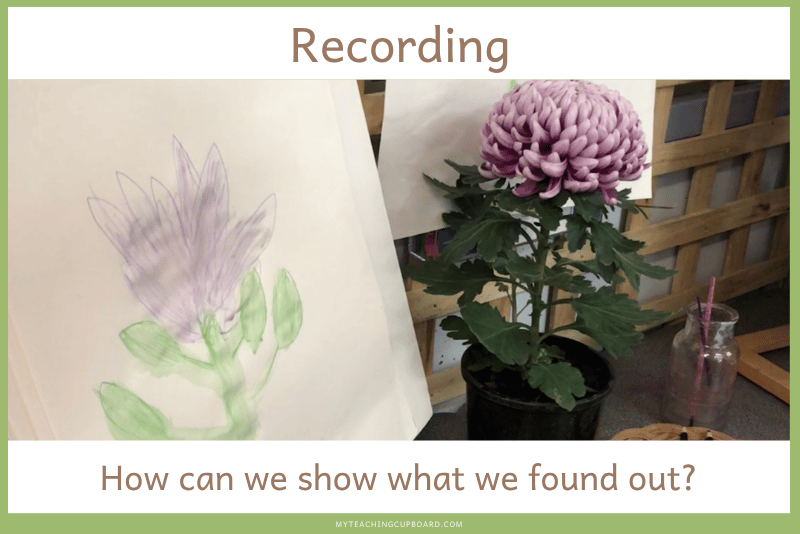
Recording – “How can we show what we found out?”
Open-ended questions also support the skill of recording, not just talking. You might ask:
What is the best way to record what happened?
Could you draw, photograph, or build to show your idea?
Students think about question requirements, key terms, drawings, symbols or simple data rather than copying a sentence from the board. They learn that results can be shared in a variety of ways, depending on the type of question and the investigation.
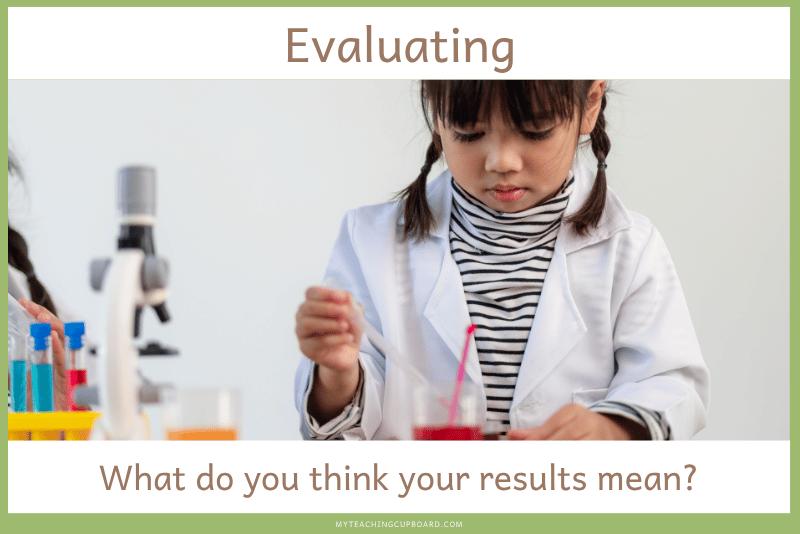
Evaluating results – “What do you think your results mean?”
Finally, inquiry includes reflecting on what happened and considering an alternative explanation. Instead of asking for the right answer, you can ask:
What do you think your results are telling you?
Was your prediction on the right track?
What would you change next time?
Here children begin using critical thinking to interpret outcomes, compare ideas, and suggest next steps. They learn that science is not about getting a single fact correct, but about thinking carefully and refining their ideas over time.
Open-ended questions are simply the best way to move children beyond recall and into real inquiry. They will help your students’ understanding grow through talk, play, investigation and reflection and that’s exactly what we want in early years science.
Open-Ended Questions for Science: Practical Examples
Open-ended questions are a powerful tool in science because they invite children to think aloud, explore possibilities, and share ideas in more than a one-word answer.
Rather than aiming for a single right answer, these prompts encourage open ended responses that reveal students’ understanding of scientific concepts in their own words.
Here are some practical examples you can use during hands-on science learning, investigations, outdoor play, and whole-class lessons.
Everyday observation questions
What do you notice about the ice melting?
What is changing? How can you tell?
What looks different now compared to the beginning?
These kinds of exploration questions help children move beyond naming what they see and begin to describe patterns and changes, using emerging scientific terminology.
Prediction and “what if” questions
What do you think will happen if we plant the seed here instead?
Why do you think that might happen?
What could be different if we tried it another way?
Here the focus is not on getting the right answer but on the application of knowledge. Children will link their experience, prior learning, and new ideas to make thoughtful suggestions.
Investigating and testing ideas
How could we test that idea?
What would we need?
What would we have to keep the same?
These prompts guide students toward good scientific questions and simple investigable questions without turning early years science into formal types of reporting. They begin to recognise that different question types need different ways of testing.
Explaining phenomena
Why do you think shadows change during the day?
What might be causing that?
Is there another possible explanation?
These types of open ended questions invite children to suggest an alternative explanation or develop more complex questions in an age-appropriate way. Student responses to these types of questions will show the difference between remembering facts and developing deeper understanding.
More open-ended science questions you can use tomorrow
What do you think is happening under the soil where we can’t see?
How are these two objects the same and different?
What surprised you about what happened?
What is the best way to show what you found out?
What new questions do you have now?
Such questions will keep your classroom practice focused on inquiry rather than just closed-ended questions that check labels or key terms. They help children stay on the right track while still thinking creatively and sharing meaningful answers in their authentic voice.
Open-ended science questions can be used in a variety of ways…
during provocations
whole-class discussions
small-group work
or quick chats outside during play
The important thing is not to think so much about the exact question type you use, but that you are encouraging your children to think, talk, and reason about the world around them.
Classroom Scenarios: What Open-Ended Questioning Looks Like in Science
It helps to actually picture how open-ended questions sound in real classroom practice. Below are three everyday science situations where a simple shift from closed questions to open-ended questions changes the whole conversation. You’ll notice how these prompts invite children to share ideas in their own words rather than offering a one-word answer.
Science provocations – magnets and shadows
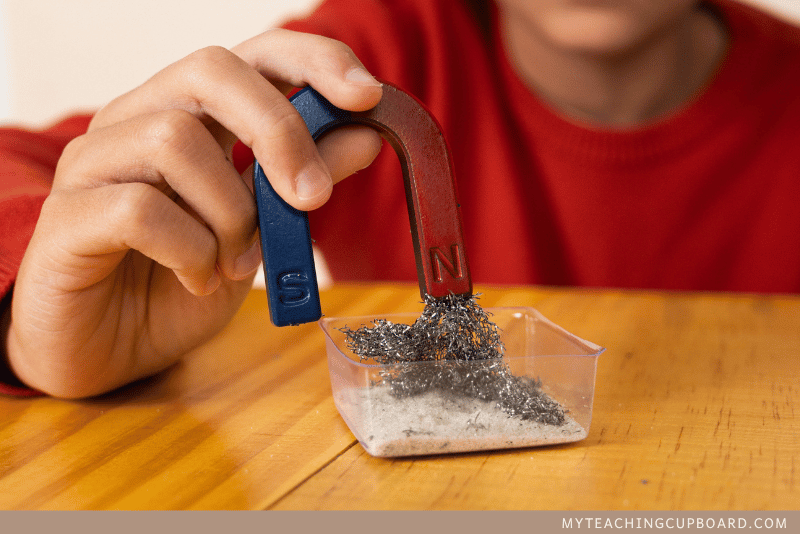
You’ve set up a science provocation table with magnets, metal objects, and a tray of random materials. In the past, questions may have sounded like:
What is this made of?
Is this magnet strong?
These are closed-ended questions and usually lead to quick yes/no or one word responses.
Now you try:
What do you notice about how this magnet works?
Which things are attracted to it? What is similar about them?
How could we sort these objects?
At a shadows provocation you might ask:
Why do you think the shadow is changing?
What happens when you move your body? Why?
Children begin offering open ended responses, testing their ideas, and using emerging scientific terminology. You hear alternative explanations, debate, and joyful disagreement — all signs of deeper understanding forming.
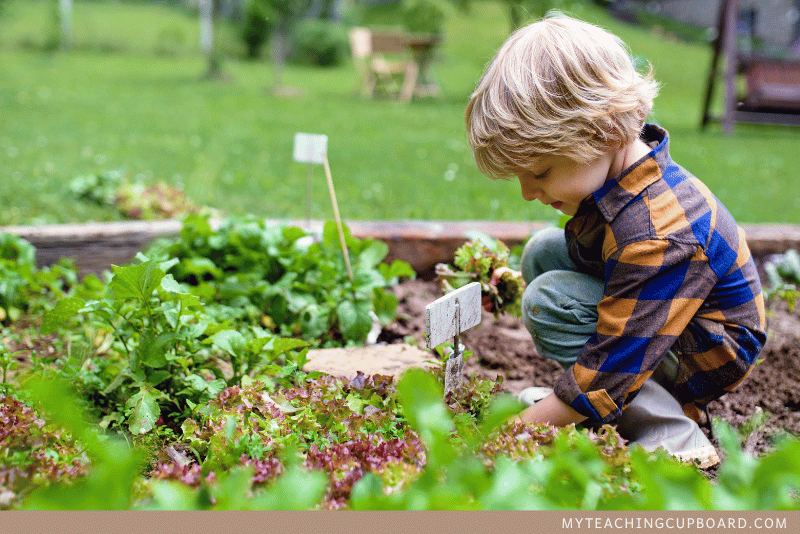
Outdoor learning - gardening, sand, mud and water play
You’re outside in the garden planting seeds with your class. Instead of asking:
Will this plant grow?
Is this the right spot?
you invite more thinking:
What do you think will happen if we plant the seed here instead?
What does this plant need most right now? How do you know?
What do you notice about how the soil feels today?
During water play, your questions might be:
Why do you think this one is sinking while that one is floating?
How could we change what happens?
Students’ understanding of scientific concepts grows because they are encouraged to reason, compare, and explain — not just give the right answer.
Simple STEM challenges - construction, makerspace and tinkering
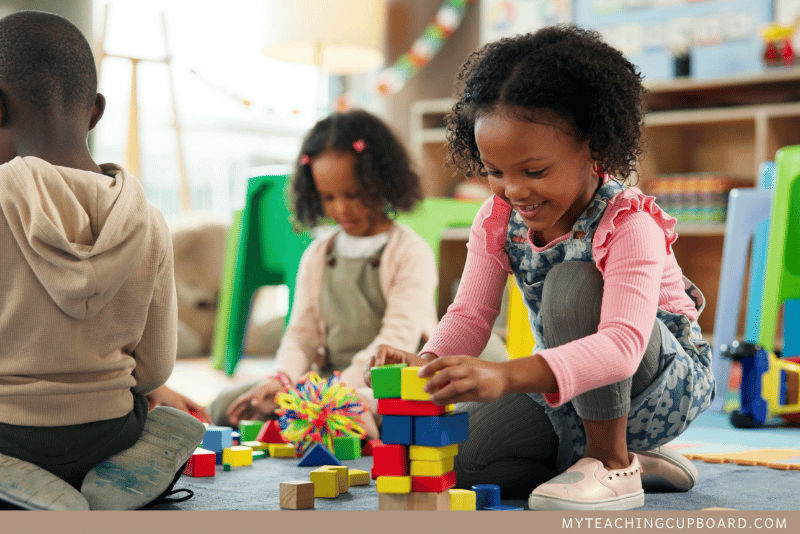
You’ve set up a STEM challenge: Build a bridge strong enough to hold five toy animals.
Instead of asking:
Did it work?
Is it strong?
you try:
How did you decide to build it that way?
What part is the strongest? How do you know?
What could you change to make it stronger?
When something collapses (as it often does!), you resist solving it for them and ask:
What do you think happened?
What will you try next?
Children begin asking their own questions, experimenting in a variety of ways, and recognising that good scientific questions often don’t have one immediate right answer. They are learning to explain their thinking, justify design choices, and evaluate results and it all happens without a worksheet or formal test in sight.
3 Teacher Tips for Success with Open-Ended Science Questions
Shifting to more open-ended questions in science doesn’t mean redesigning your entire program. Small, intentional changes in how you respond to student ideas can make a big difference to students’ understanding and confidence. Here are three simple ways to strengthen your classroom practice.
Encourage multiple hypotheses
Young children often think there has to be one “right” explanation. When you invite multiple hypotheses, you show them that scientists often explore more than one idea before deciding which is best supported by evidence.
Try phrases like:
That’s one good idea. Does anyone have a different idea?
Let’s list all our ideas before we test them.
This normalises a variety of possible answers and helps students see good scientific questions as open, flexible, and worth exploring. It also gives you rich student responses you can listen to for formative assessment.
2. Don’t rush to the “correct” answer — value the process
It can be tempting to jump in with the correct explanation, especially when time is short or you’re thinking about covering all the curriculum. But when we rush to the right answer, we sometimes shortcut the very inquiry skills we’re trying to develop.
Instead, try to:
stay with the exploration a little longer
ask follow-up questions like “What makes you think that?” or “How could we check?”
allow students to test their ideas and see what happens
This approach sends a clear message: in science, the thinking and testing process matters just as much as the final conclusion. Children learn that it’s okay to change their minds when they see new evidence and that’s not only important in science but also a powerful life skill.
3. Use questioning as formative assessment
Every time you ask an open question in science, you’re also gathering assessment information. The way children explain in their own words gives you a clearer picture of what they really understand than a simple tick-box sheet ever could.
You might:
jot quick anecdotal notes during discussions
note key terms or ideas students use correctly (or incorrectly)
record particularly insightful comments to share at planning or reporting time
Look for clues in their language:
Are they describing what they see?
Are they starting to use scientific terminology appropriately?
Can they suggest an alternative explanation when something unexpected happens?
Treating open-ended questions as a tool for formative assessment helps you adjust your teaching, plan your next investigations, and support any children who need more scaffolding.
Resources and Next Steps
If you’re ready to lean further into inquiry-based science, here are some simple next steps you can take.
Read: Teaching Science in Early Childhood
Before implementing a play-based pedagogy, I struggled to cover the ACARA Science curriculum effectively. Now I cover not only the Science curriculum but ALL the curriculum subjects and ALL the learning intentions.
The children in my class reach curriculum benchmarks easily. In fact, they learn so much more than the mandated curriculum. In this blog post, I share with you HOW to easily cover the entire curriculum for science in the early years – and it’s so much easier than you think!

If you’d like to explore how questioning supports thinking across all learning areas, not just science, I recommend reading my other blog post Using Open-Ended Questions to Promote Higher Order Thinking.
It dives deeper into how questions support critical and creative thinking, problem-solving, and richer student responses during play and explicit lessons.

This is a helpful next step if you’re building a consistent questioning approach across your classroom practice.
Free Science Question Stems Sample to Get You Started
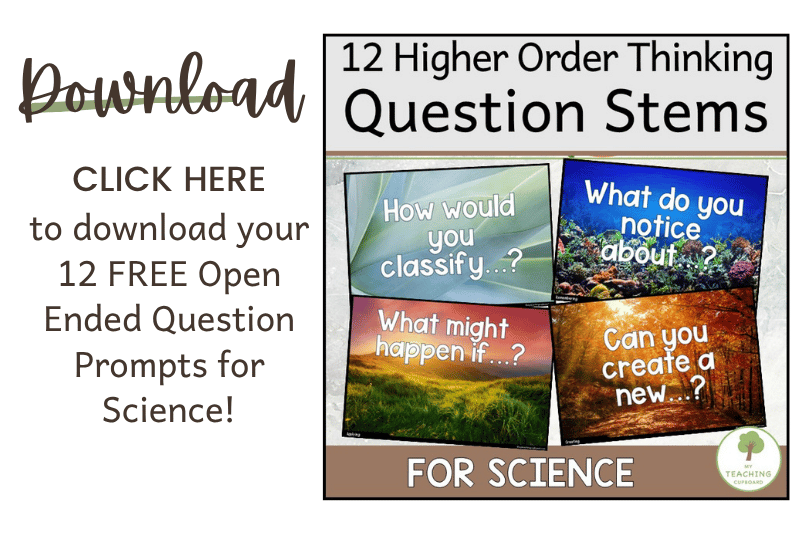
If you’d like some ready-to-use prompts to try in your classroom, I’ve created a FREE sample pack of Higher Order Thinking Question Stems for Science.
These question stems are designed for:
science provocations and investigations
whole-class science discussions
outdoor learning and nature exploration
small-group inquiry or STEM challenges
You can print them, place them near materials, or keep them on a ring for easy access while teaching and planning.
These free sample cards will help you:
move from closed-ended questions to open-ended questions
encourage meaningful answers instead of one-word responses
prompt deeper scientific thinking and student explanations
build confidence in using inquiry-based questioning every day
👉 Download your FREE Science Question Stems Sample Pack HERE
If you find them helpful and want more, you can also explore the full set of 120 Higher Order Thinking Prompts on Nature Photos HERE, which includes question stems for literacy, maths, science, reflection time, and investigations across the day.
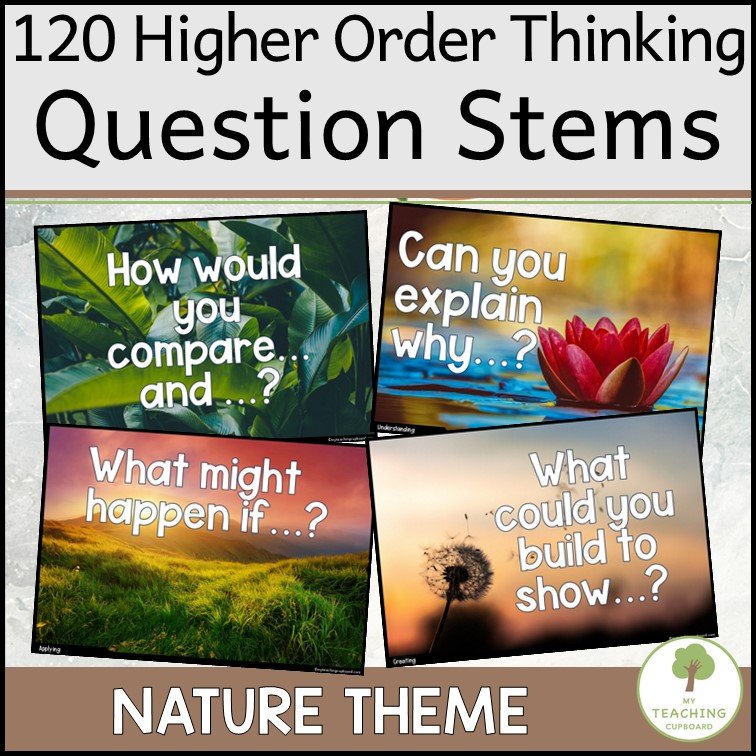
Build deeper thinking across your day with these printable higher order thinking prompts based on Bloom’s Taxonomy - perfect for Kindergarten, Prep, and Foundation teachers using play and inquiry-based learning.
Do your students give surface-level answers when you know they're capable of more? These Higher Order Thinking Prompts will help you ask the right kinds of questions – the ones that get them thinking, talking, and truly understanding.
Spark Deeper Thinking With These Higher Order Thinking Prompts
This comprehensive toolkit makes it easy to bring Bloom’s Taxonomy to life in real-world classrooms - without hours of prep or stress for you! Whether you’re guiding a maths investigation, a STEM challenge, or a group reflection session, you’ll have the perfect question ready to go.
A Time-Saving Way to Add Depth to Learning
This resource helps you move beyond “what happened?” to “why do you think that happened?” and “how could we improve it next time?”
It saves you precious planning time while also helping your students develop:
Deeper understanding across literacy, maths, and science
Richer language for sharing and justifying their ideas
Confidence to think creatively and reflect independently
Stronger reasoning and problem-solving skills
Designed for Real Classrooms and Real Conversations
You won’t find generic question posters here. These beautiful nature-themed prompts were thoughtfully written and classroom-tested during real play-based lessons, reflection times, and provocations.
Each level of Bloom’s Taxonomy is represented, from remembering and understanding to creating and evaluating. Use them flexibly - on display, in planning, or as part of inquiry-based learning.
This Higher Order Thinking Prompts Pack Includes:
120 Higher Order Thinking Posters (nature-themed, A4 size)
120 Printable Prompt Cards (four to a page)
Planning Template for intentional questioning
Teaching Notes with examples for Literacy, Maths & Science
Bloom’s Taxonomy At-a-Glance Poster
Suggested Prompts for Reflection Time
Observation Checklists for documenting student thinking
Document Wallet Label for organisation
A printable Master List of All the Question Stems
Use These Prompts to Support Deeper Conversations and Curriculum Goals
Perfect for:
Literacy, maths, and science blocks
Investigation areas and provocations
Group reflections and partner tasks
Inquiry learning, STEM, and makerspace challenges
Assessment and documentation during play
These prompts align with both the Australian Curriculum v9 and the Common Core, helping you confidently plan and assess higher order thinking skills.
Make Higher Order Thinking Part of Everyday Learning
Imagine being in the middle of a science provocation and hearing your students ask: “What would happen if we changed just one material?” That’s the power of intentional questioning - and it all starts with you.
With this set of higher order thinking prompts, you'll feel ready to guide meaningful learning through every subject, lesson, and play invitation.