
21 Activities for Teaching Phoneme Manipulation
Discover why we have to spend so much time teaching phoneme manipulation in kindergarten and get 21 engaging and effective classroom activities to help your students manipulate sounds with ease!
Phoneme manipulation is one of those phonemic awareness tasks we spend a lot of time teaching in kindergarten - but why?
Well it is an important foundational literacy skill!
Phoneme manipulation can be a bit tricky for some students, which is maybe why so much time is devoted to teaching it.
In this blog post, I’ll show you why this skill is soooo important and I’ve got 21 phoneme manipulation activities to help you teach it. Each activity is designed to be fun, interactive, and effective. With all these ideas, you'll have plenty to choose from. You’re sure to find a few that resonate with your students.
Phoneme manipulation is an important aspect of phonemic awareness. Developing this critical skill helps children to break down and construct words and paves the way for successful decoding and encoding.
Did you know strong phoneme manipulation skills are linked directly to literacy success?
As children become more proficient in manipulating phonemes, they build a solid foundation for future reading fluency and comprehension. It's a fundamental skill every young reader needs as they learn to read and write.
The techniques explored in this blog post are all informed by the Science of Reading, a robust body of research that outlines effective literacy instruction strategies.
Key Takeaways
Phoneme manipulation is essential for literacy.
Proficiency in phoneme manipulation supports reading development.
Effective instruction strategies are based on sound educational research.

What is Phoneme Manipulation?
Phoneme manipulation is changing the individual phonemes or speech sounds in a word to create a new word. The new word is sometimes a nonsense word or a made-up word.
This skill falls under the phonological awareness umbrella.
Phonological awareness is about recognising and playing with the sounds in words.
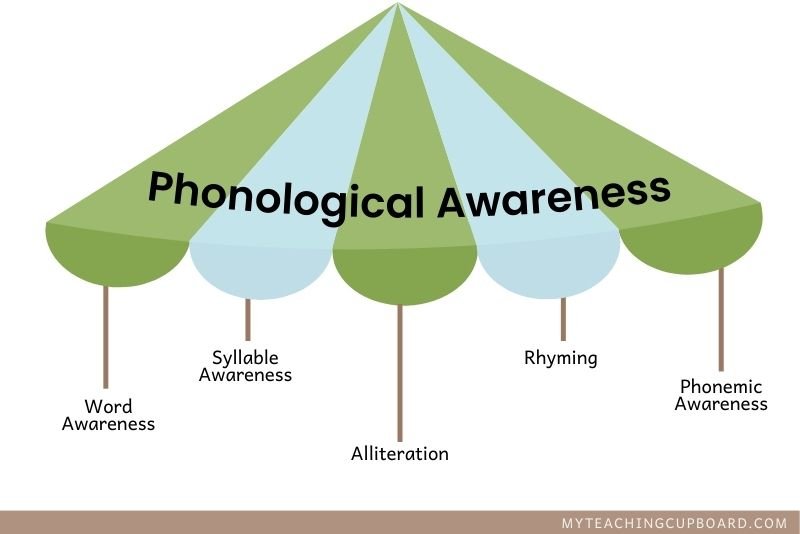
Phoneme manipulation is considered one of the more challenging aspects of phonological awareness. It involves adding, removing, or substituting sounds in words. For example, by changing the /a/ sound in cat to an /u/, we get the new word: cut.
Teaching this skill should start with simple words that have two or three different sounds and get more complex as children's language and literacy skills develop.
At the foundational level, phonemic awareness includes
identifying individual sounds
breaking words into sounds
blending sounds together.
These 3 skills are critical for learning to read and write.
Phoneme manipulation is a key component of phonemic awareness. Phonemic awareness is primarily about the spoken word. It is an oral and auditory exercise laying the groundwork for the more written-focused stages of learning in phonics. As children transition from phonemic awareness to phonics, they apply the oral skills of phoneme manipulation to written words when they start decoding (reading) and encoding (spelling).
Phoneme manipulation also helps children explore different sound combinations and introduces them to how spelling can represent various sounds. This ability to experiment with sounds enriches their reading and spelling skills by helping them tackle unfamiliar words with confidence.
The integration of phoneme manipulation from an oral-auditory exercise to a fundamental skill in decoding and encoding highlights how important this skill is in phonics and the broader literacy curriculum.
The 3 Types of Phoneme Manipulation
There are three primary forms of phoneme manipulation: phoneme addition, deletion and substitution.
Adding Phonemes: making new words or sounds by adding a phoneme to an existing word or group of sounds.
Deleting Phonemes: making new words or sounds by removing a phoneme from an existing word or group of sounds.
Substituting Phonemes: making new words or sounds by changing out a phoneme in a word or group of sounds and replacing it with another one.
Phoneme substitution is the most difficult type of phoneme manipulation because it puts a higher demand on working memory.

Examples of Phoneme Manipulation
Here are some examples of the three different types of phoneme manipulation. Within each type, you can vary the specific phoneme that you’re manipulating.
Phoneme Addition
Initial phoneme: Starting with the word ice, add /n/ to the beginning to make the word: nice.
Final phoneme: Starting with the word win, add /d/ to the end to make the word: wind.
Adding a phoneme to make a consonant blend. Starting with the word fat, add /l/ after the /f/ to make the word flat.
Phoneme Deletion
Initial phoneme: In the word flake, take away /f/ and you get the word lake.
Final phoneme: In the word belt, take away /t/ and the word you are left with is bell.
Deleting the second phoneme from a consonant blend. In the word stick, take away /t/ to leave the word sick.
Phoneme Substitution
Initial phoneme: In the word rat, change the /r/ to a /b/ and you have the word bat.
Final phoneme: In the word pin, change the /n/ to a /k/ to make the word pick.
Medial phoneme: In the word hut, change the /u/ to an /o/ and you have the word hot.
To cater to the individual needs of your students, you can vary the level of difficulty within each of these skill sets
Phoneme manipulation can also evolve from simple to more complex words. Students begin with two- or three-sound words (e.g., VC or CVC words) and gradually move on to words with digraphs, blends, r-controlled vowels, etc.
You might have many students ready to work on phoneme manipulation, but you will probably need to differentiate the types of words you use.
Most children master advanced techniques by the end of grade three.
Why Are Phoneme Manipulation Skills Important?
When children understand phoneme manipulation, they will have advanced phonemic awareness. They’ll be able to pick up on sound patterns and be better equipped to learn how to decode words and phonetically write words.
Phoneme Manipulation and the Science of Reading
As we have already discussed, phoneme manipulation is a crucial skill within phonological awareness and is directly tied to a child’s ability to read and write effectively.
Research indicates that being able to hear, identify, and alter phonemes (the smallest units of sound in speech), is foundational to literacy development.
Here’s what the research says:
The best predictor of reading difficulty in kindergarten or first grade is the inability to segment words and syllables into constituent sound units (phonemic awareness). (Lyon, 1995)
The ability to hear and manipulate phonemes plays a causal role in the acquisition of beginning reading skills. (Smith, Simmons, & Kame'enui, 1998)
The effects of training phonological awareness and learning to read are mutually supportive. "Reading and phonemic awareness are mutually reinforcing: Phonemic awareness is necessary for reading, and reading, in turn, improves phonemic awareness still further." (Shaywitz, 2003)
Research Insights
There's comprehensive research suggesting phoneme manipulation is a pre-requisite to blending and segmenting and also a predictor of word-level reading proficiency.
However, there is some evidence to suggest that deletion and manipulation of phonemes are skills that develop as a result of learning to read and so can be seen as mutually advantageous to reading skills rather than prerequisites.
Some children find deletion and manipulation of sounds easier when they use manipulatives like letter tiles. This supports the research showing that phonemic awareness training is most effective when combined with phonics.
There's no doubt focusing on exercises that reinforce phoneme manipulation strengthens the foundation for proficient reading. Ongoing practice and gradual increases in difficulty will yield the best literacy outcomes for your students.
How to Teach Phoneme Manipulation
When I teach phoneme manipulation, I follow the gradual release model.

Begin with oral exercises and phonemic awareness.
Use visual tools like Elkonin boxes to support student’s understanding of phoneme placement within words. Then, when you are ready to introduce graphemes and phonics, it’s an easy transition because students will already know how to use the Elkonin boxes.
Initially, work with simple CVC (Consonant-Vowel-Consonant) words, avoiding more complex structures like digraphs or diphthongs.
Follow a Progression of Difficulty when tackling phoneme manipulation tasks:
Start with the initial sound as it's generally easier for students to identify and manipulate.
Move on to the final sound in the word, offering a new level of difficulty.
Finally address the middle sound(s), which can be the trickiest for students to manipulate.
Also, progress through tasks methodically:
Begin with deletion tasks to develop an initial understanding of how words can change.
Transition to phoneme addition tasks, adding complexity to the student's abilities.
Finally, progress to substitution tasks to synthesise the phonemic awareness skills learned.
It's vital to gradually increase the difficulty by moving to words with more phonemes as students show they are ready.
Prioritise student confidence and competence over speed or advancement. It’s not a race.
As children develop and their language and literacy abilities improve, they can be given more complex forms of phoneme manipulation tasks like working with more challenging phoneme sounds and even combining manipulation tasks together.
A SPECIAL NOTE: While young children need to understand sounds in words and develop their phonemic awareness skills, they don't have to fully grasp it before you start teaching about letters and phonics.
Phonemic awareness continues to develop as children are exposed to language orally and in print.
It’s OK to start adding graphemes (letter symbols) once children are able to recognise the beginning sounds of words.
Phonological awareness skills involving phoneme manipulation and other literacy skills related to reading, writing, and spelling will all develop together. It’s a symbiotic relationship—they will all support each other's growth.
So Should You Teach Phoneme Manipulation?
Yes. Phoneme manipulation is critical in developing students' phonemic awareness and essential for learning to read and spell.
Just remember to keep the sessions engaging and support students patiently until the concept 'clicks'.
I find working with small groups to be the most effective. A small group ensures I can monitor everyone carefully and also allows for individualised support should the need arise.

Phonemic awareness activities involving phoneme manipulation exercises, while oral in nature, are preparing students for the essential task of transferring these auditory discrimination skills to reading and spelling.
Remember as students develop their phonemic awareness, it's okay to start phonics lessons. This will give you an opportunity to link the specific phonemes the students are working with to their corresponding letters and spelling patterns. This balanced literacy approach reinforces the interplay between phonemic awareness and phonics.
In essence, phoneme manipulation should not be seen as an isolated skill. It is part of a much bigger proficiency.
Your role is to guide your students with clear instruction and practice with a gradual increase in complexity.
7 Phoneme Manipulation Activities & Games for Adding Phonemes
Phoneme addition means that you are adding on a sound to create a new word. I’ve found it difficult to find phonemic awareness activities that practice phoneme addition so if you have any ideas to add to my list, please let me know.
Here are seven phoneme manipulation activities where kindergarten kids can practice adding phonemes.
1. Making Word Families
This is my go-to activity to help children develop their understanding of sounds in words. As the name suggests, they need to add a phoneme (onset) at the beginning of a rime in order to create a new word. For example, adding /s/ to at to make the new word sat.
Here's how I introduce this strategy to my students:
Select a word family: Choose a word family, such as the -at family, which includes words like cat, hat, and mat.
Say the word family: Pronounce several words from the chosen word family and place an emphasis on the ending letter sounds, _at.
Introduce the new sound: Explain to the children that you will add a new sound to the beginning of the word and create a new word. For example, add the sound /s/ to -at to make the word sat.
Blend the sounds: Help the children blend the new sound /s/ with the rest of the word. When you say the new word sat, make sure to emphasise the added sound /s/. Have the children repeat the word, focusing on both the new sound and the original word family sound.
Practice with other word families: Repeat the process with different word families. Add a variety of sounds at the beginning to create new words. Encourage the children to listen carefully to the new sound and blend it with the existing word family sound to form the new word.
Adding phonemes is one of the easier phoneme manipulation skills.
Want a comprehensive set of word families you can use for this activity?
Check out my 55 Rhyming Word Family Posters. I use these rhyming word family posters as both a classroom reference and as a teaching resource to teach, practise and revise rhyming words.

When learning to read and write, word patterns are important. Use these rhyming word family posters as both a classroom reference and as a teaching resource to teach, practise and revise rhyming words.
Children often recognize word patterns as opposed to sounding out words. When a learner knows the word 'cat' the pattern to teach is then mat, sat, fat. etc.
It is essential to teach patterns through word families or rhyming words.
These word family posters will be perfect for your literacy groups, classroom displays and play based centers or investigation areas.
2 SETS INCLUDED—CHOOSE THE SET TO SUIT YOUR CLASSROOM DECOR
I have designed 2 sets of these printable word family houses. Both sets have the same word families and the same rhyming words. Only the poster styles and colours are different. There is a bright set and a neutral set. Each set contains 55 word family posters.
Each house has up to 10 rhyming words along with a picture clue on the roof. A bonus blank house worksheet is also included. You might like to bind them into a book so I have also included a cover title page.
THIS PACK CONTAINS:
55 rhyming word family houses in neutral colours—illustrated with real photo images
55 rhyming word family houses in brighter colours—illustrated with clipart
EACH SET ALSO CONTAINS:
2 BONUS blank houses – colour and b&w versions
A matching Printable Title Cover Page
You will receive a zipped folder containing 2 pdf files. Each of the 110 word family posters are A4 in size. Instructions are included to tile print the posters so you can make smaller sets and store them on a clip ring for your Writing Area.
HOW TO USE:
Following discussions and activities related to the sound under study, these houses can be displayed in the room for revision and further reference. My children are constantly referring to them.
Tile print the houses to make a couple of smaller sets which can then be stored on a ring clip for reading and writing practice and as a reference in your Writing Area.
Combine specific rhyming houses with a matching rhyming text in a small world play area.
Use the bonus blank houses for brainstorming possible words and modelled writing. You could also copy the blank page and use it as a worksheet for the children to make their own word family houses.
2. It’s a Secret
For this fun game, display a small set of classroom objects or toys. My picture cards work well for this activity. The teacher decides which object is going to be the secret object and says the word but takes off the initial sound.

So if your secret word is lizard, you would say -izard. The children must think of suitable beginning sounds to add in order to discover the secret object.
For an easier version, give the students both the onset and the rime of the unknown words. So for the lizard example, you would say "My secret object is -izard and it starts with /l/." Then, have them find the picture of the lizard.
I’ve got heaps of picture card sets in my store so if you want to play this game with your students, grab a set of picture cards already done for you HERE.
3. Sticky Notes Word Builder
This is a tactile approach for students learning to manipulate phonemes by adding sounds. The sounds in the words are represented by sticky notes. By placing the sticky notes on a whiteboard divided into segments, children can have fun physically manipulating sounds at the initial, medial, or final positions.
What is it about sticky notes that little kids love so much!
4. Sound Step
In this movement game, children add an initial or final sound to a base word. Each time an initial sound is added, they take a step forward, and if a final sound is added, they take a step back.
This game is also an excellent way to practice phoneme segmentation and to build longer words progressively.
5. Silly Words
Children have a lot of fun with nonsense words.
This activity is quick and easy, so you can easily squeeze it into your daily routine.
Just say a base word, and the students add any sound to make a new nonsense word. It can be tricky for them to think of sounds on the spot so I usually suggest they refer to our sound wall to get ideas for sounds to add. You can practise adding sounds to the beginning, middle, or end.
6. Story Rewind
This is another activity that easily fits into your school day.
When you are reading a story to the children, occasionally stop and delete a phoneme from one of the words in the story. Challenge the children to suggest the correct missing phoneme and reread the sentence to see if they are correct.

7. Add Manipulatives
While phonemic awareness activities are oral, I find that manipulatives help make them more concrete.
Have your students put out cubes or counters for each sound they hear in the root word. Then, they can add a cube or counter to represent the new sound added.
Get them to blend the sounds together when they say the new word. This is a good time to use Elkonin boxes to consolidate the position of the different phonemes in the words.
Teaching Tip: When beginning phoneme addition, start with 2-sound words (vowel-consonant or consonant-vowel) to create new 3-sound words (consonant-vowel-consonant). Then, you can try starting with CVC words and adding a new sound to create a word with a blend (CCVC or CVCC).
Download my free phoneme word list so you don’t have to think up words on the spot. It has a comprehensive list of words with 2, 3, 4, and 5 phonemes. It's perfect for these types of activities.

7 Phoneme Manipulation Activities & Games for Deleting Phonemes
Phoneme deletion means that you start with a word and then ask students to delete a sound to make a new word. Being able to delete or add sounds in words is an important skill to develop as it helps students test alternatives for reading and spelling.
Sound deletion tasks are more difficult than other types of phoneme awareness tasks.
Cole and Mengler (1994) stated that it is not until the mental age of approximately 7 years that children are able to perform phoneme deletion tasks adequately. Lewkowicz (1980) suggested that sound deletion activities should be left until children exhibit some skill in segmentation and after letter names have been introduced.
Keep in mind phoneme deletion of the middle sounds in words tends to put an unnecessary burden on young children's memory too. These types of activities should target only initial or final sounds in words.
Before introducing the more difficult strategy of phoneme deletion, try introducing deleting parts of a word instead. Display pictures of objects that are compound words and demonstrate to your students how each word can be said with a part missing. For example, when you say seesaw without the see, it says saw.
Deleting a sound from a word becomes easier if you can build on previous phoneme segmenting practice. When your students are ready, here are some fun phoneme deletion activities to try:
1. Simon Says
To introduce the idea of deleting parts of a word, you can start by showing pictures of compound words to demonstrate how each word can be said with a part missing.
For example, "This is a raincoat. If I say raincoat without the rain, I would say coat. Now you try it." Show another compound word picture card. "This is a basketball. Say basketball without the ball."
When children get the idea, you can add a bit of fun and turn it into a game of Simon Says. For example, "Simon says, say football without the ball."
If you need a set of compound word picture cards, my Segment and Blend Compound Words with Pictures - Flip Cards are perfect for this activity. They are also great for independent practice once students are familiar with the idea of deleting parts of words.

Do you have kids struggling to blend and segment syllables? Start with compound words. This interactive compound words activity is perfect for developing basic phonological awareness skills. Students will gain confidence, fluency and feel successful when they practice segmenting and blending compound words using the real-life pictures in this resource.
Teach Phonological Awareness with Compound Words
Once students understand that sentences are made up of individual words, they are ready to start blending and segmenting syllables. That’s where compound words come in. Compound words are made of two smaller words, combined to make a new word with a new meaning.
This makes them perfect for teaching young children the concepts of blending and segmenting – a basic phonological awareness skill.
If your students find blending, segmenting and manipulating syllables difficult, you need to take a step back and work with compound words. It is much easier for students to blend and segment compound words than it is to blend and segment syllables.
When they have mastered blending, segmenting and manipulating compound words, they can progress to syllables and, eventually single sounds or phonemes.
Oh - It’s great for vocabulary development as well.
Why Use Compound Words with Pictures?
Phonological awareness is about recognising and manipulating the spoken parts of sentences and words. It does not include written words and letters – that’s phonics!
Always avoid resources heavy with text when teaching phonological or phonemic awareness. That's why I designed this resource using only pictures to illustrate the compound words. Your students will practise HEARING the words (phonemic awareness) rather than thinking about the letter-sound correlations of phonics.
This picture-based compound word activity is designed with young learners in mind. There’s no complicated clipart – just easy-to-recognise real life photos so your students can easily identify them. The use of real-life pictures also makes learning more engaging for young children.
Talk about engaging! My kids love these flip cards.
How To Use These Pictures of Compound Word Flip Cards
Your students can use these cards to practice both blending or segmenting compound words. Each card has 2 sides. One side has a compound word picture, and on the other side, there are 2 pictures illustrating the 2 parts.
Use These Compound Word Picture Cards 2 Ways
Students practice hearing the 2 word parts of the compound word and then blending these parts together to make the complete compound word.
Students practice hearing the complete compound word and then segmenting it into the 2 parts.
They love working with a friend to practice, but it also makes for a great independent activity as well. The hands-on nature of flipping and manipulating the cards adds an interactive element that will keep students interested and motivated.
How My Students Independently Practice Blending and Segmenting with These Compound Word Picture Cards
First the kids pair up with a buddy.
If I want them to work on blending, they look at the card showing two pictures and say out loud the two words so that they blend them together to make a new compound word. If I want them to practice segmenting, they look at the picture card showing a compound word and say out loud the two smaller words that come together to make the word in the picture.
Their buddy listens and if they think it was done correctly, they will say, “Flip it!"
Now the card is flipped over to reveal the matching picture on the back. I love that these cards are self-correcting. No more kids interrupting my small group literacy instruction lessons. EMOJI
Finally, the kids swap! The listener becomes the blender or segmenter, and their partner has their turn to listen and the activity continues.
There are 40 compound words included in this resource so there’s plenty to keep the kids on task. I’ve included a heap of bonus features for you as well.
This Blending and Segmenting Compound Word Resource Contains:
40 Illustrated compound word flip cards for learning to both blend and segment compound words
A Compound Words Poster to help your students understand compound words
3 Learning Prompt Posters in case you want to set up a compound word learning center
2 Student Recording Sheets for evidence of learning
Teacher Assessment Recording Sheets – to keep those essential teacher observations organised
Task Card Box Label for storing and organising the flip cards
The key to successful phonological awareness instruction is to make it engaging and enjoyable for your students. Incorporating games and hands-on activities like this will capture your students’ interest and motivate them to develop their phonological and phonemic awareness.
Following a bit of guided practice with these cards, your students will be able to remember the routine and practice independently or with a friend. You will be able to use these versatile cards over and over again.
There are even printables included in this compound word PDF that you can use to help you set up a quick and easy literacy center or phonemic awareness investigation area.
This Independent Self-checking Compound Word Activity is Perfect for:
small group literacy rotations
guided reading instruction
buddy reading
independent reading
hands-on literacy centers
homework
reading stations
morning tubs
early finishers
word work
reading intervention
or to inform your assessment grades
An Easy To Prep Compound Word Activity
These cards are super simple to make.
Print the cards onto paper and cut out the strips.
Fold each strip in half and laminate to make the flip cards. You’ll have a picture on the front and self-checking pictures on the back.
Easily hole punch each card using the guide marks included.
Thread the cards onto a binder ring.
So, if you have been struggling to find the right tools for teaching basic phonological awareness skills, these interactive compound word flip cards can help you.
Instantly download this resource to help your kids find success and ensure your phonological and phonemic awareness instruction is complete and comprehensive.
Specially designed for kindergarteners and early primary students. They provide a fun and effective way for students to practice blending and segmenting compound words.
Ensure your students have no gaps in their phonemic awareness skills by investing in the targeted practice of segmenting and blending compound words.
2. What's Missing?
This is a fun guessing game that can be played for both phoneme addition or deletion.
The teacher says two words for comparison and asks the children to identify the missing phoneme. For example, "Listen to these two words: eat and meat. What sound is missing in eat that you can hear in meat?"
Identifying the missing phoneme is the first skill children need to master before they can delete phonemes independently.
3. Slip or Slide
Say a word, and children get a manipulative (like a counter or a block) for each sound they hear in the word. Then, they slip or slide out the manipulative that represents the deleted sound and blend what’s left together.
Children who have difficulty with deleting sounds will benefit from using the visual clues of manipulatives.
By placing two coloured blocks side-by-side, the teacher can designate one to represent the target sound and the other to represent the remainder of the word. For example, you can say, "I'm going to use these blocks to say moon. This (red block) says moo and this (yellow block) says /n/." The child is then asked what the first block says when the second block is removed.
4. Picture Match
You will need two related pictures for this activity. The first picture represents the original word, like block, and the second represents the word after a sound has been removed, in this case, lock. You can use these types of picture cards to play a few different phoneme deletion games.
Show the students the first picture and tell them the phoneme that needs to be deleted. Check their accuracy by revealing the second picture.
Show both pictures and challenge children to work out the phoneme that has been deleted.
Show a group of three or four pictures and ask students to pick the one that matches the word you’ve created by removing a sound.
5. Sound Take-away
In this activity, you demonstrate how to segment a word and then take away a part. For example, segment the word cup into /c/ and up. Then delete the initial /k/ sound from the word. “Say cup. Take away the /k/, and what is left?"
Start with simple CVC words and progress to words that have 4 or 5 sounds (CVCC, CCVC, CCVCC, CVCCC, CCCVC, etc.). For example, "Say flow without the /f/." You can also move on to removing sounds either in the middle of the word or at the end of the word. For example, "Say clump without the /l/"
Children must first be able to isolate a sound before they can delete it.
If you have students struggling with isolating the initial sound in a word, my initial sound picture sorts are just what you need.

Develop your students' phonemic awareness skills with these engaging Initial Sounds Picture Sorts. Based on the Science of Reading, these phonetic picture sorts teach sound recognition and develop strong alphabet letter-sound correspondence. Designed for beginning and emergent readers, this hands-on phonemic awareness activity is a must-have for kindergarten and preschool teachers seeking to practice isolating phonemes and strengthening alphabet letter sounds.
THIS SET CONTAINS:
26 Alphabet letter labels to make sorting mats.
up to 12 easily recognised photos for each of the 26 initial sounds.
Printable Title Cover Label for easy storage.
A word list answer key.
Bonus A4 Alphabet Poster.
2 printable Learning Prompts.
IDEAS FOR USE:
Picture sorts are one of my favourite ways to help students hear and identify beginning sounds in words. They help students turn abstract listening into a concrete activity so they can learn by doing.
I first model how to do a picture sort with my children. Working together, we say the letter name and sound on 2 of the labelled A4 cards. I then introduce the corresponding little picture cards. One at a time, we name the picture and listen to the initial sound before deciding on which labelled card it belongs.
At the end of the guided sorting, the children are ready to sort the pictures individually or with a friend.
To become fluent readers, children must become fast and accurate with their phonemic awareness. These picture sorts will help your children get there. Put a timer on and have a sorting race—your children will love it.
DIFFERENTIATE:
I love these picture sorts as they allow me to easily differentiate my teaching. I can individualise the activity by giving each child the sorts for the letter sounds they need to learn.
I start them on a 2-sound sort that has a sound they already know and a sound they need to learn.
For more able children, I might give them up to 4 picture sorts at once. They love the challenge.
CLEAR PHOTO VISUALS:
The visually appealing pictures in the sorts are real-life photos so your students can easily relate to them.
ALL ALPHABET LETTER SOUNDS INCLUDED:
This phonemic awareness resource includes pictorial sorts for all 26 alphabet letters. Each alphabet letter sound is represented with up to 12 relatable sorting pictures. Bonus matching alphabet letter labels, clear and detailed instructions for using the cards and learning activities, and a storage label are also included.
Please Note: Some picture sort letter cards do not contain 12 pictures. Some letters (like letters o, x, u, y and z) just don’t like to play the game and their initial sounds cannot be represented pictorially 12 times.
ALIGNED WITH THE SCIENCE OF READING:
Initial Sound Picture Sorts align with the Science of Reading research and develops phonological awareness skills in your students.
Teach foundational reading skills by integrating this resource into your curriculum.
You can be confident that you’ll be providing your students with targeted instruction that meets essential literacy standards with these Initial Sound Picture Sorts..
For young children or those who haven’t had much practice, you need to start by deleting the initial sound in words.
You can develop your students' phonemic awareness skills with these engaging Initial Sounds Picture Sorts.
Based on the Science of Reading, these phonetic picture sorts teach sound recognition and develop strong alphabet letter-sound correspondence. They have been designed for beginning and emergent readers.
A great hands-on phonemic awareness activity like this one is a must-have for kindergarten and preschool teachers seeking to practice isolating phonemes and strengthening alphabet letter sounds.
6. Sound Shaker
This is a fun way to practice phoneme deletion.
Give each child a small container with objects or pictures representing different words. Have them shake the container, take out an object, and say the new word without the initial or final sound.
The new word will more than likely be a nonsense word, but that just adds to the fun.
7. Story Rewind
This is similar to the Story Rewind activity I shared for phoneme addition. It works the same.
Read a short story to the children and occasionally stop on a word. Repeat the word and ask the children to change it into a new word by deleting a phoneme.
Reread the story sentence, replacing the old word with the new word. My kids think this is hilarious.
7 Phoneme Manipulation Activities & Games for Substituting Phonemes
Phoneme substitution is one of the last and most difficult phonemic awareness manipulation skills.
In phoneme substitution exercises, students switch sounds out to make new words. When children have learned how to delete a phoneme, it isn’t that much more difficult for them to substitute the deleted sound with another new phoneme.
Ask the children to tell you what would happen if you took away one sound and swapped it for another one. “Say, bat. Take away the /b/ and put in a /f/ to make the new word…?" fat

Once again, it would be handy to have these word family charts on hand. It will save you time trying to think of suitable words that allow you to swap out sounds and make new words that make sense. Of course, children love a bit of nonsense, so swapping out sounds to make nonsense words is always a good idea!
Here are six phoneme manipulation activities where kindergarten kids can practice substituting phonemes:
1. Push and Pull
Once again, we will use manipulatives. They are a great way to make the concept of phoneme substitution concrete. I like using magnetic counters on magnetic whiteboards for this activity.
The students put a counter on the board for each individual sound they hear in a given word. Then, they can push up the counter representing where the sound changes, and push in a new one to represent the new sound.
2. Where Did the Sound Change?
Another way to develop phoneme substitution skills is by teaching students to identify where the sound changes in two words.
Say or show picture cards of two different words, like cat and cab. The students have to identify where the sounds in the words changed.
It can be time-consuming searching for suitable picture cards to use for this activity, so I have created a done-for-you set. These downloadable resources will save you heaps of prep time and you can use them year after year.

Looking for phoneme substitution activities? These Phoneme Substitution Cards are for students learning to change the sound in words. Designed to build essential phonemic awareness skills, these cards are the perfect tool for phoneme manipulation activities, teaching children how to substitute initial, medial, and final sounds to create new words.
This comprehensive resource contains 90 phoneme substitution task cards:
30 Beginning Sound Cards
30 Medial (middle) Sound Cards
30 Ending Sound Cards
The cards are illustrated with real-life pictures, so your students will easily recognise and relate to the images.
PLUS, there are other BONUS resources in this pack!
Keep Your Kindergarten Students Engaged
This hands-on phoneme manipulation activity keeps students actively engaged. Using these cards is pretty straightforward but highly effective in holding student interest.
They are a fun way to learn how to substitute sounds in words.
This important skill lays the foundation for strong writing and reading skills so use these cards to help your students develop a deeper understanding of how to manipulate the sounds in words and have fun doing it. .
Build Phonemic Awareness and Phoneme Substitution Skills
Phoneme manipulation is a phonemic awareness skill that covers adding, deleting and substituting the sounds in words. It is a critical step in building phonemic awareness. This important skill requires students to change the individual phonemes or speech sounds in a word so they can create a new word.
The differentiated picture cards in this resource will give your students practice changing the sounds at the beginning, middle, or end of words.
Your students will practice
phoneme deletion
phoneme addition
phoneme substitution
Phoneme substitution is one of the more difficult phonemic awareness skills so your students will need lots of practice. That’s why I designed this set of Phoneme Substitution Cards. They are a practical and hands-on way for students to practice deleting a sound from a word and then changing it with a new sound to make a new word!
The Science of Reading research explains phonemic awareness as an oral and auditory skill, so these cards contain only pictures—no written words.
This Phoneme Substitution Resource Contains:
30 cards for initial sound substitution
30 cards for medial sound substitution
30 cards for final sound substitution
Answer key
4 Printable learning prompts
4 printable recording sheets
No more trying to think up suitable words on the spot or trying to source suitable images.
Download this set of 90 phoneme manipulation cards, and you’ll have plenty to choose from.
Differentiate Your Literacy Instruction
The various photo illustrations on these cards make differentiation easy..
The colour-coded cards help you find the perfect task for your students. Use the green cards if you are looking at initial phonemes or sounds in the beginning of words. They are perfect for initial sound deletion exercises.
Working on vowel sounds in the middle of words? Use the brown cards to challenge students to substitute either long and short vowel sounds.
Of course you can work on final phonemes too. Just use the green cards if you want to focus on final letter sounds.
This phonemic awareness resource not only includes a variety of CVC words with short vowel sounds but also features images representing long vowel sounds, blends, and common digraphs.
This resource is a comprehensive tool for diverse learning needs.
Perfect for:
hands-on literacy investigation areas
a literacy center
small group literacy rotations
literacy intervention
morning tubs
busy bags
early finishers
homework
or to inform your assessment grades
2 Ways to Use These Phoneme Substitution Cards
Orally in small groups: Use the cards to say the name of each picture with the students. Ask them what sound changed in the word: beginning, middle or ending sound?
Hands-On Independent Work: Use the cards in literacy centers or investigation areas. To build phonemic awareness, students manipulate the individual sounds orally using the pictures. More advanced students can progress to writing the new word or making it with letter tiles or magnetic letters.
Use these phonemic awareness task cards in your phonemic awareness lessons and phonemic awareness activities.
Then use them again when you start your phonics instruction and focusing on phonics skills. I love a resource that you can use over and over in the classroom.
3. Picture Swap
I use the picture cards from my Initial Sounds Picture Sorts for this activity because you need a set of pictures that represent words that all have the same initial sound.
Ask the children to substitute one sound in a picture-word with another sound to create a new word.
For instance, they can change the /d/ sound in dog to /f/ to make the new word fog. I like to get them to make a new picture card for me too. Sometimes, the new words we make are nonsense words, and it’s a fun creative activity illustrating nonsense words.
4. Draw It
This is a fun phoneme substitution activity my students really enjoy.
The teacher gives the students any word, let's use hop as an example. The students must draw a picture representing the new word they have created by substituting any of the phonemes in my given word.
Some examples of the pictures they could draw would include shop, hip or hot. Highly skilled students could draw pictures that represent words with two of the phonemes substituted. Their pictures could include dog, sap, or hat.

5. Rhyme Time Swap
Use the picture cards in my Word Family Card Games Pack to play this game.
Give the children a card and ask them to substitute one sound to create a new rhyming word from the set. For example, if given the word man, they can replace the /m/ sound with /f/ to create the word fan.
6. Sound Board Game
Create a blank board game (or download a free one from my Freebies Resource Library).
You’ll also need a set of picture cards.
To play, the children roll a dice, move their game piece to a space, and pick up a picture card. They have to substitute the initial, medial or final sound in the word (picture) to be able to stay in that space. You can make this game extra challenging by not accepting nonsense words.

7. Sound Transformation
This final activity is a great one for a literacy warm-up or as a transition activity.
The teacher starts off by saying one word, such as shop. The children take turns gradually substituting one sound at a time until they transform the word into an entirely new word.
For example, they could transform shop into hop, then hip, and finally hill.
Of course, you can keep going. Hill can turn into pill, then pick, and lick. This is such a fun activity but it does require advanced skills.
Phoneme Manipulation Bingo
Phoneme Manipulation word lists
Overcoming Phonemic Manipulation Difficulties in Kids
Learning these skills takes time. Patience and repetition will be key. When kids struggle with phoneme manipulation, targeted interventions and extra support can make a significant difference.
Some children seem to grasp the skill of phoneme manipulation easily while others need some extra help and practice.
Some children may face difficulties even after they have learned all the 44 Phonics Sounds in English.
One common reason for this difficulty is that these children might have been taught incorrect pronunciations of the sounds.

In English, the 44 sounds are usually categorised into two groups: voiced versus unvoiced sounds and continuous versus stop sounds. Unfortunately, it is a common mistake to teach unvoiced sounds as voiced sounds, and continuous sounds as stop sounds, and vice versa.
When children learn to pronounce sounds incorrectly, it becomes challenging for them to hear and manipulate sounds.
Here are some examples to illustrate what I mean:
The sound represented by the letter s is /s/, not /suh/. The sound /s/ is a continuous sound, meaning it should be said for a couple of seconds. However, when the schwa sound /uh/ is added at the end, the sound /s/ no longer remains continuous but instead sounds more like a stop sound /suh/.
Another example is the sound represented by the letter h, which is /h/, not /huh/. The sound /h/ is unvoiced, which means only the sound of air pushing through the mouth should be heard. But when the schwa sound /uh/ is added at the end, it becomes a voiced sound /huh/.
Understanding these distinctions and teaching them accurately will greatly support children in blending sounds correctly and improving their reading skills.
It doesn’t stop there though.
Here are 6 more phoneme manipulation teaching tips:
Explicit Modelling: Provide clear and explicit modelling. Ensure you are pronouncing the individual sounds correctly and demonstrate how to manipulate them. Place an emphasis on the smooth transition between sounds. Using visual aids like hand gestures can go a long way to helping struggling children.
Use a Multi-Sensory Approach: Engage multiple senses during manipulation activities. Use visual, auditory, and kinesthetic elements to help reinforce the process. For example, use manipulatives, sound cards, songs, and movement to make phoneme manipulation more interactive and memorable.
Focus on Sounds: Have students close their eyes and focus only on the sounds, using only their hearing senses.
Gradual Progression: Start with simple and familiar single sounds and gradually introduce more complex blends. Scaffold your students' learning by providing ample opportunities to practice and heaps of opportunities for repetition at each stage before even thinking about moving on to more challenging blends.
Chunking Strategies: Go right back to basics by manipulating word chunks or syllables. Teach your students to identify syllables or word parts and manipulate them first. For example, start with compound words like snowman where children can add snow to man, delete snow from the snowman and change man to ball to make snowball. Then move on to syllables like mon and key for monkey and Tues and day for Tuesday. You’ll usually be working with nonsense words because there are not enough examples of proper words for these types of activities. My kids love nonsense words – the funny words we make keeps them engaged.
Use Visuals and Manipulatives: See if pictures or other visuals, like Elkonin boxes, help. I have also found hands-on manipulatives like little blocks, counters, or even small toys helpful.
Remember to provide ample opportunities for extra practice, reinforce positive efforts, and create a supportive learning environment where students feel comfortable taking risks and seeking help when needed. Patience, repetition, and targeted instruction are all effective interventions in their own right.
Conclusion
In this blog post, we explored phoneme manipulation and the specific skills of adding, deleting and substituting phonemes.
We've also explored a variety of engaging activities that can be integrated into the classroom to both teach and hone this skill, and I've offered insights into strategies that can help overcome the typical challenges associated with phoneme manipulation.
Phoneme manipulation is a key component of phonemic awareness, playing a significant role in developing reading abilities. It lays the groundwork for future literacy achievements. We need to allow children to play with sounds and understand how words are formed and transformed.
Want to learn more about phonemic awareness? Explore the essential strategies for teaching phonological and phonemic awareness in early childhood education here in this blog post: Teaching Phonological Awareness and Phonemic Awareness

If you've found this post on phoneme manipulation activities helpful and believe it has given you fresh ideas for fostering phonemic awareness in your students, it's likely that other early years educators will find it beneficial too.
Sharing insights and strategies can help create a richer, more supportive community focused on elevating literacy skills from the very start so please consider sharing this blog post on phoneme manipulation…
Just CLICK the sharing box below.👇