
Our Daily Morning Meeting in Kindergarten
Discover how to run a successful daily morning meeting in kindergarten! Learn morning meeting activities, ideas, and tips to create engaging routines that foster classroom community, support student learning, and start your school day right.
Good morning!
It’s 8:30 am and the school bell has just rung. The classroom is buzzing with kids calling out, your tabletop activities are getting a workout, and the energy of 25 excited kindergartners fills the room. You’re ready to dive into the day, but before you’ve even had a chance to settle everyone, two students are already squabbling over a pencil, someone is tugging on your shirt, and one child is gluing collage items to a window! … and you’re left wondering: How can I channel this energy into calm, purposeful learning?
Sound familiar?
Have you ever wished your mornings could run smoother, your students could feel more connected, or you could actually introduce curriculum goals in a way that captures their attention - right from the start?
It’s frustrating when the start of your day feels disorganised, leaving you and your students playing catch-up for hours.
That’s where morning meetings come in! They truly are a game-changer for any early childhood teacher.
Morning meetings can help you set the tone for a positive, productive day. They create a predictable routine, foster a sense of community, and can help you introduce the day’s learning intentions.
Morning meetings are more than a transition into the school day—they’re your answer to transforming your mornings!
In this blog post, I’ll share how you can implement an effective morning meeting routine that works for your classroom. You’ll discover a daily schedule with
practical ideas
creative activities
and ready-to-use resources
All designed to save you time and reduce your planning stress.
Stick around, because by the end of this post, you’ll not only have a clear roadmap for starting your mornings with purpose and ease, but you’ll also have access to my done-for-you morning meeting printables that will make it all possible!
What is a Morning Meeting?
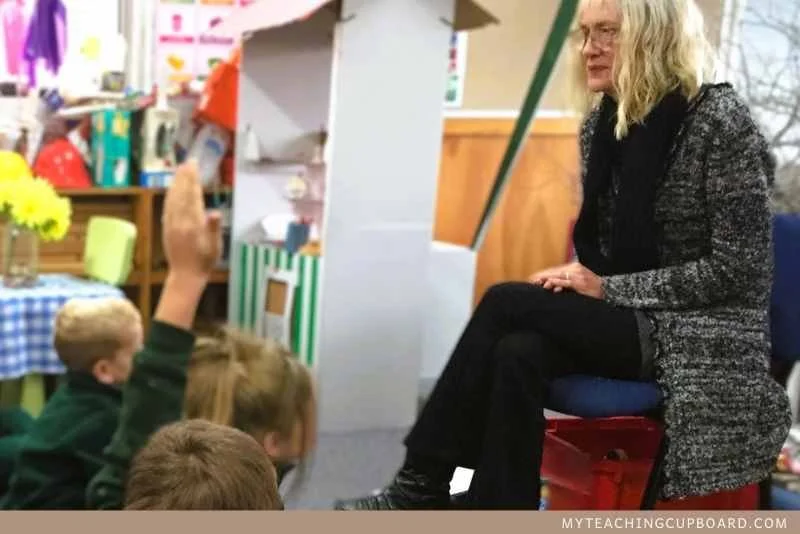
A morning meeting is a purposeful way to start the school day. It is a great time for bringing your students together for a short but impactful daily gathering that sets the tone for a positive and productive day.
It’s a structured routine designed to help your children transition smoothly into the school day.
It fosters a sense of community by connecting everyone together.
And they are particularly important in early childhood classrooms, where building relationships and establishing predictable routines are the keys to successful learning experiences.
If you are into community building with your first-grade or kindergarten students, you are going to love this time of day!
The Purpose of Morning Meetings in Kindergarten
The purpose of a morning meeting is often seen as simple housekeeping or administrative tasks BUT at its heart, it’s really about connection and communication.
A time to welcome your students into the classroom, create a positive tone and give them a sense of belonging and security. In a kindergarten classroom, this is critical for young learners. You know doubt know that our little ones absolutely thrive when there is a predictable routine and a sense of community and belonging.
Don’t get me wrong - morning meetings also serve an academic purpose.
From discussing the day of the week and months of the year to integrating literacy and numeracy concepts like phonics or counting skills, this daily gathering will give you a fantastic way to incorporate foundational learning objectives in a child-friendly format.
And perhaps most importantly, a morning meeting also gives you the chance to introduce the day’s learning intentions in an engaging way. It ensures your children know exactly what is planned for the day ahead and how these planned activities align with their curriculum goals.
Key Elements of a Morning Meeting
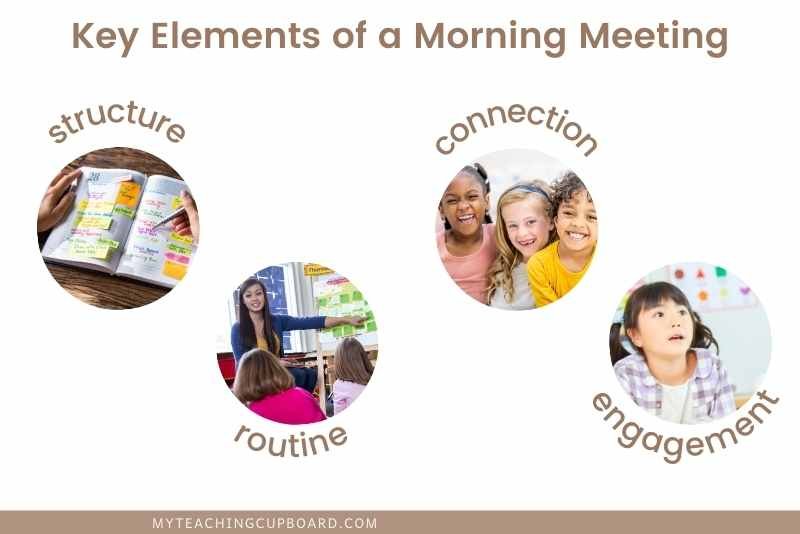
A great morning meeting includes four key elements:
Structure: Morning meetings follow a predictable format, such as a greeting, a morning message, a sharing time, and an activity or focus task. This structure will help your young students feel safe and comfortable because they will know exactly what is coming next.
Routine: The repetition of daily activities—like reviewing the calendar, marking the roll, or discussing a question of the day—helps reinforce learning and builds familiarity and predictability over time.
Connection: Morning meetings are a special time for you to build relationships, foster a classroom community, and make every child in your class feel seen and valued.
Engagement: Fun morning meeting questions, interactive whiteboards, and movement-based activities are just some of the different ways you can keep your students engaged and excited to join in.
Common Questions About Morning Meetings
What is the purpose of morning meetings in kindergarten?
The purpose is to create a sense of routine and belonging, build classroom community, and set the tone for a day of purposeful learning. Morning meetings also help teachers weave in curriculum goals in meaningful ways.
How long should a morning meeting be?
Morning meetings in kindergarten typically last 15–20 minutes. Aim to keep the routine consistent and the activities engaging to suit young students’ attention spans. Adding movement is a great idea too!
Morning meetings are an important routine in my classroom. They helped me go from chaos to calm.
With structure, routine, and connection at the core, they create a meaningful foundation for the learning and play that follows. In the next section, I’ll explore why morning meetings are an essential part of my play-based kindergarten classroom and why you will want to use them too!

Why You Need Morning Meetings in Kindergarten
Morning meetings are a powerful tool that can transform the way your classroom operates. From smooth transitions to skill development, these brief daily gatherings are my secret ingredient to a successful school day.
Set the Tone for the Day
The first moments of the school day are crucial for creating the right environment for learning. Our morning meetings help us start the day on the right foot. They ensure we have a smooth and calming transition from home to school.
Predictable routines make children feel safe and ready to learn. The consistency of this routine anchors our day and definitely helps me and my young learners settle in and focus.
Build Classroom Community
I believe creating a sense of community is one of the most important goals in early childhood education.
Morning meetings will give you a dedicated time to connect everyone as a whole class, build relationships, and even foster teamwork. Whether it’s through tuning-in time, a talk about the calendar, or a quick interactive game, morning meetings can encourage meaningful discussions that will help your children feel seen and valued.
Over time, these daily interactions create a classroom community where everyone feels they belong.
If you would like to learn more about creating a classroom community, check out this blog post: How to Build a Classroom Community

Building a classroom community really should be one of your top priorities. In this blog post, you’ll discover what a classroom community is and why I think building one is so, so, so important. I also share some simple ways and tips for how you can build a lovely classroom community.
Introduce Curriculum Objectives
I find morning meetings are the perfect time to introduce our learning intentions for the day.
By sharing your WALT (What Are We Learning Today) goals right at the start of the day, your students will know what to expect and how their activities connect to the curriculum.
I love using my illustrated learning intentions when I do this. The illustrations make their goals accessible – especially for young learners who are not yet confident readers. Explicitly clarifying the learning intentions for the day empowers my students to approach their day with purpose and confidence.

Save money and grab this big bundle of illustrated learning intentions. Use them to explicitly teach your Kindergarten, Prep and Preschool students what the English, Math, Science and HASS Foundation Stage learning intentions are.
The pictures will act as a visual prompt and help your students remember and better understand their WALT goals.
THIS SET CONTAINS VERSION 8 ENGLISH OBJECTIVES & BANNERS:
56 visual WALT goals or Learning Intentions for the Language strand
47 visual WALT goals or Learning Intentions for the Literature strand
83 visual WALT goals or Learning Intentions for the Literacy strand
Content strand headings
WALT banner
English headings
AND THIS SET CONTAINS VERSION 9 MATH OBJECTIVES & BANNERS:
90 visual WALT goals or Learning Intentions for the Number and Algebra strand
71 visual WALT goals or Learning Intentions for the Measurement strand
7 visual WALT goals or Learning Intentions for the Statistics and Probability strand
Content strand headings
WALT banner
Math headings
THIS SET CONTAINS VERSIONS 8 & 9 SCIENCE OBJECTIVES & BANNERS:
20 visual WALT goals or Learning Intentions for the Living Things Unit
17 visual WALT goals or Learning Intentions for the Materials and their Properties Unit
10 visual WALT goals or Learning Intentions for the Weather Unit
12 visual WALT goals or Learning Intentions for the How Things Move Unit
Content strand headings
WALT banner
Science Unit
AND THIS SET CONTAINS VERSION 8 HASS OBJECTIVES & BANNERS TOO:
11 visual WALT goals or Learning Intentions for the History strand
11 visual WALT goals or Learning Intentions for the Geography strand
WALT banner
HASS Unit headings
These effective and thoughtfully aligned ACARA learning intentions will improve your student’s learning.
Research indicates that students who regularly discuss and are made aware of their learning intentions are more
focused and for longer periods of time.
more motivated and active in their learning.
able to take responsibility for their own learning.
You will receive a total of 435 illustrated learning intentions aligned to the ACARA Foundation Stage curriculum and when you use them in your classroom, you will be giving your children the tools they need to take more responsibility for their own learning and achieve greater learning independence.
Maths and Science have been updated to Version 9 of the ACARA Curriculum.
In preschool and kindergarten, written learning intentions are somewhat ineffective because your young children are just not confident readers yet. When you refer to the written learning intention on display, all your little ones see is a collection of letters.
For this reason, I like to use illustrated learning intentions in my early childhood settings. Learning intentions with a pictorial representation will help your students remember and understand their learning goals.
Save yourself some time and lots of effort with these already done for you age-appropriate learning intentions.
Teach the More Tricky Curriculum Topics
I have found that some curriculum objectives just need consistent, daily practice to ensure understanding. This is where morning meetings come to the rescue!
It is so easy to embed tricky ACARA-aligned goals, like
sequencing the days of the week
remembering the months of the year
practising early phonics sounds and letters
learning counting sequences
into your morning meeting activities.
Use Your Morning Meeting Time to Develop Skills
Yes a morning meeting can cover academic skills but it can also provide you an opportunity to develop a range of other essential skills like:
Social-Emotional Skills: Foster empathy, listening, and collaboration through sharing time or team-building activities.
Executive Function Skills: Build focus, self-regulation, and organisation by following predictable routines and taking turns.
This combination of skill development will set your students up for success in the classroom and beyond!
Oh - And the Teacher Benefits!
Morning meetings don’t just benefit students—they make your job easier too!
By establishing a consistent routine, you’ll save so much time on transitions and reduce the chaos that often accompanies the start of the day. With everyone on the same page, you can minimise disruptions, maintain focus, and set a positive tone for teaching and learning.
PLUS the daily practice of embedding curriculum goals into morning meeting activities can sure ease the pressure of meeting curriculum benchmarks and that’s going to leave you feeling less stressed and more organised.
It’s a WIN–WIN!
Our Daily Morning Meeting Routine
Our morning meeting routine is designed to create a smooth transition into the day while also embedding meaningful learning opportunities into our schedule. Each activity has a purpose, and together they form a predictable, engaging, and effective way to start the day.
1. Calendar Routine: Building Awareness of Time
We always start our morning meeting with calendar work because it helps my students build their awareness of time and sequence daily events. This activity is aligned with the ACARA Foundation strand (AC9MFM02), which focuses on sequencing days of the week and times of day, while also connecting them to familiar events.
Each morning, we explore the day, month, and season. To make it more engaging, we use a visual calendar where students can draw their own little pictures to represent the day.

For example, if it’s sunny, they might draw a little sun or if there’s a special event, they might draw something to remind the class of it.
By the end of the month, we have a beautiful visual timeline to display at the top of the wall.
My kids love the calendar time and I love that it reinforces sequencing and time concepts every single day.
2. Marking the Roll: Literacy and Responsibility
Next, we mark the roll.
At the start of the school year, I model how to greet each child and read their name aloud from our makeshift paper roll—the morning sign-in sheet.
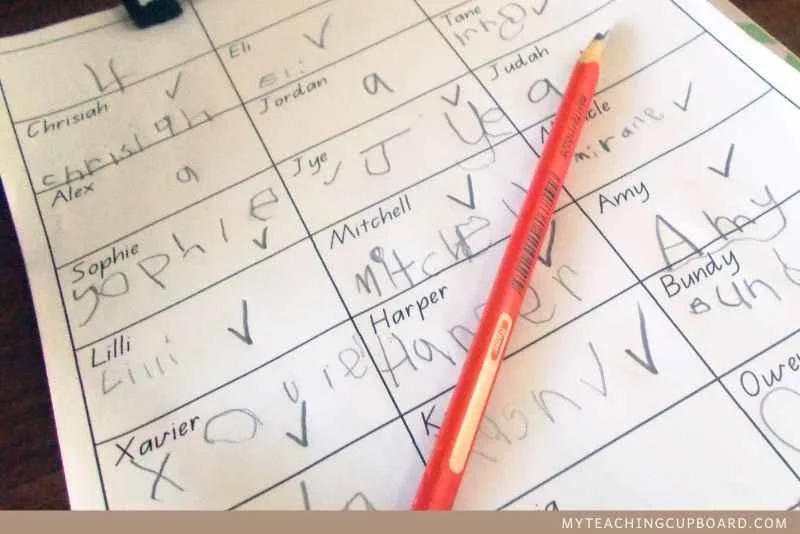
Before long, my students take over as the “teacher roll-marker.” This rotating job is an absolute favourite!
This little whole group routine helps to build a sense of responsibility, reinforces early literacy skills like name recognition and phonemic awareness and gives me a chance to mark our digital roll – you know the one you always forget to mark by 9:15!
3. Counting the Days: Numeracy Made Fun
Then we move on to another one of the highlights of our morning meeting - counting the days of school.
We use my Count the Days resources, which come in two beautiful themes—Nature Theme and Zen Neutral Theme.

Looking to celebrate 100 days of school this year?
Use these reggio inspired resources in a nature theme to count and record the days of school. Posters, teaching ideas and blackline masters to track the days and teach number concepts as you go.
This beautiful natural theme will compliment any calming classroom décor.
THIS SET CONTAINS:
A Count the Days title poster.
Printable Sheet with Teaching Ideas.
10 posters with ten frames labelled to 200.
5 blackline master recording sheets which may be reproduced for students to count and record the days.
3 styles of posters to record and display the running daily tally.
You will receive a .pdf file containing 20 sheets of beautiful resources to teach essential numeracy skills as you count and record your days at school.
EASY PREP:
Print the pages.
Laminate the posters you will use to record and display the running daily tally.
No need to laminate the 10 posters with ten frames labelled to 200.

Count the days of school and celebrate 100 days with these math recording charts. Track the days on the ten frame posters and teach number concepts as you go.
This calming neutral theme will compliment any classroom décor.
THIS SET CONTAINS:
A Count the Days title poster.
Printable Sheet with Teaching Ideas.
10 posters with ten frames labelled to 200.
5 blackline master recording sheets which may be reproduced for students to count and record the days.
3 styles of posters to record and display the running daily tally.
You will receive a .pdf file containing 20 sheets of beautiful resources to teach essential numeracy skills as you count and record your days at school.
EASY PREP:
Print the pages.
Laminate the posters you will use to record and display the running daily tally.
No need to laminate the 10 posters with ten frames labelled to 200.
Each day, we add a sticker to our ten frames. We are working towards the big milestone of 100 days of school.
This daily activity reinforces number recognition, counting sequences, and place value. It is such a great hands-on and visual way to practise important math skills – daily!
If we have time, we might talk about how many days until the next ten frame is completed or the number of days left until we reach the big 100. We even link it to the calendar and I pose questions like “What day will it be when we reach 50 days?”
There are just so many opportunities for learning. You will be surprised at how many early numeracy skills and concepts can actually be taught through these real-life math discussions.
Interested in finding out all the ways you can use this time to teach and consolidate so many different numeracy concepts?
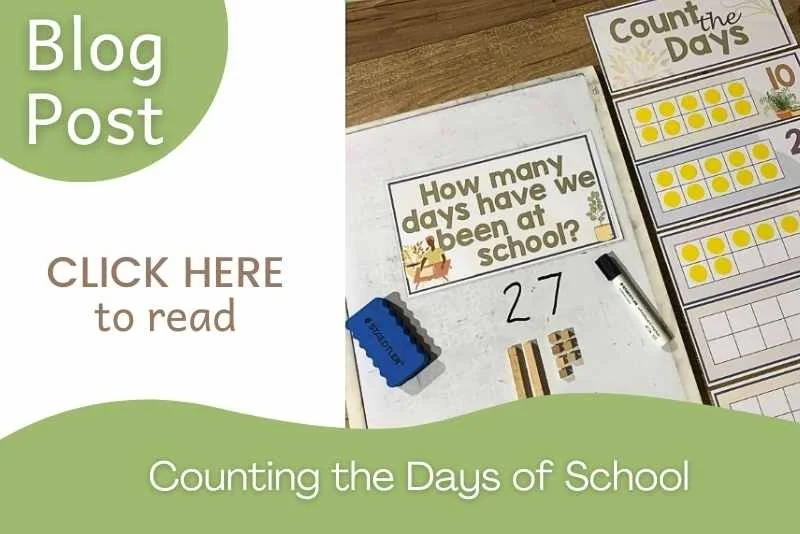
Check out this blog post: Counting the Days of School
4. Movement Break: Exercise Counting for Focus
After three seated activities, it is time to get the kids up and moving. A movement break is a fun activity and just what we need to reset our focus.
We call this activity “exercise counting.” It’s where students combine physical activity with oral counting.
For example, we might do ten star jumps while counting aloud or practice counting backwards while crossing the midline with body twists.
This quick break will keep your young learners active and engaged while reinforcing those important counting skills. This daily practice goes a long way to develop automaticity.

5. Phonemic Awareness or Phonics Practice
We all know phonemic awareness and phonics are foundational literacy skills. So that’s why I ensure our morning meeting includes daily skill practice.
We have a quick literacy activity in every morning meeting.
Sometimes we use the Heggerty program, and other times we do a phonics alphabet chart review together.
This daily practice is essential for building the strong literacy foundations your children need to become confident readers. Repetition is key, and the short timeframe fits perfectly into our morning routine.
6. WALT Goals: Making Learning Objectives Clear
We always finish our morning meeting by introducing the WALT (What Are We Learning Today) goals for the day.
Sharing our learning intentions at the start of the day gives my students clarity and purpose. They know what’s coming up and how their learning tasks and activities align with their learning goals.
I love using my Illustrated Learning Intentions to do this because the pictures make our curriculum objectives accessible for my students – they are still developing their reading skills after all.
The pictures act as a visual prompt and help my students remember and better understand their WALT goals.
If you’d like to use these in your classroom, you can find my Bundle of Illustrated Learning Intentions for Foundation Stage here. 👇
Save money and grab this big bundle of illustrated learning intentions. Use them to explicitly teach your Kindergarten, Prep and Preschool students what the English, Math, Science and HASS Foundation Stage learning intentions are.
The pictures will act as a visual prompt and help your students remember and better understand their WALT goals.
THIS SET CONTAINS VERSION 8 ENGLISH OBJECTIVES & BANNERS:
56 visual WALT goals or Learning Intentions for the Language strand
47 visual WALT goals or Learning Intentions for the Literature strand
83 visual WALT goals or Learning Intentions for the Literacy strand
Content strand headings
WALT banner
English headings
AND THIS SET CONTAINS VERSION 9 MATH OBJECTIVES & BANNERS:
90 visual WALT goals or Learning Intentions for the Number and Algebra strand
71 visual WALT goals or Learning Intentions for the Measurement strand
7 visual WALT goals or Learning Intentions for the Statistics and Probability strand
Content strand headings
WALT banner
Math headings
THIS SET CONTAINS VERSIONS 8 & 9 SCIENCE OBJECTIVES & BANNERS:
20 visual WALT goals or Learning Intentions for the Living Things Unit
17 visual WALT goals or Learning Intentions for the Materials and their Properties Unit
10 visual WALT goals or Learning Intentions for the Weather Unit
12 visual WALT goals or Learning Intentions for the How Things Move Unit
Content strand headings
WALT banner
Science Unit
AND THIS SET CONTAINS VERSION 8 HASS OBJECTIVES & BANNERS TOO:
11 visual WALT goals or Learning Intentions for the History strand
11 visual WALT goals or Learning Intentions for the Geography strand
WALT banner
HASS Unit headings
These effective and thoughtfully aligned ACARA learning intentions will improve your student’s learning.
Research indicates that students who regularly discuss and are made aware of their learning intentions are more
focused and for longer periods of time.
more motivated and active in their learning.
able to take responsibility for their own learning.
You will receive a total of 435 illustrated learning intentions aligned to the ACARA Foundation Stage curriculum and when you use them in your classroom, you will be giving your children the tools they need to take more responsibility for their own learning and achieve greater learning independence.
Maths and Science have been updated to Version 9 of the ACARA Curriculum.
In preschool and kindergarten, written learning intentions are somewhat ineffective because your young children are just not confident readers yet. When you refer to the written learning intention on display, all your little ones see is a collection of letters.
For this reason, I like to use illustrated learning intentions in my early childhood settings. Learning intentions with a pictorial representation will help your students remember and understand their learning goals.
Save yourself some time and lots of effort with these already done for you age-appropriate learning intentions.

By following this morning meeting routine, we create a calm and focused start to the day while also including important academic and social-emotional learning. The fact that it is all done in a meaningful way ensures my students have a purposeful morning meeting.
The Benefits of Morning Meetings in Play-Based Classrooms
Morning meetings offer unique advantages in a play-based classroom.
Blending the structure of a daily routine with the flexibility and creativity of a play-based pedagogy is easier with a morning meeting.
Here are all the reasons why they’re a must-have for your play-based environment:
Create Predictability: As already mentioned, young learners thrive on routine. Knowing what to expect each morning creates a sense of security and stability, which is essential for children to feel confident and ready to learn. Morning meetings anchor the day, providing a predictable and comforting start that helps students transition smoothly into play and other classroom activities.
Reinforce Learning Goals: Morning meetings are the perfect bridge between play-based activities and explicit teaching objectives. By introducing the day’s learning intentions and embedding tricky curriculum goals into morning routines, you are setting a clear direction for the day. This connection ensures that children see how their play and investigations align with academic outcomes.
Foster Independence: Morning meetings encourage student-led participation, which fosters independence and responsibility. For example, giving students the chance to take on roles like “teacher roll-marker” or lead a counting exercise empowers them to take ownership of their learning and builds confidence in their abilities. This has a flow-through effect and you will notice your students further develop their independence and autonomy in their play based learning sessions too.
Build Relationships: This dedicated time each morning strengthens relationships within the classroom. Students connect with each other and their teacher on a deeper level. These interactions help create a classroom community where every child feels valued and supported. You will notice more positive interactions happening during investigations when you have a strong classroom community.
By having a morning meeting routine in your play-based classroom you will build a strong foundation for learning, connection, and independence.

Tips for Starting a Classroom Morning Meeting in Your Classroom
If you’re new to morning meetings or looking to refine your routine, these practical tips will help you implement them successfully. Morning meetings are flexible and can be tailored to suit your teaching style and students’ needs.
Here’s how to get started:
1. Keep It Simple
When you’re just starting out, it’s important to keep things simple. Choose a few key elements—like a greeting, calendar work, and a quick activity—and build over time as you and your students become comfortable with the routine.
A short, consistent structure is better than trying to include too much all at once.
2. Incorporate Visuals
Young learners benefit greatly from visual supports. Use resources like my Morning Meeting Visual Schedule Train.
It can make all the difference!

Each part of your meeting is represented by a visual cue to help your students follow along and anticipate what comes next. Using visuals not only supports understanding but also keeps your routine organised and engaging.
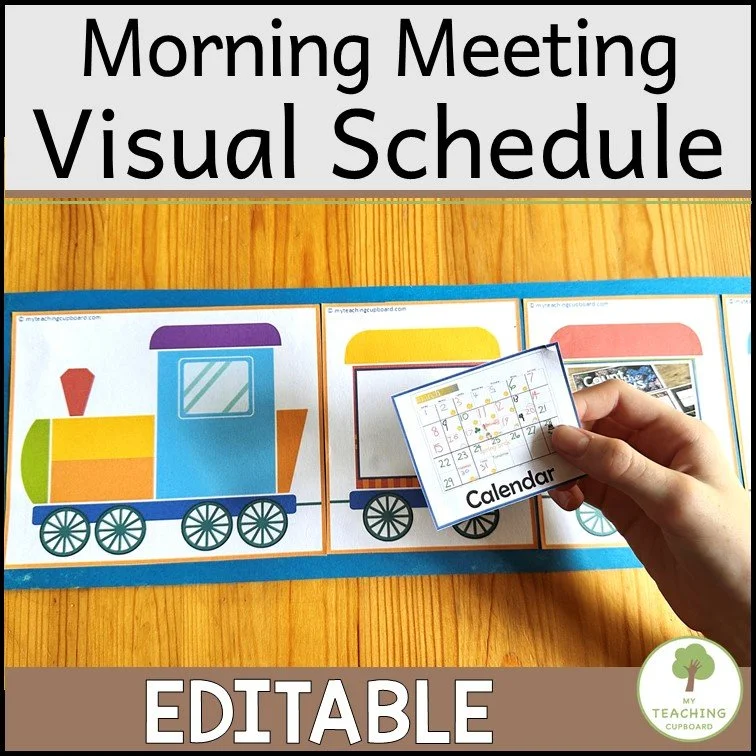
Looking for a simple way to keep your morning meeting on track and fully engage your students? This Morning Meeting Schedule Train is a fun, interactive visual tool that keeps your circle time running smoothly while teaching routine and responsibility.
Use this Morning Meeting Train as a visual schedule to guide your daily morning meeting routine.
Each carriage represents a specific task or activity, such as calendar work, counting the days, or introducing WALT goals.
As you complete each activity, students can take off the corresponding card, giving them a sense of ownership and visually marking the progress of your meeting.
Why You'll Love This Visual Schedule
Builds Independence: Students actively participate by removing completed task cards.
Keeps You Organised: Stay on schedule with this clear, structured visual guide.
Saves You Time: The editable design means you can personalise the schedule to suit your classroom’s needs in minutes.
Features Designed to Make Your Mornings Easier
This set includes everything you need to implement a visual routine that works:
Printable Train Engine
7 Printable Train Carriages – Print as many as you like to match your routine.
Editable Schedule Cards – Customise the text, font, colour, and size in PowerPoint to suit your class.
Editable PowerPoint Sign-in Sheet – Perfect for roll marking and building early literacy skills.
Teaching Notes – Step-by-step instructions on how to use the Morning Meeting Train in your classroom.
How to Use This Morning Meeting Train
Print, laminate, and add Velcro dots to each schedule card so your students can easily remove and replace them.
You can use my pre-designed images, or swap them out for your own to make the train uniquely yours!
I love adding photos of my students completing each task to personalise the experience even further.
This resource is perfect for:
Circle Time Routines
Morning Meetings
Visual Reminders
Developing Responsibility and Independence
Why A Visual Schedule Works
This visual schedule keeps me organised BUT more than that, it creates a predictable routine that supports student independence. My students LOVE this visual routine! They are always fully engaged every morning we use it.
By involving your students in the process of removing the task cards, they feel a sense of accomplishment while clearly understanding what’s next in their day.
Streamline your mornings!
Reduce stress!
AND create a predictable, structured routine your students will love!
Ready to transform your morning meetings?
Download this Morning Meeting Schedule Train now and see how it can bring calm and focus to your classroom.
3. Add Movement
We all know that children thrive when movement is integrated into their day.
Alternate between seated and active activities to keep your students engaged and focused.
For example, follow a discussion or calendar activity with a movement break, such as exercise counting or a quick phonics game.
Movement helps students reset their energy and improves their ability to concentrate on the next task.
4. Make It Personal
No two classrooms are the same so take the time to personalise your morning meeting routine.
Consider your students’ needs and interests, and include activities that reflect their unique personalities. This might include fun morning meeting questions, an activity like a beach ball game, or a sharing time where students talk about their favourite thing from the day before.
The beach ball game is a fun and interactive activity that’s perfect for a morning meeting. Here’s how it works:
Stick questions, prompts, or topics with a matching picture (such as What’s your favourite living thing?, What investigation area do you want to work in today?, or Name something blue) on the panels of a beach ball.
During the game, students toss the ball to one another, and when they catch it, they answer the question or prompt facing them.
This game is a great way to encourage participation, build communication skills, and get students talking and sharing. It’s also flexible—you can tailor the questions to suit your class’s interests or even align them with curriculum topics. Plus, the physical activity of catching and tossing the ball adds a movement element, keeping students engaged.

5. Plan Ahead
Planning ahead is the key to reducing stress and ensuring your morning meetings run smoothly.
Use ready-to-go resources like my Count the Days printables and Illustrated Learning Intentions to save you hours of prep time.
These resources are designed to help you easily integrate curriculum objectives into your routine and leave you free to focus on teaching.
Starting morning meetings in your classroom doesn’t have to be overwhelming. With a few simple steps, you’ll be on your way to creating a daily routine that
engages your students
builds community
and supports your curriculum goals.
FAQs About Morning Meetings in Kindergarten
What Are the Objectives of a Morning Meeting?
The main objectives of a morning meeting are to create a positive start to the day, foster a sense of classroom community, and connect students with the learning goals they’ll be working on.
Morning meetings also help students transition smoothly from home to school, while providing opportunities to reinforce social-emotional skills, independence, and curriculum concepts like numeracy, literacy, and sequencing.
How Do I Fit Morning Meetings Into a Play-Based Schedule?
In a play-based classroom, morning meetings act as the bridge between structured learning and child-led play. By keeping them short (10–20 minutes) and focused, you can easily embed learning goals and routines without taking time away from play-based activities.
For example, use your morning meeting to introduce WALT goals, review calendar work, or practise phonics skills—then your tuning-in session will be shorter and your students will have more investigation time.
Can I Adapt Morning Meetings for Older/Younger Students?
Absolutely!
Morning meetings are flexible and can be adapted for any age group:
For younger students, keep the routine simple and focus on visuals, movement activities, and short attention spans.
For older students, introduce more complex discussions, higher-order thinking prompts, or student-led STEAM activities to challenge their developing skills.
With thoughtful planning, morning meetings can be tailored to meet the developmental needs of any class.
Setting Up for Your Success with Morning Meetings
Morning meetings are an important classroom routine.
They’re a powerful way to transform your mornings and set the stage for a successful day.
A Recap of Key Points
Morning meetings create a positive tone, foster a strong sense of community, and support curriculum goals.
They provide a smooth, focused, and engaging start to the day, helping students feel confident and ready to learn.
With the right tools, implementing morning meetings is simple and effective.
Whether you’re just starting out or looking to enhance your routine, these strategies and resources will help you make your mornings impactful and enjoyable.
Ready to transform your mornings?
Download my Morning Meeting Visual Schedule Train, Illustrated Learning Intentions, and Count the Days resources to get started today.
With these tools, you’ll save time, reduce stress, and create a morning meeting routine that engages your students and supports their learning – every – single - day!